
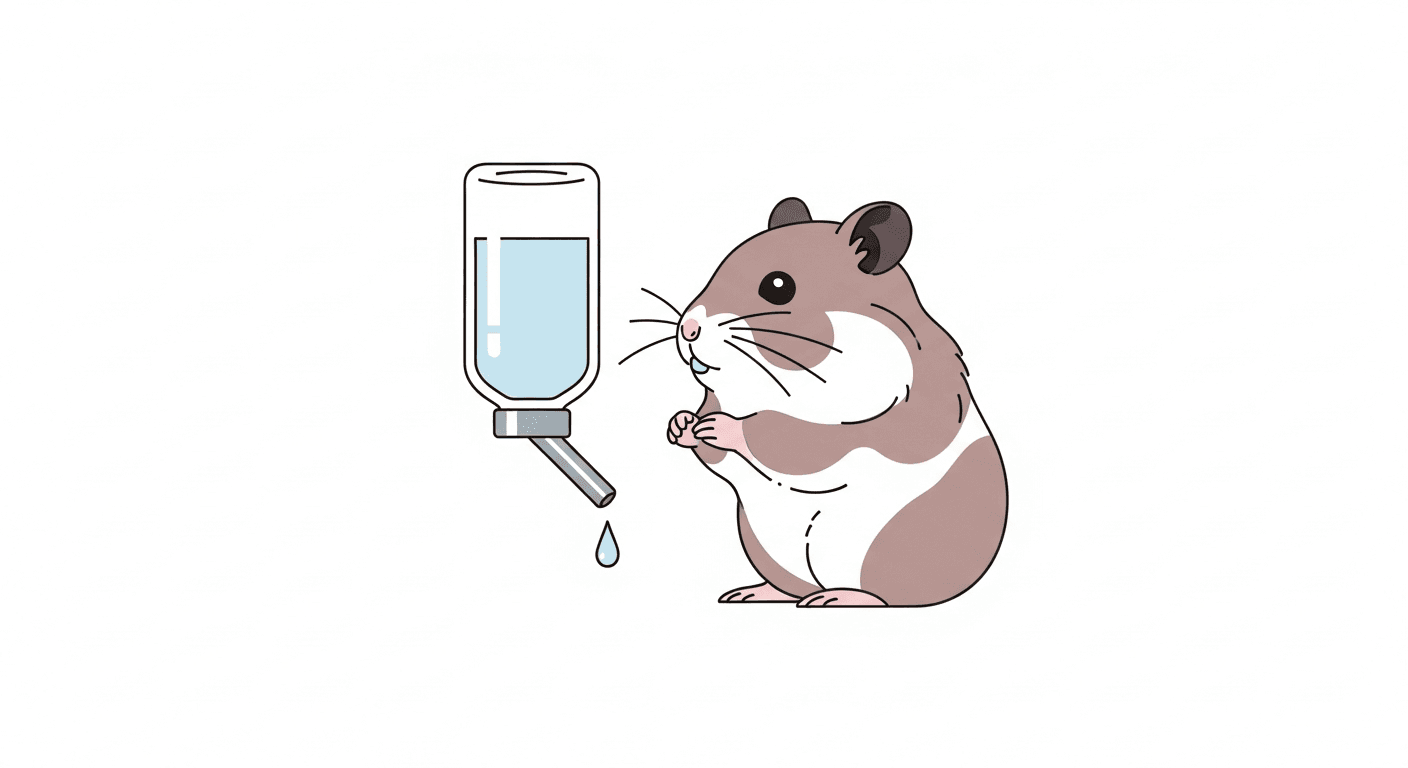
How Much Should a Hamster Drink?
A healthy adult Syrian hamster typically drinks 10–30 ml of water per day. Dwarf species drink proportionally less. Daily water intake varies based on diet moisture content — hamsters eating fresh vegetables may drink less than those on a dry-only diet. The key is identifying your individual hamster's baseline normal, then noticing when it deviates significantly.
Both too little and too much water consumption are cause for concern. Dramatic increases in thirst (polydipsia) are one of the earliest signs of diabetes in hamsters, which is common particularly in dwarf breeds.
First 3 Steps at Home
- Verify the water source works: Before assuming your hamster is drinking less, check that the bottle spout isn't blocked. Many bottle blockages go undetected. Tap the ball bearing — it should move freely. Offer a shallow dish temporarily to ensure access.
- Measure daily intake: Fill the bottle to a consistent level and mark it with a rubber band or tape. Check daily how much has been consumed. Keeping this measurement for a week establishes a personal baseline.
- Assess for dehydration: Gently tent the skin on the scruff of the neck. In a well-hydrated hamster, skin returns to flat position instantly. In a dehydrated hamster, it holds the tented position for a second or two before returning. Also check for dry, tacky gums.
When to Go to the Vet Immediately
- Skin tent test showing dehydration with any refusal to drink
- Sudden increase in thirst with increased urination — possible diabetes
- No detectable water intake for 24 hours
- Lethargy and dry mouth alongside reduced drinking
Follow-Up Care Checklist
- Offer a water dish alternative if the hamster struggles with the bottle — some prefer dishes
- Change water daily to ensure freshness — stale water discourages drinking
- Include water-rich vegetables (cucumber, zucchini) to supplement hydration
- If diabetes is diagnosed, follow the vet's specific dietary management plan
Track Hydration with TailRounds
Daily water intake notes in the TailRounds Daily Log make it easy to spot trends. A week of records showing gradual decrease or sudden increase is information your vet needs to make an accurate diagnosis.
Book a Vet Appointment
Dehydration and polydipsia in hamsters both warrant prompt veterinary assessment. Book at Happy Paws — blood glucose and urinalysis can be done in the clinic to check for diabetes and kidney issues.
Summary for Your Clinic Visit
Note your baseline daily water consumption measurement, how long the change has been occurring, whether urination has also changed, and current diet details including any recent changes.
Continue Reading
 🐭 Hamster Health
Hamster Diabetes: Which Breeds Are Affected and How It's Managed
Chinese and Russian Dwarf hamsters are prone to diabetes. Learn the signs, how diabetes is diagnosed and managed, and what dietary changes help.
 🐭 Hamster Health
Hamster Not Eating: Causes and What to Do
A hamster that stops eating quickly loses dangerous weight. Learn the common causes of appetite loss and when to seek urgent veterinary care.
 🐭 Hamster Health
Daily Hamster Care Routine: Health Monitoring Checklist
A consistent daily routine is the best early warning system for hamster health problems. Learn what to check every day and how to build a baseline.