
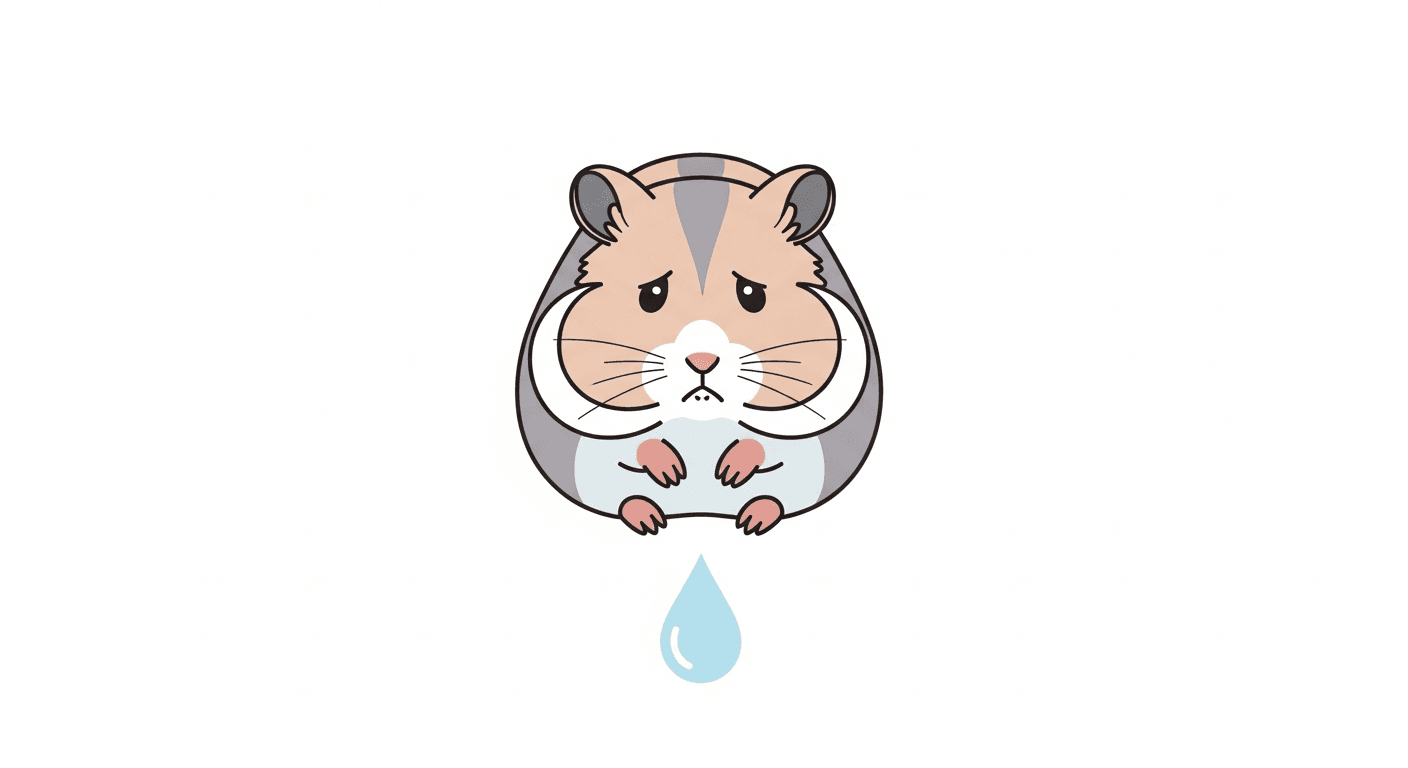
What Urinary Problems Look Like in Hamsters
Hamsters have small, concentrated urinary systems that can develop stones, infections, and kidney dysfunction — often without obvious symptoms until the condition is advanced. Normal hamster urine ranges from pale yellow to milky white; the milky appearance is normal due to calcium carbonate crystals and should not be confused with blood or infection.
True warning signs include blood-tinged urine, straining to urinate, a wet perineal area (urine scald), reduced urine output, or a strong ammonia smell beyond the typical urine odor.
First 3 Steps at Home
- Observe urination behavior: Watch for straining, frequent unsuccessful attempts, vocalizing when urinating, or hunching tightly around the lower abdomen. These suggest blockage or stone irritation.
- Check for urine scald: Look at the fur around the genital area. Wet, stained, or matted fur suggests urine is leaking continuously — a sign of incontinence from kidney disease or an anatomical obstruction.
- Increase water availability: Ensure the water bottle is working and that the hamster can access it easily. Dehydration concentrates urine and accelerates stone formation. Some hamsters prefer a shallow dish for water over a bottle.
When to Go to the Vet Immediately
- Visibly red or pink-tinged urine — possible blood
- Complete absence of urine for several hours — possible blockage
- Straining with pain vocalizations
- Sudden swelling of the lower abdomen
- Wet perineal area with skin redness or raw skin — urine scald requires treatment
Follow-Up Care Checklist
- Reduce dietary calcium — limit seeds high in calcium and reduce dairy-based treats
- Ensure constant access to fresh water
- Clean the enclosure more frequently if urine scald is present
- Follow any prescribed antibiotic or anti-inflammatory course completely
- Schedule follow-up urinalysis as directed by the vet
Track Urinary Health with TailRounds
Logging urination frequency and appearance in the TailRounds Daily Log helps detect early changes. Even noting "normal urine today" creates the baseline needed to identify when something shifts.
Book a Vet Appointment
Urinary problems in hamsters progress quickly. Book promptly at any sign of abnormality. Book at Happy Paws with our exotic team for urinalysis and ultrasound assessment.
Summary for Your Clinic Visit
Note what you observed in the urine, when it started, current water intake, diet details, and the hamster's age. A urine sample collected in a clean container is helpful if you can manage it safely.
Continue Reading
 🐭 Hamster Health
Hamster Not Eating: Causes and What to Do
A hamster that stops eating quickly loses dangerous weight. Learn the common causes of appetite loss and when to seek urgent veterinary care.
 🐭 Hamster Health
Hamster Weight Loss: Causes and How to Monitor Effectively
Weight loss in hamsters is a serious sign — their small size means even small losses are significant. Learn to detect and respond to weight loss early.
 🐭 Hamster Health
Lethargic Hamster: Hibernation, Illness, or Torpor?
A hamster that won't move may be sleeping normally, entering torpor from cold, or seriously ill. Learn how to tell the difference and when to act.
 🐭 Hamster Health
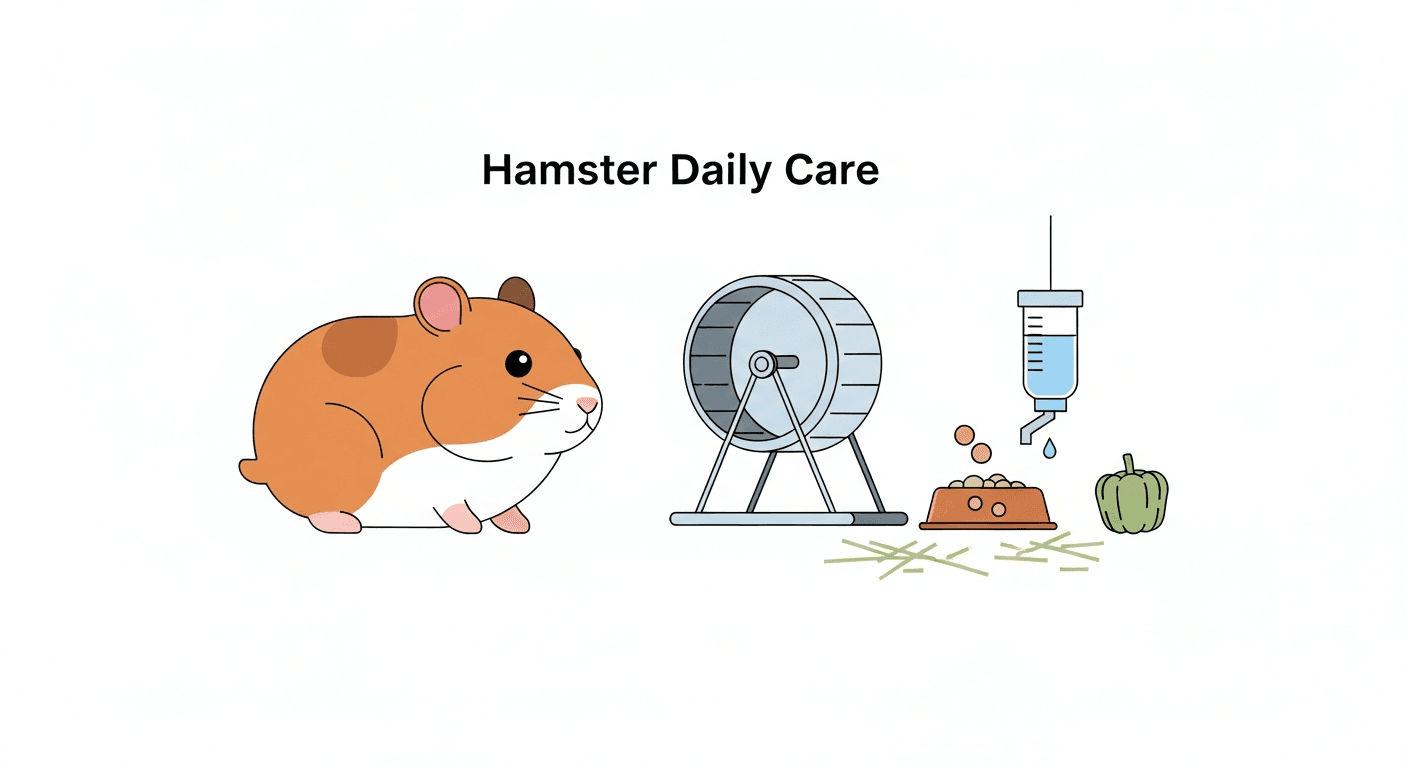
Daily Hamster Care Routine: Health Monitoring Checklist
A consistent daily routine is the best early warning system for hamster health problems. Learn what to check every day and how to build a baseline.