

Why Are Tumors So Common in Hamsters?
Hamsters have a remarkably high rate of neoplasia (tumor development), particularly after 12–18 months of age. This is partly because their lifespan is short (2–3 years), compressing the cancer risk period that in humans occurs over decades. Common tumors include melanomas (dark, pigmented skin growths — especially in Syrian hamsters), adrenal tumors, mammary gland tumors (in females), fibrosarcomas, and lymphoma. Not all lumps are cancerous — abscesses and benign cysts also occur — but all lumps need veterinary evaluation.
First 3 Steps When a Lump Is Found
- Note the lump characteristics: Location, size, firmness (hard vs. soft), whether the overlying skin is normal or ulcerated, how long you've noticed it, and whether it's growing. These factors help your vet prioritize urgency and decide whether biopsy or fine needle aspirate is appropriate.
- Assess impact on the hamster's quality of life: Is the hamster eating, active, and behaving normally? A small lump in an otherwise healthy, active hamster is less urgent than a large, ulcerated lump in a lethargic hamster. Both need veterinary evaluation, but the latter needs it today.
- Book a vet appointment within a few days: Most lumps in hamsters are not hours-level emergencies unless they're ulcerated or causing obvious distress. But "watching for a few weeks" is also not appropriate — small lumps are easier to remove and have better outcomes than large ones.
When to Go to the Vet Immediately
- Lump that is growing rapidly over days
- Ulcerated or bleeding skin over the lump
- Hamster not eating alongside a lump
- Multiple lumps developing simultaneously
Follow-Up Care Checklist
- Surgical removal is the most effective treatment for accessible tumors — discuss feasibility with your vet given the hamster's age and health
- Quality of life assessment is important — surgery on a very old or debilitated hamster may not be in the hamster's best interest
- Pain management is always appropriate if tumors are causing discomfort
Track Tumor Growth with TailRounds
Measure and photograph lumps weekly, logging dimensions in the TailRounds Daily Log. This growth tracking data is important for surgical planning.
Book a Vet Appointment
Any lump in a hamster over age 1 warrants prompt evaluation. Book at Happy Paws with our exotic team for lump assessment and treatment planning.
Summary for Your Clinic Visit
Tell your vet the lump location, estimated size, how long you've noticed it, whether it's growing, whether the skin over it looks normal, and the hamster's age and overall health status.
Continue Reading
 🐭 Hamster Health
Hamster Not Eating: Causes and What to Do
A hamster that stops eating quickly loses dangerous weight. Learn the common causes of appetite loss and when to seek urgent veterinary care.
 🐭 Hamster Health
Hamster Weight Loss: Causes and How to Monitor Effectively
Weight loss in hamsters is a serious sign — their small size means even small losses are significant. Learn to detect and respond to weight loss early.
 🐭 Hamster Health
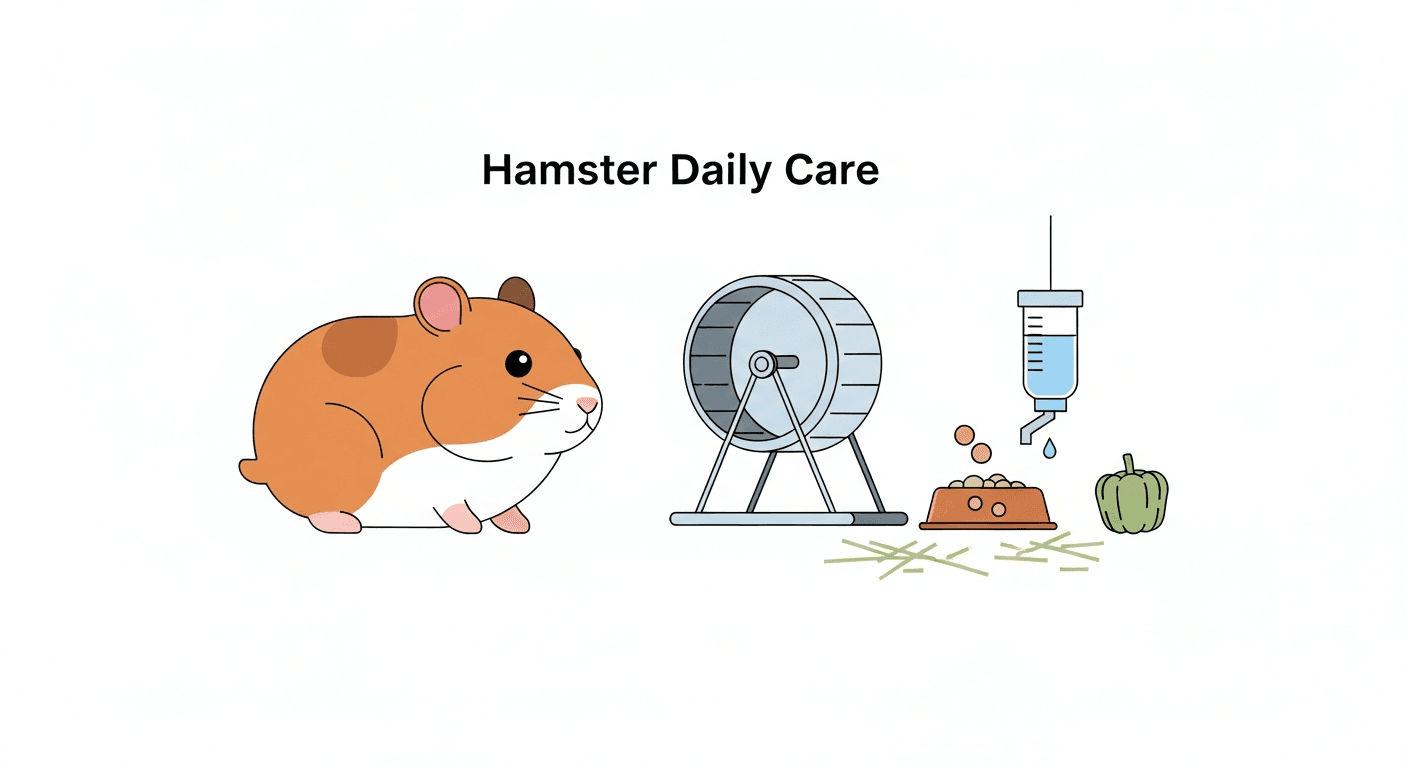
Daily Hamster Care Routine: Health Monitoring Checklist
A consistent daily routine is the best early warning system for hamster health problems. Learn what to check every day and how to build a baseline.
 🐭 Hamster Health
Lethargic Hamster: Hibernation, Illness, or Torpor?
A hamster that won't move may be sleeping normally, entering torpor from cold, or seriously ill. Learn how to tell the difference and when to act.