
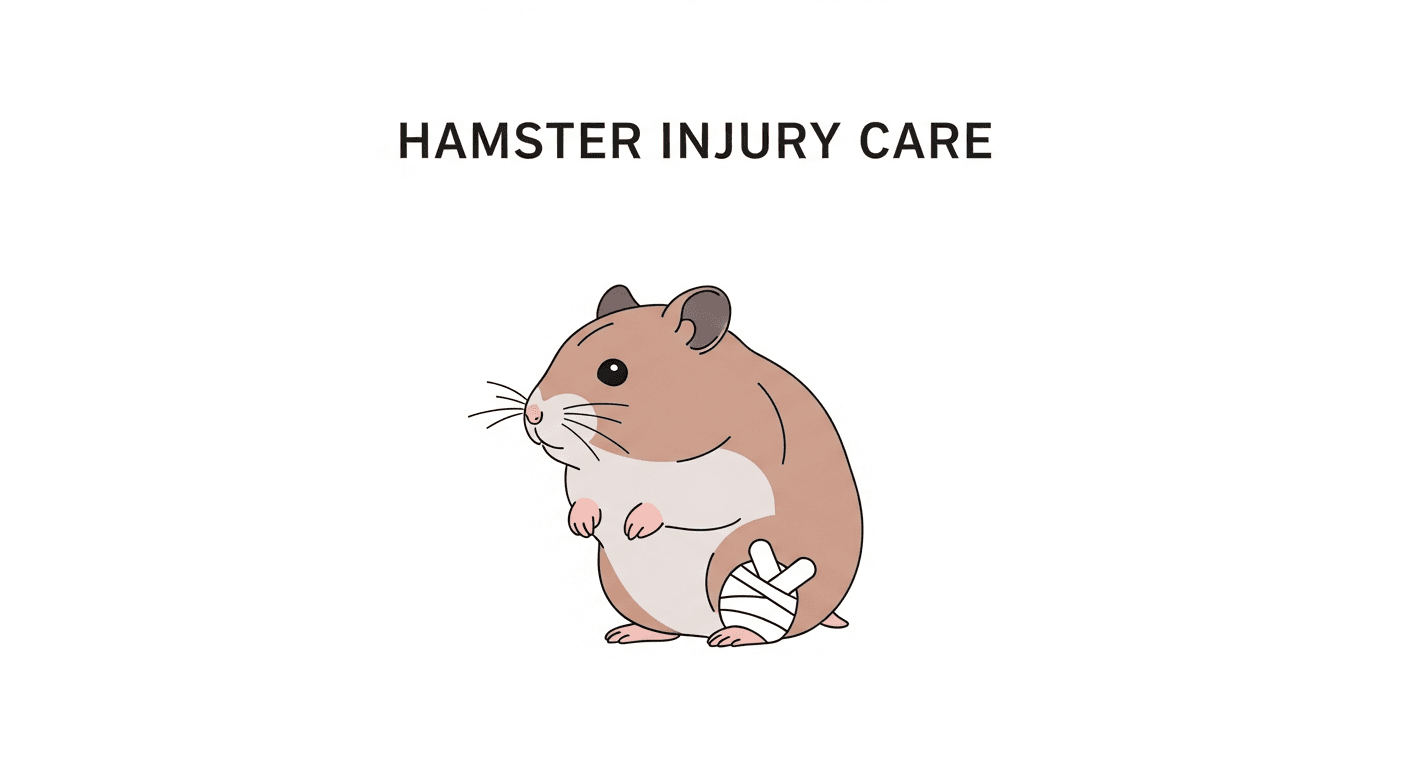
Common Hamster Injuries and Why They Are Serious
Due to their small body mass and fragile skeletal structure, injuries that might be minor in a larger animal can be life-threatening in a hamster. Falls from even moderate heights can fracture limbs, damage the spine, or cause internal bleeding. Bite wounds from other hamsters (which is why hamsters must always be housed alone) can become abscesses within 48 hours.
Hamsters are also susceptible to cheek pouch prolapse from inappropriate food items, wheel injuries from exposed spokes, and limb entrapment in cage equipment.
First 3 Steps at Home
- Assess from a safe distance first: Place the hamster in a small secure box and observe without handling. Note whether the hamster is mobile, whether any limb appears non-weight-bearing, and whether there is visible bleeding or swelling.
- Control visible bleeding: Apply gentle pressure with a clean cloth or gauze for 2–3 minutes. Do not use cotton wool — fibers can embed in small wounds. Do not apply antiseptics to open wounds without vet guidance as many are toxic to hamsters.
- Keep warm and still: Injured hamsters go into shock easily. Wrap loosely in a soft cloth at room temperature and minimize handling until you reach the vet. Shock in small animals is rapidly fatal.
When to Go to the Vet Immediately
- Any fall from above table height
- Non-weight-bearing limb or obviously abnormal limb position
- Bite wound — all bite wounds require veterinary cleaning and antibiotic coverage
- Visible protruding tissue (cheek pouch prolapse, rectal prolapse)
- Bleeding that doesn't stop within 3 minutes of pressure
- Unresponsive, cold, or in apparent shock
Follow-Up Care Checklist
- Remove any cage equipment that contributed to the injury
- Switch to a solid-surface wheel with no open rungs
- Use only paper-based bedding — loose fiber bedding is safer around healing wounds
- Give all prescribed medications at the correct intervals
- Limit handling while healing — allow the hamster to rest
Track Recovery with TailRounds
Monitor and log daily recovery progress in the TailRounds Daily Log — noting mobility, appetite, wound appearance, and medication administration to share with your vet at follow-up appointments.
Book a Vet Appointment
Even injuries that appear minor should be assessed by a vet within 24 hours. Book at Happy Paws — our exotic team has experience stabilizing and treating small mammal injuries.
Summary for Your Clinic Visit
Describe how the injury happened, when it occurred, what you observed, and any first aid you provided. Note the hamster's current movement ability and whether it has eaten or drunk since the injury.
Continue Reading
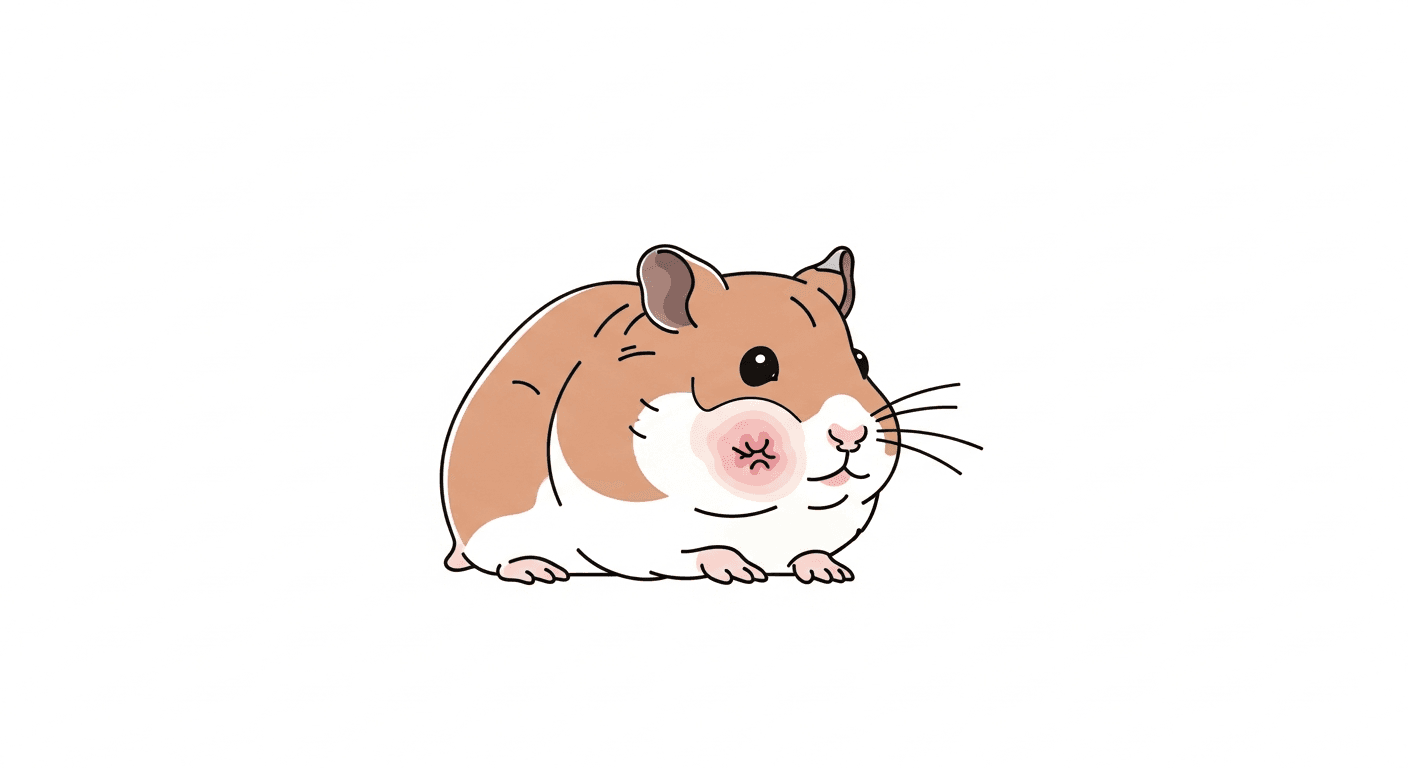 🐭 Hamster Health
Hamster Abscesses: Causes, Signs, and Treatment
Abscesses from bite wounds, dental problems, or cheek pouch injury are common in hamsters. Learn to recognize them early and understand what treatment involves.
 🐭 Hamster Health
Stress in Hamsters: Signs, Causes, and How to Reduce It
Chronic stress shortens hamsters' lives and suppresses their immune systems. Learn to recognize stress signs and create a calmer, healthier environment.
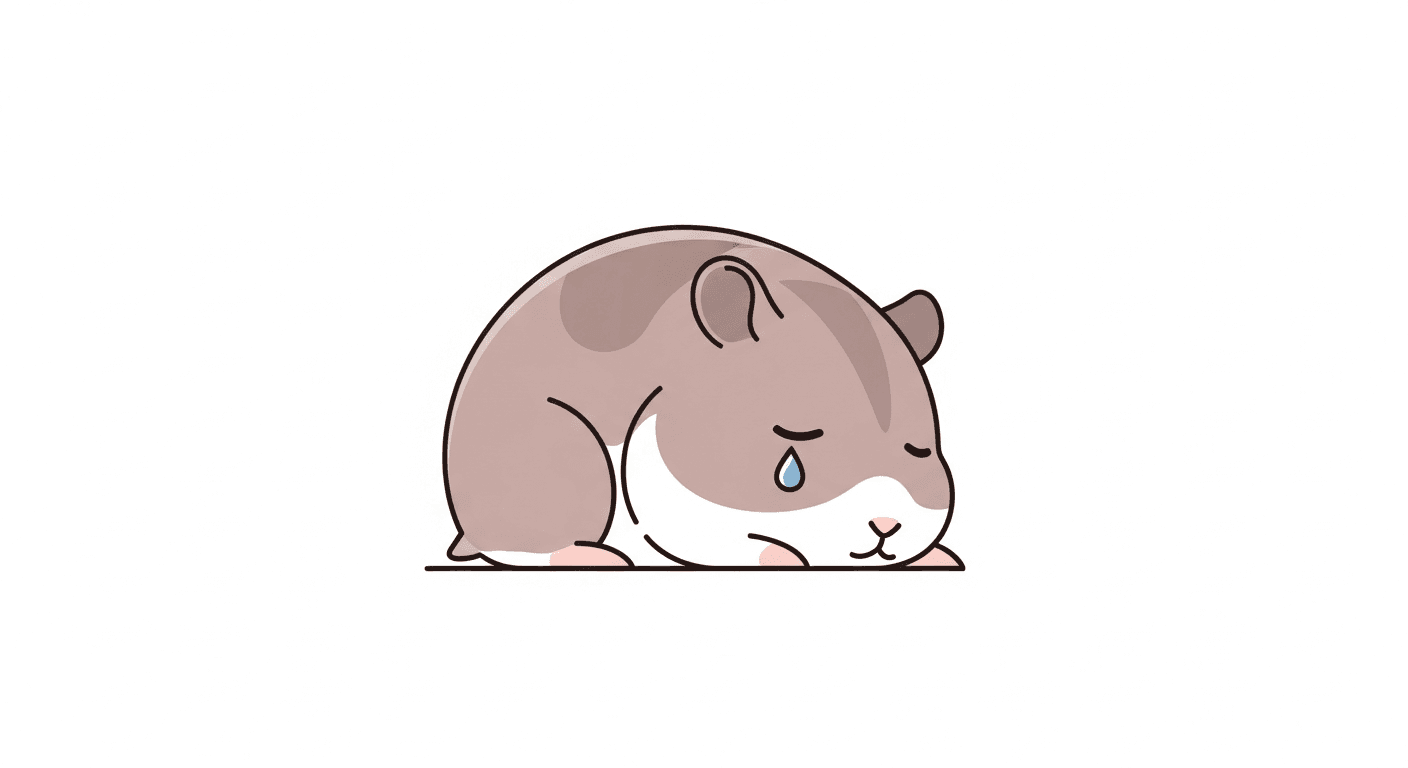 🐭 Hamster Health
Lethargic Hamster: Hibernation, Illness, or Torpor?
A hamster that won't move may be sleeping normally, entering torpor from cold, or seriously ill. Learn how to tell the difference and when to act.
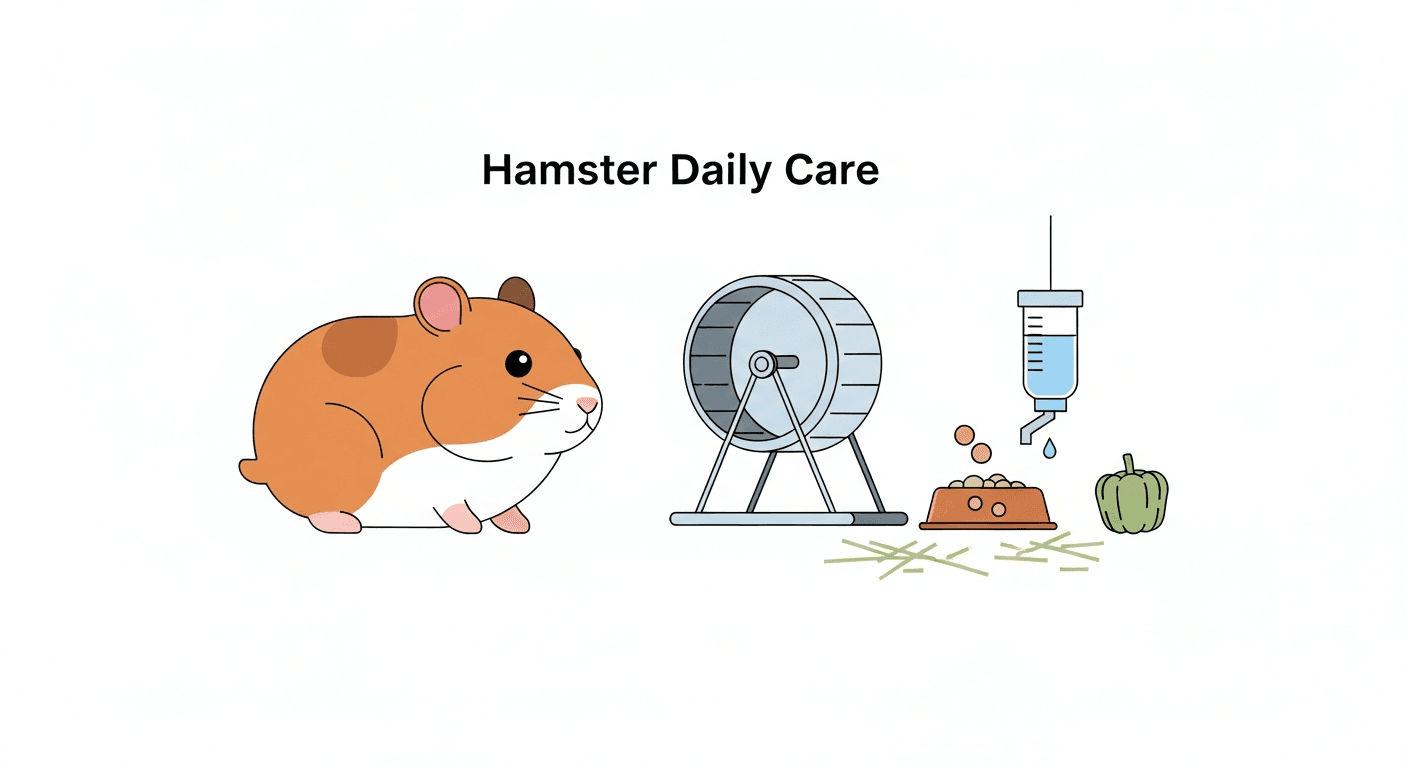 🐭 Hamster Health
Daily Hamster Care Routine: Health Monitoring Checklist
A consistent daily routine is the best early warning system for hamster health problems. Learn what to check every day and how to build a baseline.