
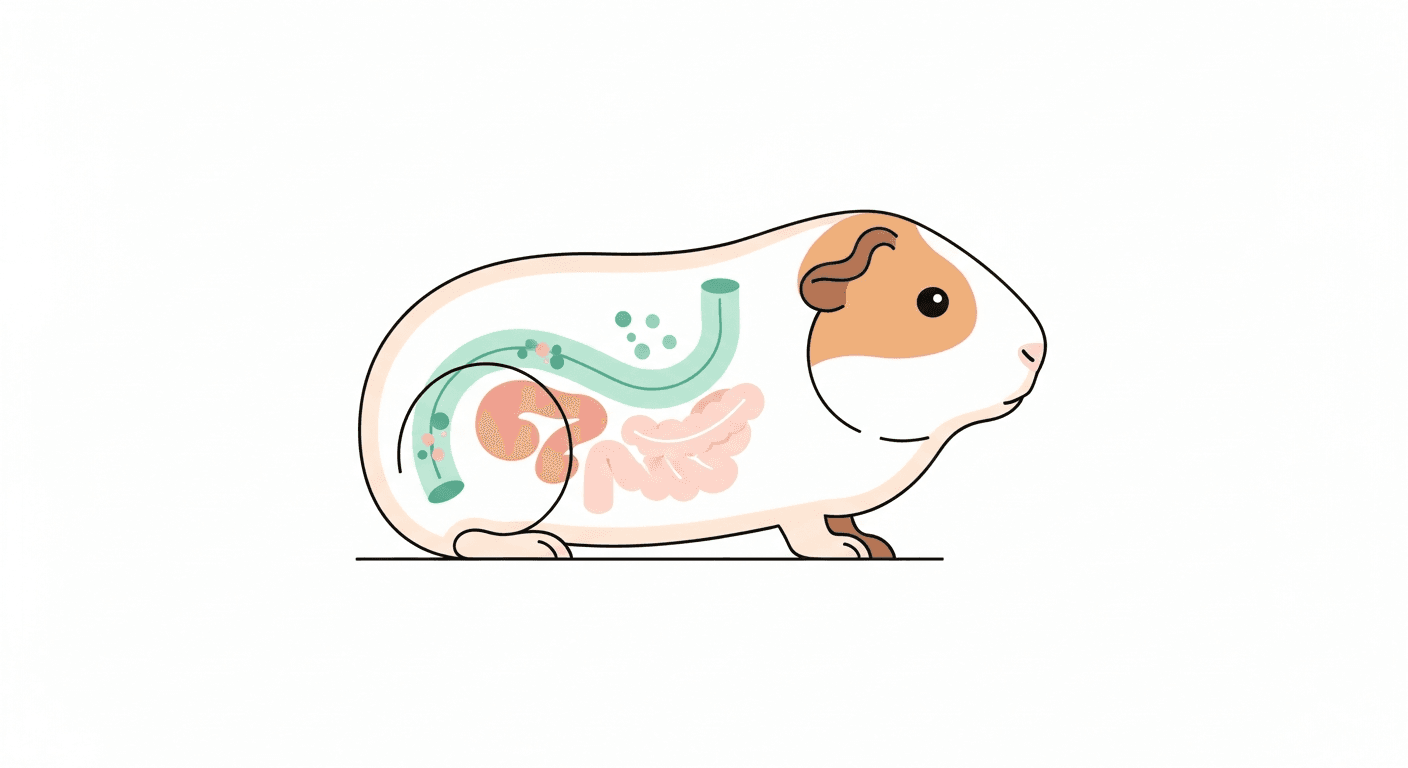
The Guinea Pig Gut: Understanding the Basics
The guinea pig gastrointestinal system is designed for continuous, high-volume fiber processing. The cecum (a fermentation chamber analogous to the rabbit's) houses billions of bacteria that break down plant matter and produce nutrients. This bacterial population is exquisitely sensitive to dietary change, antibiotic use, and stress. When the bacterial balance shifts or the gut slows, gas accumulates, causing pain, further appetite suppression, and — if untreated — potentially fatal bloat.
Unlike rabbits, guinea pigs do not produce cecotropes, but they do have a similarly sensitive GI system that requires constant movement to stay healthy.
First 3 Steps to Maintain Gut Health
- Provide unlimited hay 24/7: This is the single most important gut health intervention. Long fiber strands drive peristalsis (gut movement) throughout the day. When hay intake drops, gut motility drops with it.
- Avoid abrupt dietary changes: Any new food should be introduced gradually over 1–2 weeks. Sudden changes in diet disrupt the cecal bacterial population, causing gas and GI upset. This includes well-intentioned improvements — even switching to a better diet must be done gradually.
- Be extremely cautious with antibiotics: Certain antibiotics disrupt guinea pig cecal bacteria so severely that they cause fatal diarrhea. Never give antibiotics prescribed for another species. If your guinea pig needs antibiotics, work with a vet experienced in exotic medicine who knows which are safe.
Warning Signs of Gut Problems
- Reduced or no droppings
- Visible abdominal distension or bloating
- Teeth grinding suggesting abdominal pain
- Hunched posture with reluctance to move
- Not eating alongside any gut symptoms
When to Go to the Vet Immediately
- No droppings for 4+ hours
- Visible bloating or hard abdomen
- Severe lethargy combined with any gut symptoms
Track Gut Health with TailRounds
Monitor dropping frequency and appearance daily in the TailRounds Daily Log. A reduction in dropping number or size is an early gut problem signal.
Book a Vet Appointment
GI problems in guinea pigs progress rapidly. Book at Happy Paws as soon as gut symptoms are noticed.
Summary for Your Clinic Visit
Tell your vet when dropping changes started, the diet, any recent changes, any medications given, and whether the guinea pig is eating or drinking.
Continue Reading
 🐹 Guinea Pig Health
Guinea Pig Not Eating: Causes and When to Act
Like rabbits, guinea pigs cannot safely skip meals. Learn the common causes of appetite loss and how quickly you need to respond.
 🐹 Guinea Pig Health
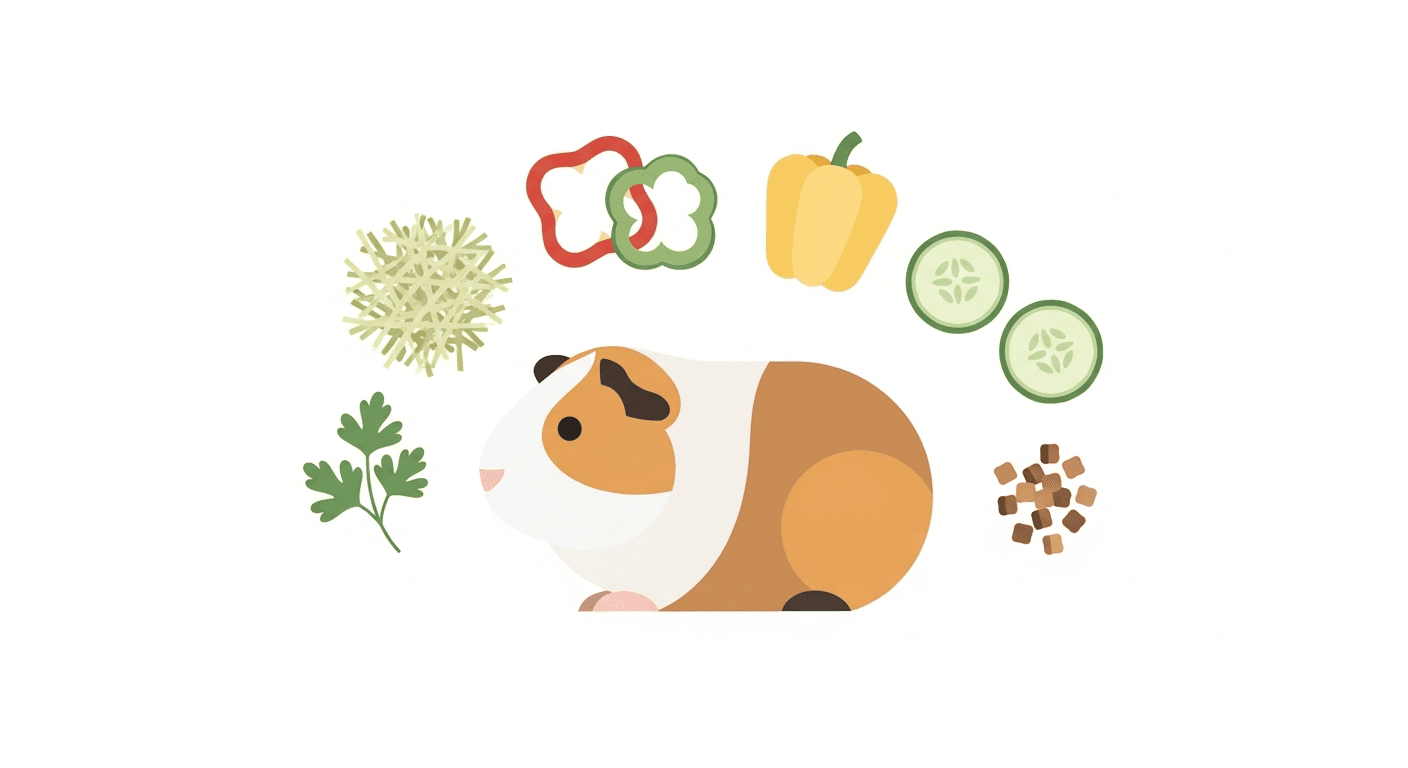
Complete Guinea Pig Diet Guide: What to Feed for Optimal Health
The right diet prevents most common guinea pig diseases. Learn the correct proportions of hay, vegetables, vitamin C sources, and pellets for healthy guinea pigs.
 🐹 Guinea Pig Health
Why Hay Is the Most Important Food for Guinea Pigs
Hay prevents the most common guinea pig diseases. Learn why it's so critical, how much to provide, and how to get a pellet-addicted guinea pig to accept more hay.
 🐹 Guinea Pig Health
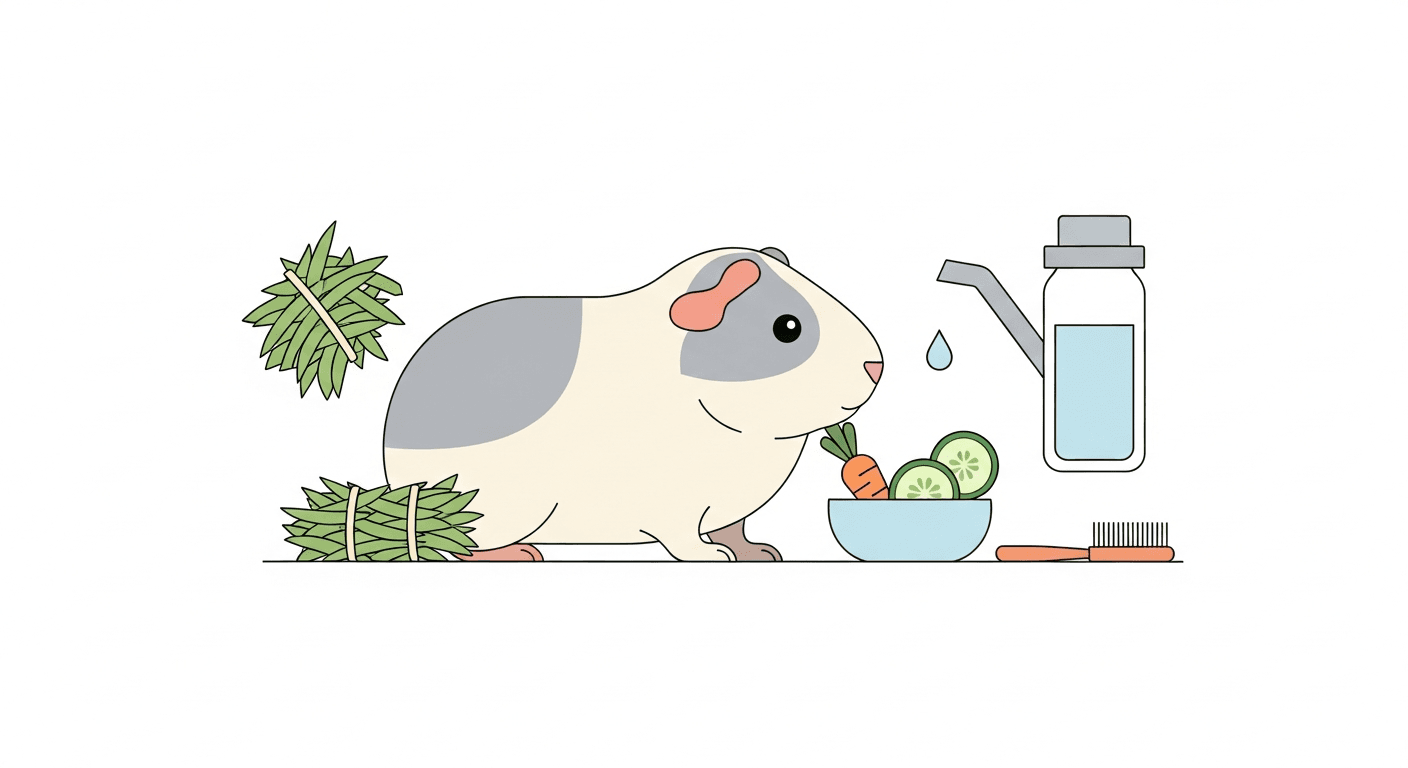
Daily Guinea Pig Care Routine: Essential Health Monitoring
A consistent daily care routine is the best protection against common guinea pig diseases. This checklist keeps you and your guinea pig on track every day.