
What Causes Sudden Limping in Dogs?
A dog that starts limping suddenly — one minute running fine, the next holding up a leg — has usually experienced something acute: a cut pad, a thorn in the foot, a twisted ankle from a bad landing, or a pulled muscle. These are often self-limiting and resolve with rest. However, sudden limping can also signal serious conditions: a fractured bone, a ruptured cruciate ligament (one of the most common orthopedic injuries in dogs), a dislocated joint, or even Lyme disease. Your job is to do a quick assessment to determine urgency before deciding whether to rush to the emergency vet or monitor at home overnight.
First 3 Steps You Can Take at Home
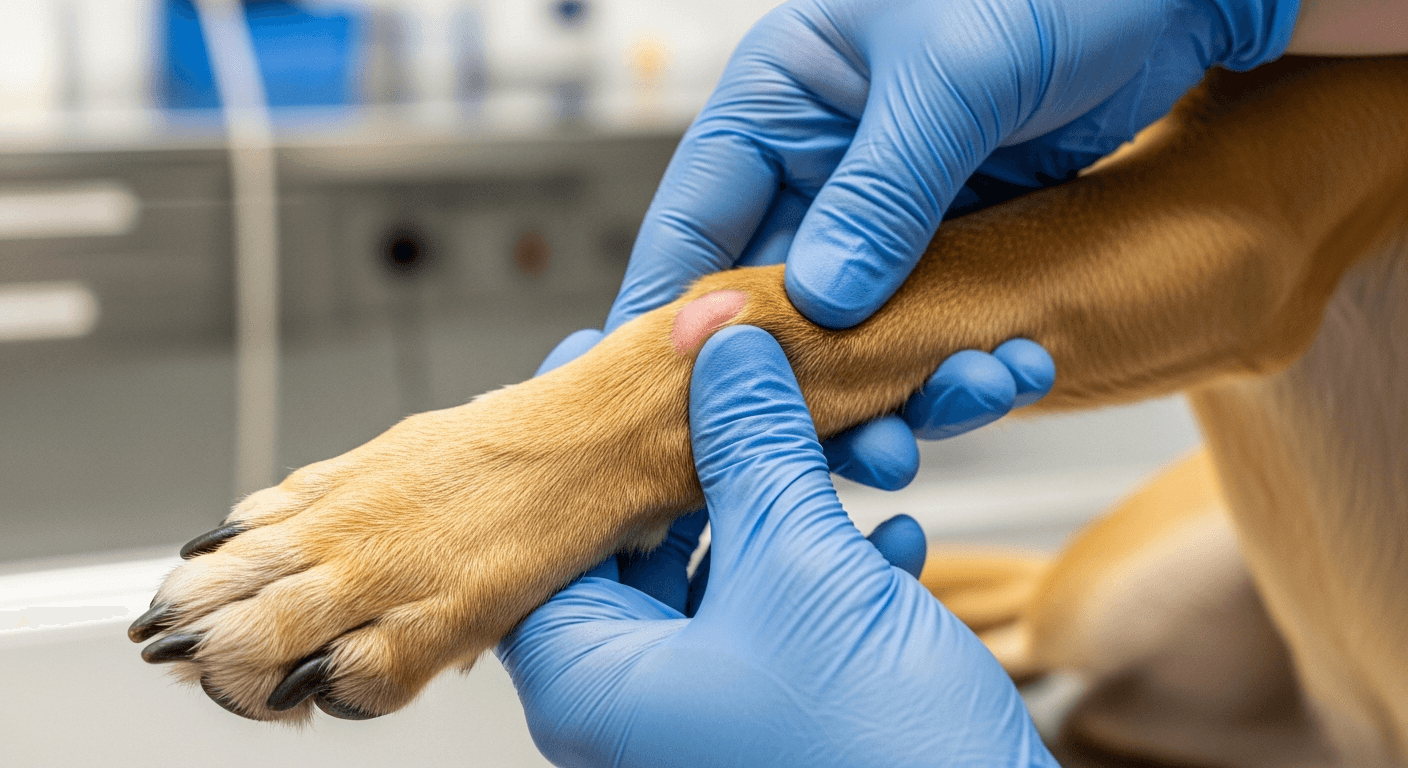
- Do a careful paw inspection: The paw is the site of many common acute limping causes. Gently hold the leg and examine each pad, between toes, and the nail bed. Look for: cuts, bleeding, swelling, embedded objects (glass, thorns, grass seeds), cracked pads, torn or broken nails, or anything obviously wrong. If you find something embedded but can't easily remove it without causing pain, leave it for the vet. If you spot a small cut, clean gently with saline and apply light pressure.
- Observe the limp itself: Watch how your dog moves. Are they putting any weight on the leg at all? Non-weight-bearing lameness (holding the leg completely off the ground) is more serious than weight-bearing lameness (limping but still touching the ground). Which joint does the movement seem to originate from — paw, wrist, elbow, shoulder, hip, or knee? Does the leg look swollen, bent at an unnatural angle, or deformed? This helps localize where the problem is.
- Rest and monitor for 24 hours (if not severe): If your dog is partially weight-bearing, the paw looks intact, and they're otherwise calm and comfortable, short-term rest is reasonable. Restrict activity — no stairs, no jumping, no running — and observe overnight. If they're improving with rest, a soft tissue injury is likely. If they're no better or worse after 24 hours, a vet visit is needed.
When to Go to the Vet Immediately
- Complete non-weight-bearing — won't touch the limb to the ground at all
- Visible bone, deformity, or extreme swelling of a joint or limb
- Crying or screaming in pain when touching the leg
- Limp appeared after a fall from height, being hit by a vehicle, or major trauma
- Limping in both hind legs simultaneously — possible spinal issue
Follow-Up Care Checklist
- ☐ Restrict activity — no jumping, stairs, or running during recovery
- ☐ Check the paw daily for healing if a wound was found
- ☐ Note if lameness improves, stays the same, or worsens over 48 hours
- ☐ Avoid NSAID medications from the pharmacy — dog-safe pain relief is different from human
- ☐ If prescribed anti-inflammatories, complete the full course
- ☐ Book a follow-up if limping returns after apparent recovery
📋 Log This With TailRounds
Note which leg is affected, the severity, and any activities before the limp started in the TailRounds daily log. Recurring lameness logs are very helpful for orthopedic assessments.
Start Free →Book a Vet Appointment
Any limping that hasn't fully resolved within 24–48 hours of rest should be seen by a vet. Cruciate ligament tears, for example, often cause a dog to weight-bear within days of injury — but without treatment, the joint deteriorates significantly over time. Book an appointment at Happy Paws Veterinary Clinic — same-week slots are usually available.
Summary for Your Clinic
Pet concern: Sudden Limping
Affected leg: [front left/right or back left/right], weight-bearing: [yes/partial/no]
Possible cause: [fall, rough play, unknown], paw checked: [yes/no — findings]
Duration: Started [X hours/days] ago
Questions for vet: Is an X-ray needed? Could this be a cruciate tear? What activity restrictions are recommended?
Related Articles
Continue Reading
 🦴 Dog Care
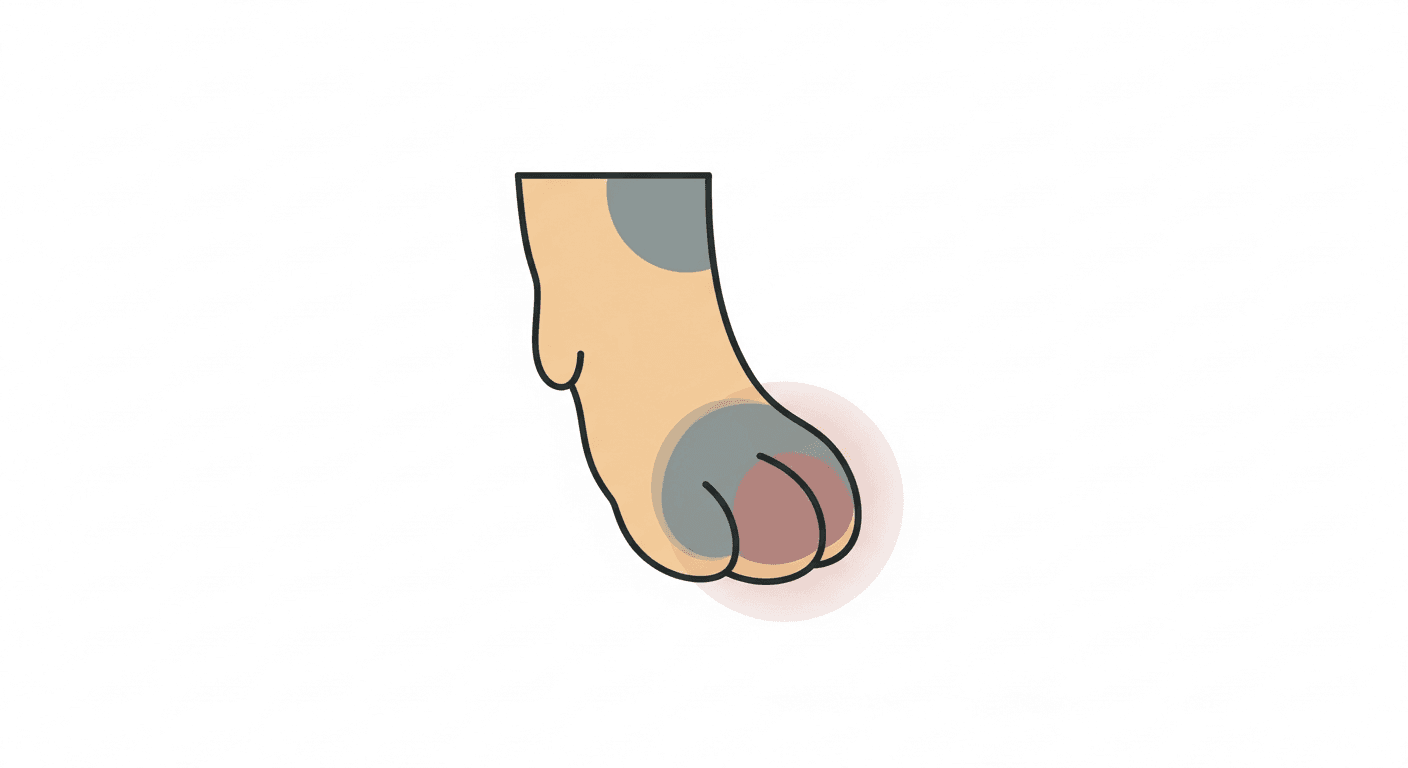
Dog Swollen Paw Causes and Care
Why your dog's paw is swollen — from infections and foreign bodies to allergies and fractures, with home care and vet guidance.
 🦴 Dog Care
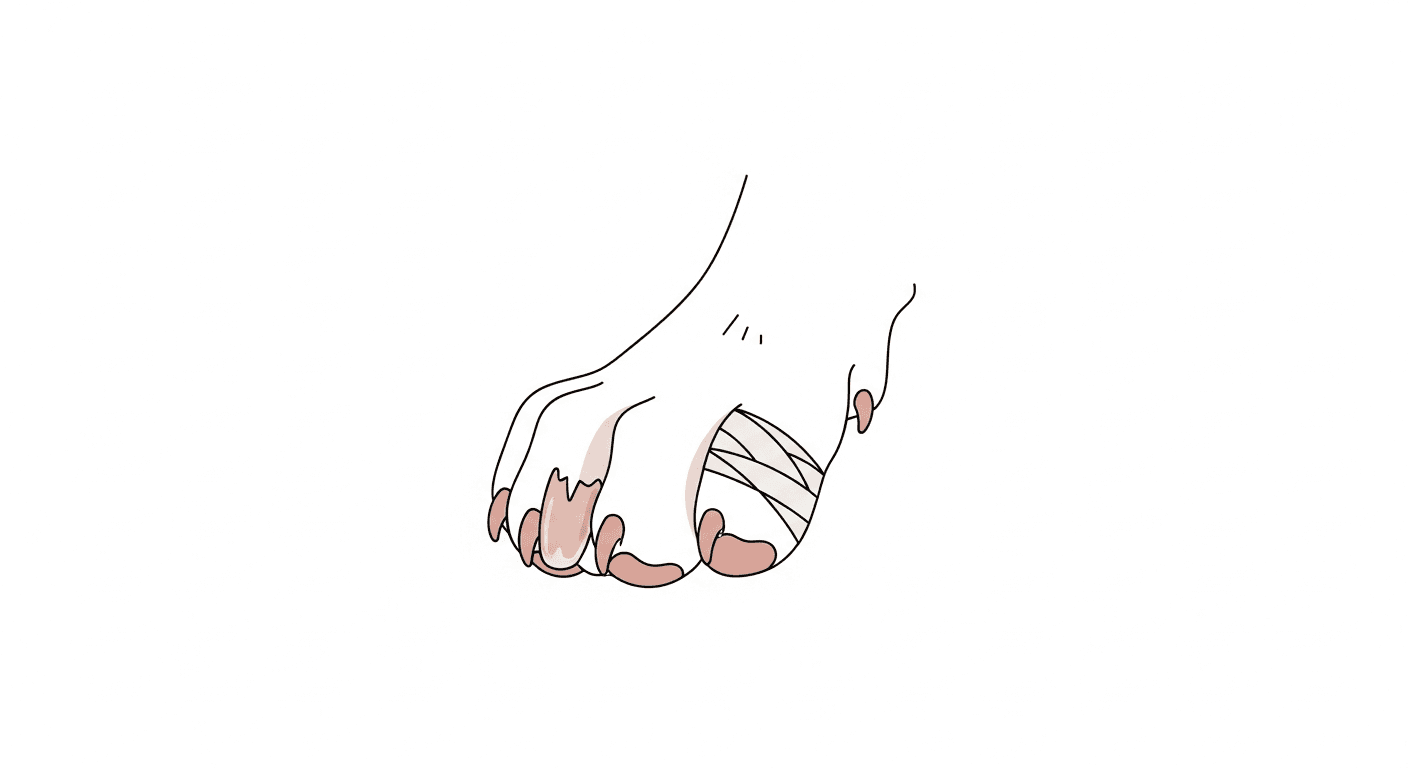
Dog Broken Nail Home Care
What to do when your dog breaks a nail — how to manage pain, stop bleeding, prevent infection, and when a vet visit is needed.
 🐕 Dog Health
Dog Shaking and Trembling: When Is It Serious?
From cold to pain to toxins — why dogs shake and tremble, and how to know when it's a medical emergency vs. normal behavior.