
What Causes Patchy Hair Loss in Dogs?
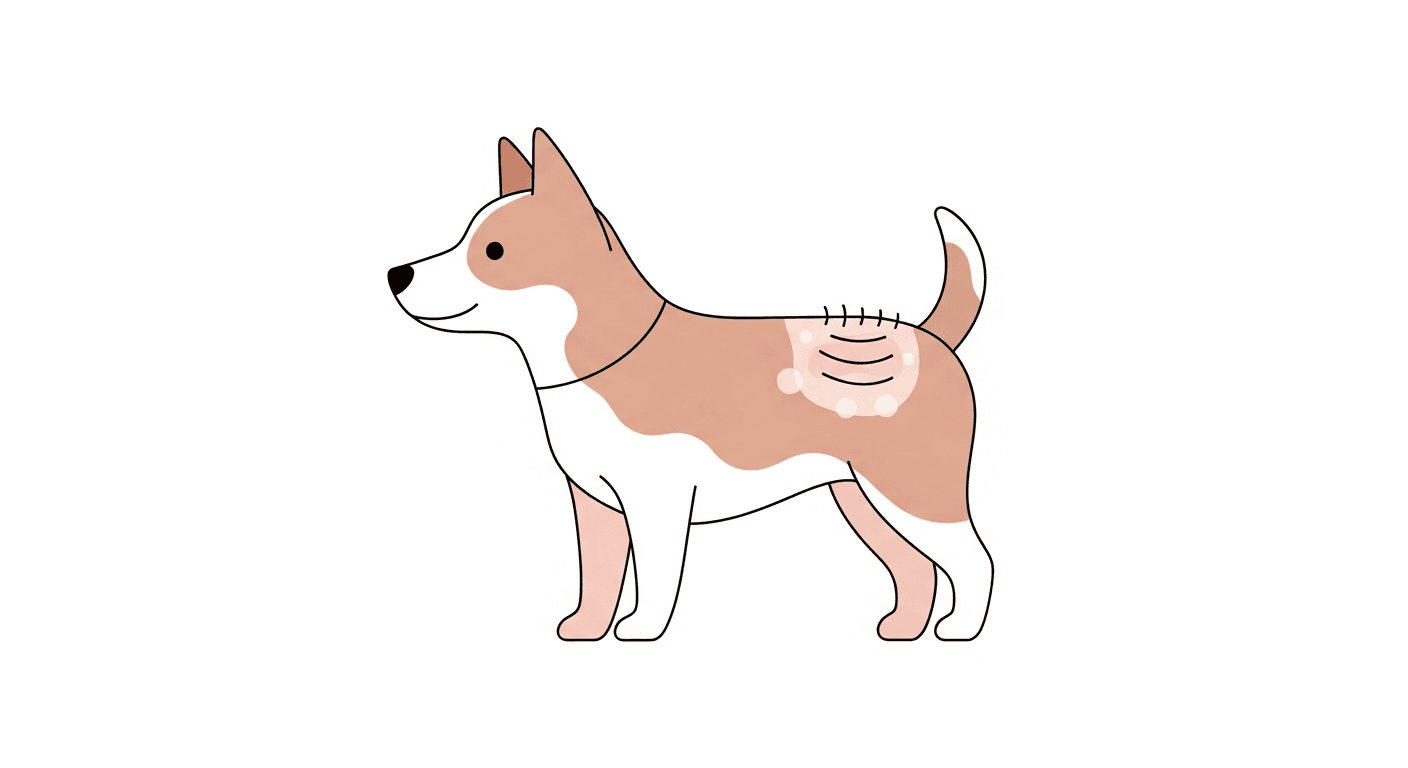
Hair loss (alopecia) in dogs can appear as small circular patches, large diffuse areas of thinning, or symmetrical patterns across the body. Unlike normal shedding, alopecia means hair isn't regrowing where it's been lost. The causes are diverse: mange (mite infestation), ringworm (a fungal infection, not an actual worm), bacterial infection, hypothyroidism, Cushing's disease, allergies causing self-trauma, and genetics in certain breeds. The pattern of hair loss and whether it's itchy or not often tells you a lot about the cause before any testing is done.
First 3 Steps You Can Take at Home
- Observe the pattern of hair loss: Is the hair loss circular and crusty (classic ringworm appearance)? Is it around the eyes and muzzle only (localized demodex mange in young dogs)? Is it symmetrical on both sides of the body (often hormonal)? Is it in an area your dog scratches constantly (allergy or flea-related self-trauma)? Each pattern suggests a different cause. Take close-up photos to show your vet.
- Check for contagion risk: Ringworm and sarcoptic mange are both contagious — to other pets and to humans. If you have multiple pets and one is developing bald patches alongside scratch or scab marks, isolate them until a vet can diagnose what's causing it. Ringworm glows under a UV (black) light, though not all strains do. If family members develop circular, itchy rashes on their skin, mention this to the vet.
- Don't self-treat without knowing the cause: Applying anti-itch creams or steroid sprays to mange can worsen the mite infestation dramatically. Using antifungal creams on a bacterial infection won't help. Treatment for hair loss must match the cause. The safest home step while waiting for a vet appointment is keeping the area clean (gentle saline wash), preventing your dog from scratching or licking the area, and monitoring whether it's spreading.
When to Go to the Vet Immediately
- Hair loss spreading rapidly across the body
- Bald patches with weeping sores, crusting, and extreme itch (possible mange)
- Hair loss accompanied by lethargy, weight gain, or pot belly (possible hormonal disease)
- Human family members developing circular itchy lesions (possible ringworm)
Follow-Up Care Checklist
- ☐ Wash bedding and any shared items if ringworm or mange is suspected
- ☐ Keep other pets separated until diagnosed
- ☐ Take photos weekly to monitor whether the area is growing, shrinking, or stable
- ☐ Complete prescribed treatment fully — mange and ringworm both need extended treatment
- ☐ Re-check thyroid levels annually if hypothyroidism is diagnosed
📋 Log This With TailRounds
Photo logs of affected areas in the TailRounds daily log help track response to treatment over time and give your vet clear visual progress to compare at follow-up appointments.
Start Free →Book a Vet Appointment
Hair loss almost always needs diagnosis before treatment — a skin scraping for mange, fungal culture for ringworm, or blood test for hormonal disease. Getting the diagnosis right saves time and prevents ineffective treatment. Book an appointment at Happy Paws Veterinary Clinic — same-week slots are usually available.
Summary for Your Clinic
Pet concern: Dog Hair Loss Patches
Location and pattern: [specific areas, symmetrical/asymmetrical, circular or diffuse]
Skin appearance: [crusty/weeping/normal/red], itch level: [high/low/none]
Other pets or people affected: [yes/no]
Questions for vet: What tests do we need to diagnose this? Could this be hormonal?
Related Articles
Continue Reading
 🐕 Dog Health
Dog Skin Allergies: Signs and Home Support
How to recognize dog skin allergies, tell them apart from infections, and support your dog at home while working toward a diagnosis.
 🐕 Dog Health
Dog Itching and Scratching: Likely Reasons
Discover why your dog keeps scratching — from fleas and allergies to dry skin and infections. Practical home care and vet advice.
 🐕 Dog Health
Dog Hot Spots: Early Treatment Steps
What dog hot spots are, why they happen, and the step-by-step approach to treating them at home before they spread.