
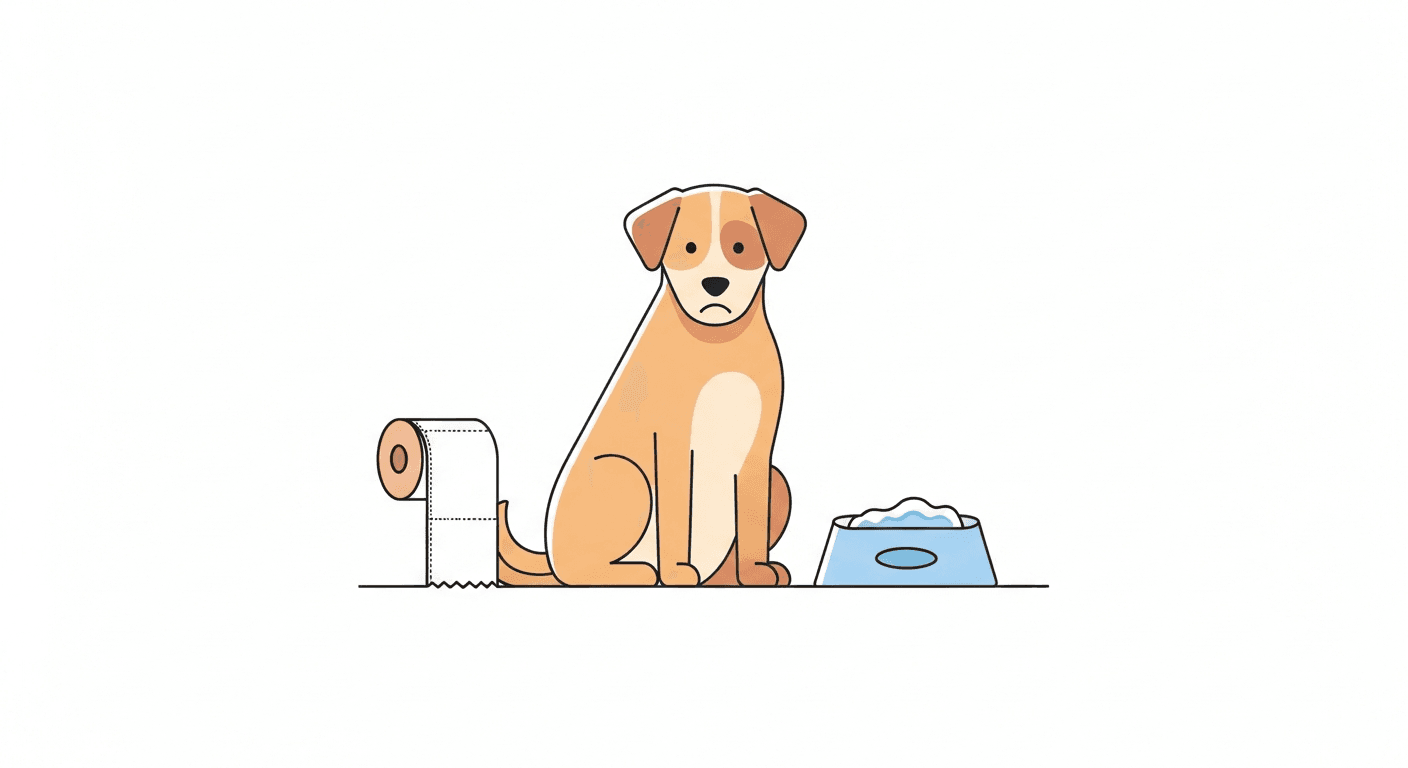
What Is Dog Constipation?
Constipation in dogs — difficulty or inability to defecate normally — is less common than diarrhea but can be just as uncomfortable and occasionally more serious. A healthy dog typically defecates 1–3 times per day. Constipation is when they're going less frequently, straining without producing much, or producing very dry, hard, pebble-like stools. Causes include dehydration, insufficient fiber in the diet, swallowed foreign material (fur, grass, small objects), medications with constipating side effects, and in older male dogs, enlarged prostate is a major factor. Occasional mild constipation often resolves with simple home measures.
First 3 Steps You Can Take at Home
- Increase water intake and exercise: The first line of treatment for mild constipation is hydration and movement. Both stimulate intestinal motility. Encourage drinking by using a pet fountain, adding a splash of low-sodium broth to water, or offering wet food instead of dry kibble for a few days. A good long walk or play session also helps get things moving — exercise stimulates the gut and can often trigger a bowel movement in a mildly constipated dog.
- Add fiber carefully: A small amount of plain canned pumpkin (pure pumpkin, not pie filling) added to food is a safe and gentle fiber source that helps soften stool. Start with 1–2 teaspoons for small dogs or 1–2 tablespoons for large dogs, once or twice daily. Psyllium husk (unflavored, plain Metamucil) mixed into food is another option many vets recommend. Don't give laxatives or enemas designed for humans without vet guidance — many are unsafe for dogs.
- Check for an obvious cause: Think about recent diet changes, any bones they may have eaten (cooked bones compact into chalky, rock-hard stool), whether they've been drinking less water due to weather or dental pain, and any new medications. Hair ingestion in long-coated dogs can cause blockages, especially if grooming has lapsed. Knowing the cause helps you prevent recurrence once the immediate issue resolves.
When to Go to the Vet Immediately
- Not defecated at all for 48+ hours despite trying
- Straining to defecate with nothing produced and obvious pain or distress
- Vomiting alongside constipation — possible obstruction
- Hard, distended abdomen
- Known or suspected ingestion of bones, foreign objects, or large amounts of fur
Follow-Up Care Checklist
- ☐ Increase daily water intake — consider wet food as a long-term diet component
- ☐ Add pumpkin or fiber supplement to food ongoing if prone to constipation
- ☐ Ensure adequate daily exercise for gut motility
- ☐ Stop giving bones — especially cooked ones — if this was a trigger
- ☐ Monitor stool consistency daily for the next week
- ☐ For older male dogs: discuss prostate screening at the next vet visit
📋 Log This With TailRounds
Track stool frequency and consistency in the TailRounds daily log. For dogs who get constipated regularly, logging diet and water intake alongside bowel habits often reveals a clear dietary cause.
Start Free →Book a Vet Appointment
If home remedies don't produce results within 24–48 hours, or if constipation keeps recurring, a vet check is appropriate. X-rays can assess how much stool is present and rule out a blockage, and the vet may recommend a safe enema or manual disimpaction under sedation. Book an appointment at Happy Paws Veterinary Clinic — same-week slots are usually available.
Summary for Your Clinic
Pet concern: Dog Constipation
Symptoms: Not defecating for [X days], [straining / no stool / hard pebbles], any vomiting
Diet: [dry/wet food], recent changes: [bones / new food / medication], water intake: [normal/reduced]
Home steps taken: Added pumpkin, increased exercise and water
Questions for vet: Is there a blockage? Do we need an enema? Is this diet or something structural?
Related Articles
Continue Reading
 🐕 Dog Health
Dog Diarrhea: When to Worry and When to Wait
A practical guide to dog diarrhea — home care steps, warning signs that need a vet, and how to firm up loose stools safely.
 🐕 Dog Health
Dog Blood in Stool: What It Means
Bright red vs. dark tarry blood in dog stool — what each means, which is an emergency, and the steps to take before calling your vet.
 🐕 Dog Health
Dog Scooting on the Floor: Causes and Solutions
Why dogs drag their bottoms on the floor and what you can actually do about it — from anal glands to parasites and irritation.