
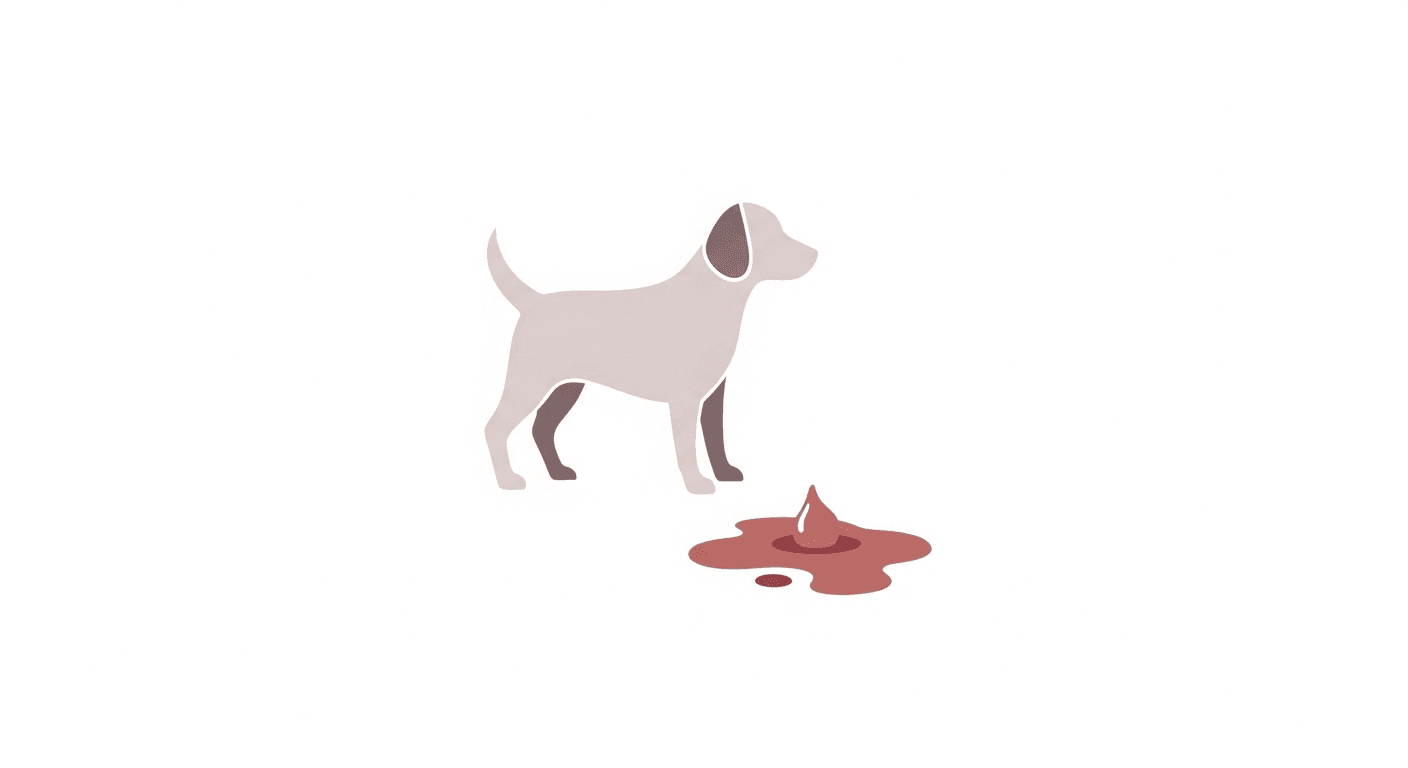
What Does Blood in a Dog's Stool Mean?
Finding blood in your dog's poop is understandably alarming — but the type of blood matters enormously in terms of urgency. Bright red blood (hematochezia) comes from the lower GI tract (large intestine, rectum) and is often less serious, caused by things like colitis, straining, or small tears from hard stools. Dark, tarry, very smelly stool (melena) indicates digested blood from higher up in the GI tract — stomach or small intestine — and is generally more concerning, potentially signaling ulcers, serious infections, or other significant conditions. Either type warrants a vet call, but melena is typically more urgent.
First 3 Steps You Can Take at Home
- Identify the type of blood: Look carefully at the stool. Fresh, bright red blood coating the outside of otherwise normal stool, or separate drops of blood — this is hematochezia. If the entire stool is very dark, almost black, tar-like, and has an unusually pungent smell — this is melena. Take a photo to show your vet if possible. This information changes how urgently your vet wants to see your dog.
- Look for accompanying symptoms: A single spot of blood with otherwise normal stool and a completely normal, happy dog is different from blood in stool alongside vomiting, lethargy, pale gums, or obvious pain. The full picture determines urgency. A dog that passed one bloody stool and is bouncing around wanting breakfast is very different from one that is collapsed and passing dark tarry stools — the latter is a same-day emergency.
- Check what your dog may have eaten: Dietary indiscretion — getting into garbage, eating raw meat, scavenging outside — is one of the most common causes of sudden blood in stool. New food transitions, a switch in protein source, and high-fat meals can all cause sudden colitis. Similarly, certain medications, especially NSAIDs, can cause GI ulcers. Knowing what your dog ate in the last 48 hours is useful context.
When to Go to the Vet Immediately
- Dark, tarry, melena-type stools — always warrants same-day evaluation
- Bright red blood with vomiting, lethargy, or pale/white gums
- Large amounts of blood or blood with every stool
- A puppy under 6 months with any blood in stool — parvovirus risk
- Known ingestion of rat poison, toxins, or certain medications
Follow-Up Care Checklist
- ☐ Take a photo of the stool for your vet
- ☐ Collect a stool sample in a clean container if possible
- ☐ Note when it happened and how many stools had blood
- ☐ Check your dog's gum color — pink and moist is normal
- ☐ Withhold food temporarily if dog is also vomiting; keep water available
- ☐ Follow up if blood returns after treatment
📋 Log This With TailRounds
Log stool changes, diet, and any unusual items your dog may have eaten in the TailRounds daily log. Recurrence patterns help your vet identify food triggers or chronic GI conditions.
Start Free →Book a Vet Appointment
Blood in stool needs investigation even when your dog seems otherwise fine — parasites, polyps, inflammatory bowel disease, and early tumors can all present this way before other symptoms appear. Book an appointment at Happy Paws Veterinary Clinic — same-week slots are usually available.
Summary for Your Clinic
Pet concern: Blood in Dog Stool
Type of blood: [bright red coating / dark tarry stool]
Frequency: [one episode / multiple stools], other symptoms: [yes/no — describe]
Recent diet changes or potential toxin exposure: [describe]
Questions for vet: Should we do a stool parasite test? Is this likely colitis or something more serious?
Related Articles
Continue Reading
 🐕 Dog Health
Dog Diarrhea: When to Worry and When to Wait
A practical guide to dog diarrhea — home care steps, warning signs that need a vet, and how to firm up loose stools safely.
 🐕 Dog Health
Dog Vomiting: What to Do First at Home
Learn the first steps to take when your dog vomits, which signs mean danger, and when to call your vet immediately.
 🐕 Dog Health
Dog Constipation Home Care Guide
How to recognize and safely manage dog constipation at home, what causes it, and when to call the vet for help.