
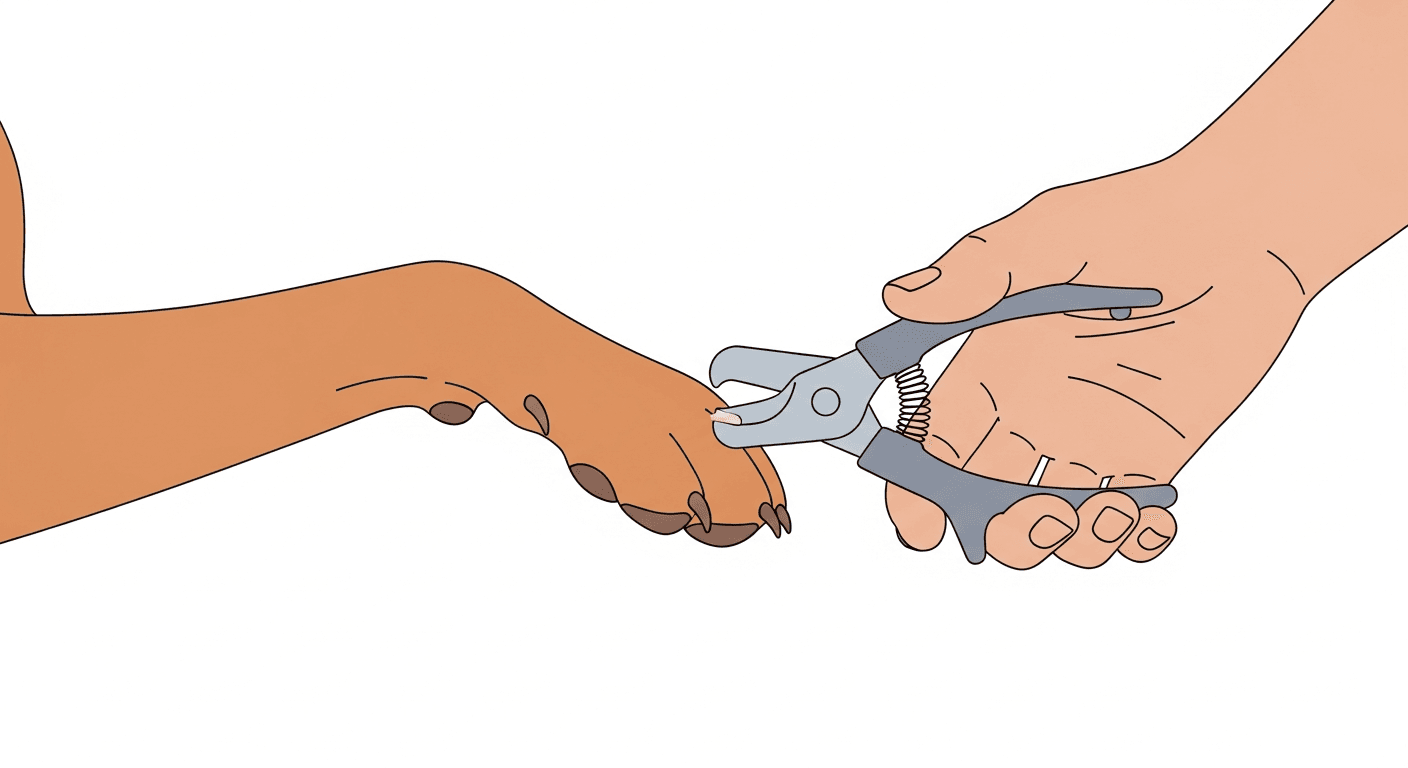
Why Regular Nail Trimming Matters
Dog nails that are too long cause real problems — they alter the way a dog walks, changing the angle of the toes and wrists in ways that lead to joint pain over time. Overgrown nails also curl back toward the pad, eventually growing into the skin — a painful condition requiring vet treatment. For dogs who walk mainly on soft surfaces (grass, carpet), nails won't wear down naturally the way they would on concrete or rock. Ideally, you should hear no clicking on hard floors — that's the target nail length. Most dogs need trimming every 3–4 weeks, though this varies by individual.
First 3 Steps You Can Take at Home
- Understand where the quick is: The quick is the blood vessel inside each nail. In dogs with clear or white nails, you can see it — a pinkish core running down the center of the nail. Trim only the curved, hooked tip well clear of the pink zone. In dark or black nails, the quick isn't visible. The key technique is to cut a thin slice at a time and look at the cut end — when it turns from white/grey to a solid darker circle in the center, you're very close to the quick and should stop. Keep styptic powder nearby for accidents.
- Get the right tools and use them correctly: Guillotine-style clippers can crush the nail if they're dull. Scissor-style (plier) clippers, especially with a quick-stop guard, are often more precise for at-home use. Grinding tools (like Dremel pet grinders) are an excellent alternative for dogs who hate the clipper sensation — they produce a fine result and are harder to accidentally trim too deep. Whichever tool you use, keep it sharp. A dull clipper crushes rather than cuts, which is painful even if you miss the quick.
- Build a positive association — especially for anxious dogs: Don't attempt to trim all nails in one session with a dog who's never been trained to accept handling. Start by simply touching the paws and rewarding heavily. Then introduce the clipper sound without clipping, then touch the clipper to the nails, then clip one nail, reward, stop. Build up to full sessions over days or weeks. Counter-conditioning (pairing nail trims with extremely high-value treats like cream cheese or peanut butter spread on a lick mat) transforms the experience for most dogs.
When to Go to the Vet Immediately
- Nail trimming accident causes bleeding that won't stop after 10 minutes of pressure
- You notice a nail growing into the pad — needs immediate professional removal
- Your dog is in severe distress or won't let you near the nails due to pain (not just anxiety)
Follow-Up Care Checklist
- ☐ Trim every 3–4 weeks — frequent short trims are easier than infrequent long ones
- ☐ Check dew claws separately — they don't contact the ground and can overgrow faster
- ☐ Keep styptic powder accessible whenever trimming
- ☐ End every session positively even if you only did one or two nails
- ☐ Consider a professional groomer for dogs who won't tolerate home trimming
📋 Log This With TailRounds
Log nail trimming dates in the TailRounds health log. Seeing how long you went between trims helps calibrate how quickly your dog's nails grow so you can stay ahead of the problem.
Start Free →Book a Vet Appointment
If your dog's nails have been severely neglected — curling significantly or growing into the pad — a veterinary visit is the right first step rather than attempting a major trim at home. The vet can address any pain, infection, or embedded nail safely. Book an appointment at Happy Paws Veterinary Clinic — same-week slots are usually available.
Summary for Your Clinic
Pet concern: Nail Care
Current nail length: [clicks on floor / extremely long / curling], last trimmed: [date]
Any nails of concern: [dew claw / specific nail]
Dog's tolerance: [calm / anxious / won't allow]
Questions for vet: Can you trim them this visit and show me technique? Is any nail growing into the pad?
Related Articles
Continue Reading
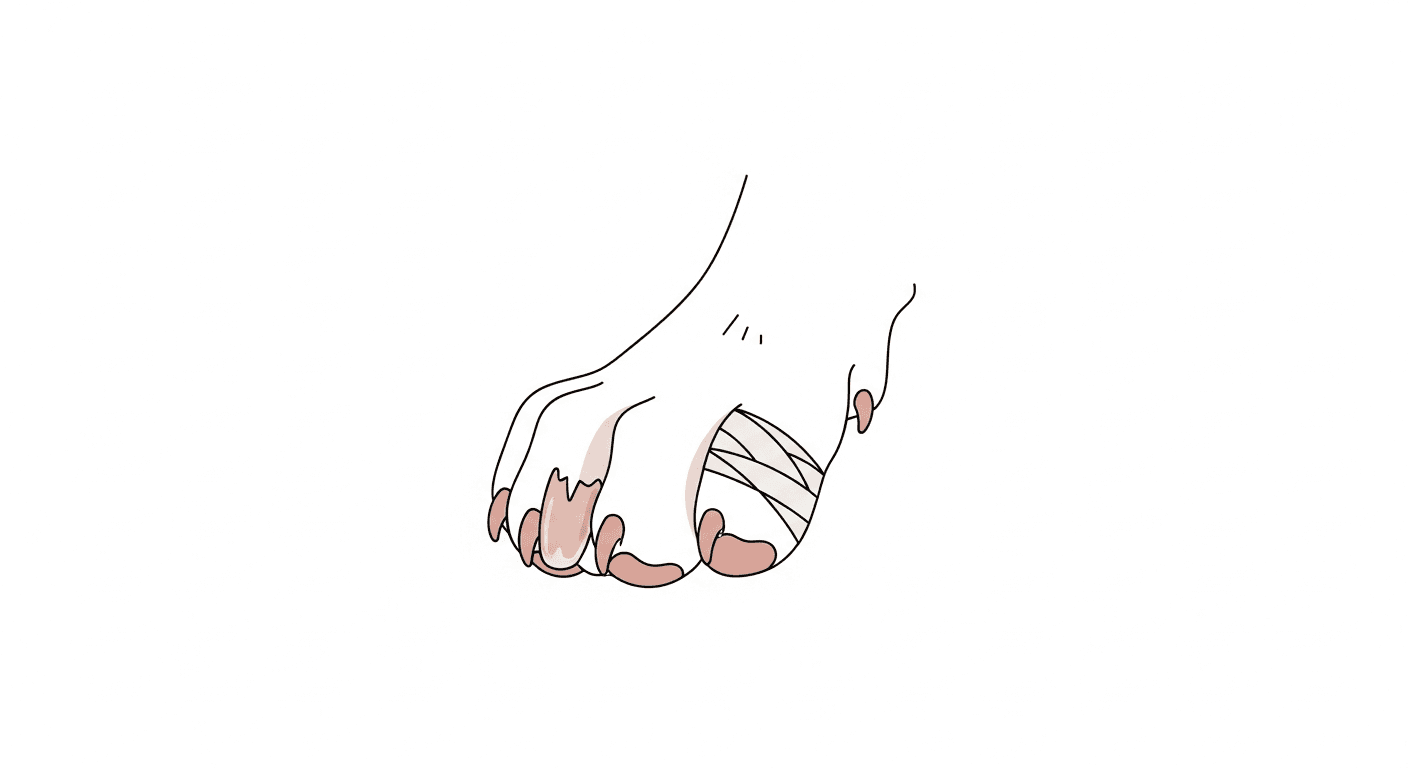 🦴 Dog Care
Dog Broken Nail Home Care
What to do when your dog breaks a nail — how to manage pain, stop bleeding, prevent infection, and when a vet visit is needed.
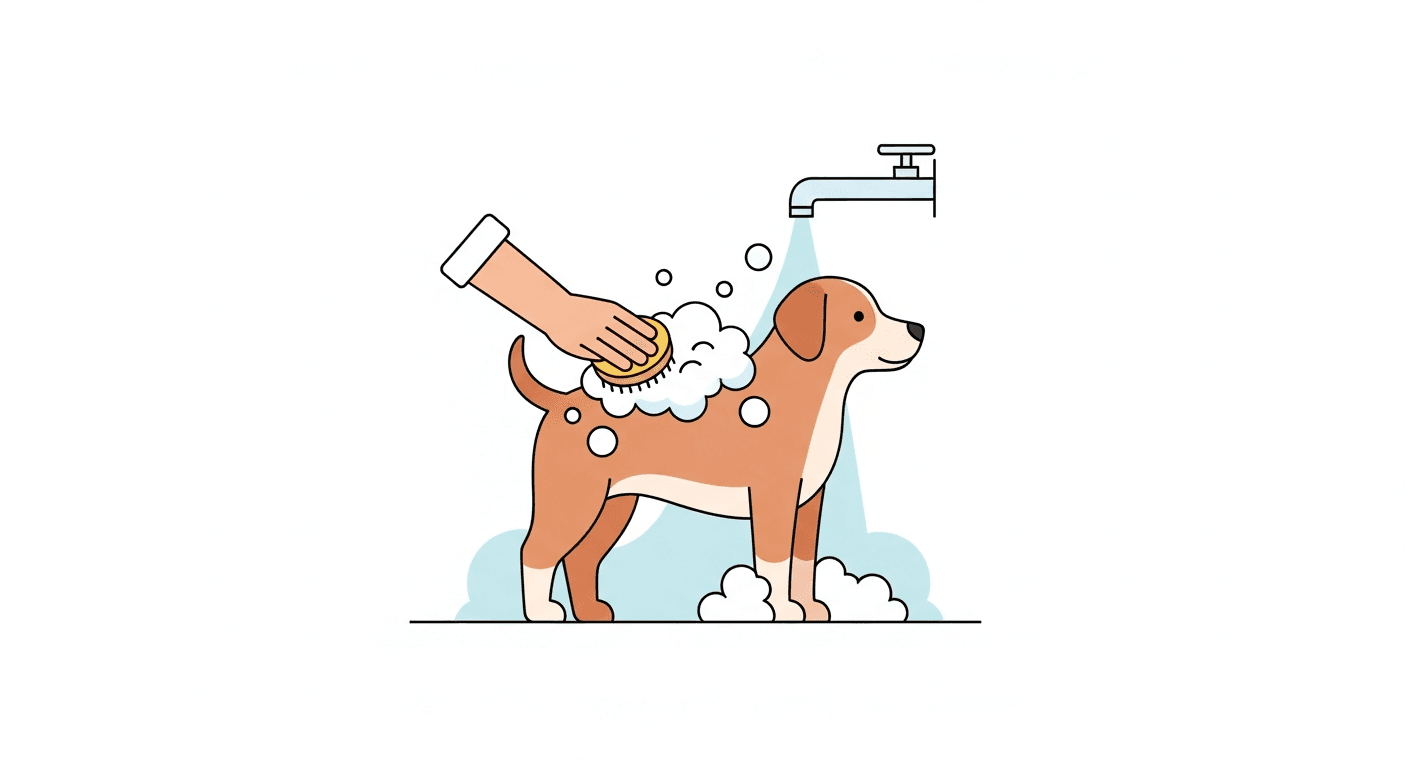 🦴 Dog Care
Dog Bathing Guide for Owners
How often to bathe your dog, which products to use, and step-by-step technique for a stress-free bath at home.
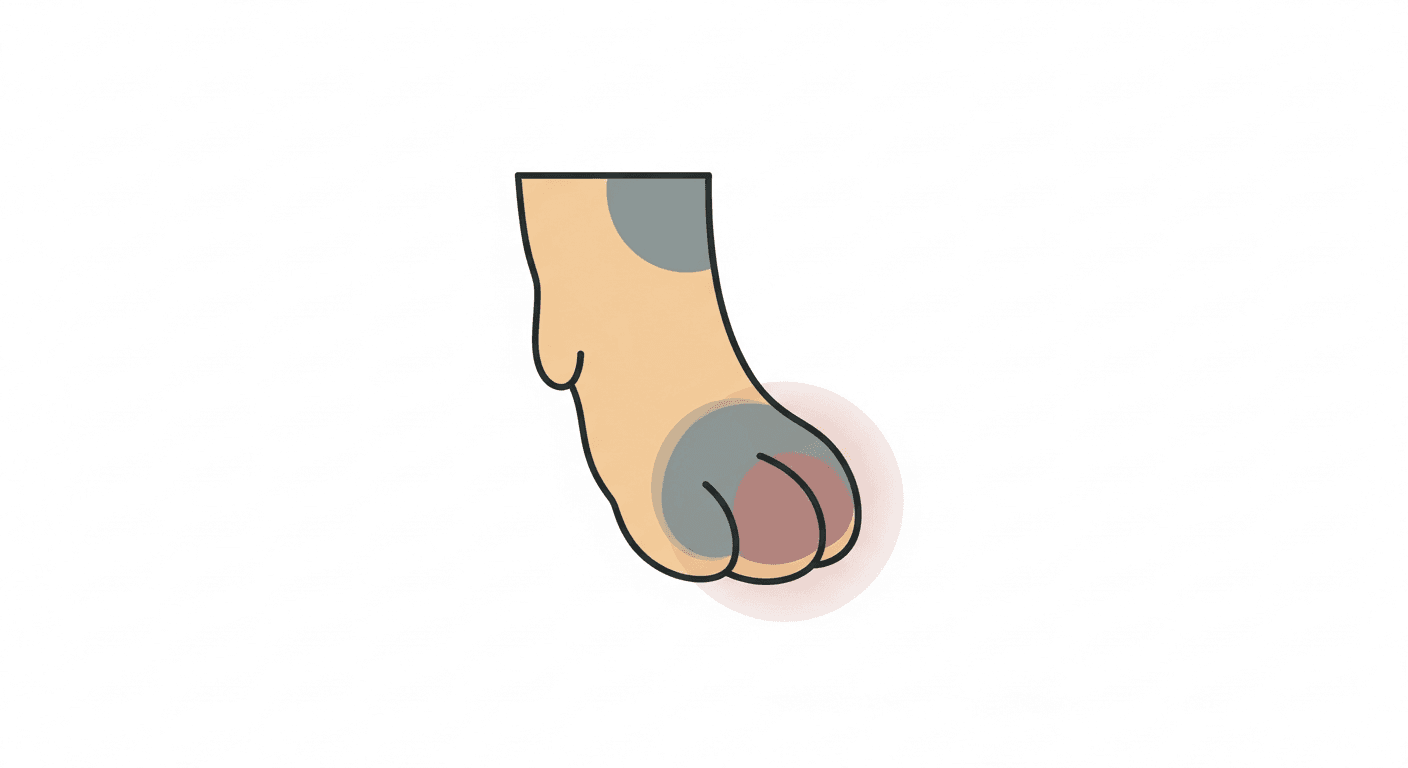 🦴 Dog Care
Dog Swollen Paw Causes and Care
Why your dog's paw is swollen — from infections and foreign bodies to allergies and fractures, with home care and vet guidance.