
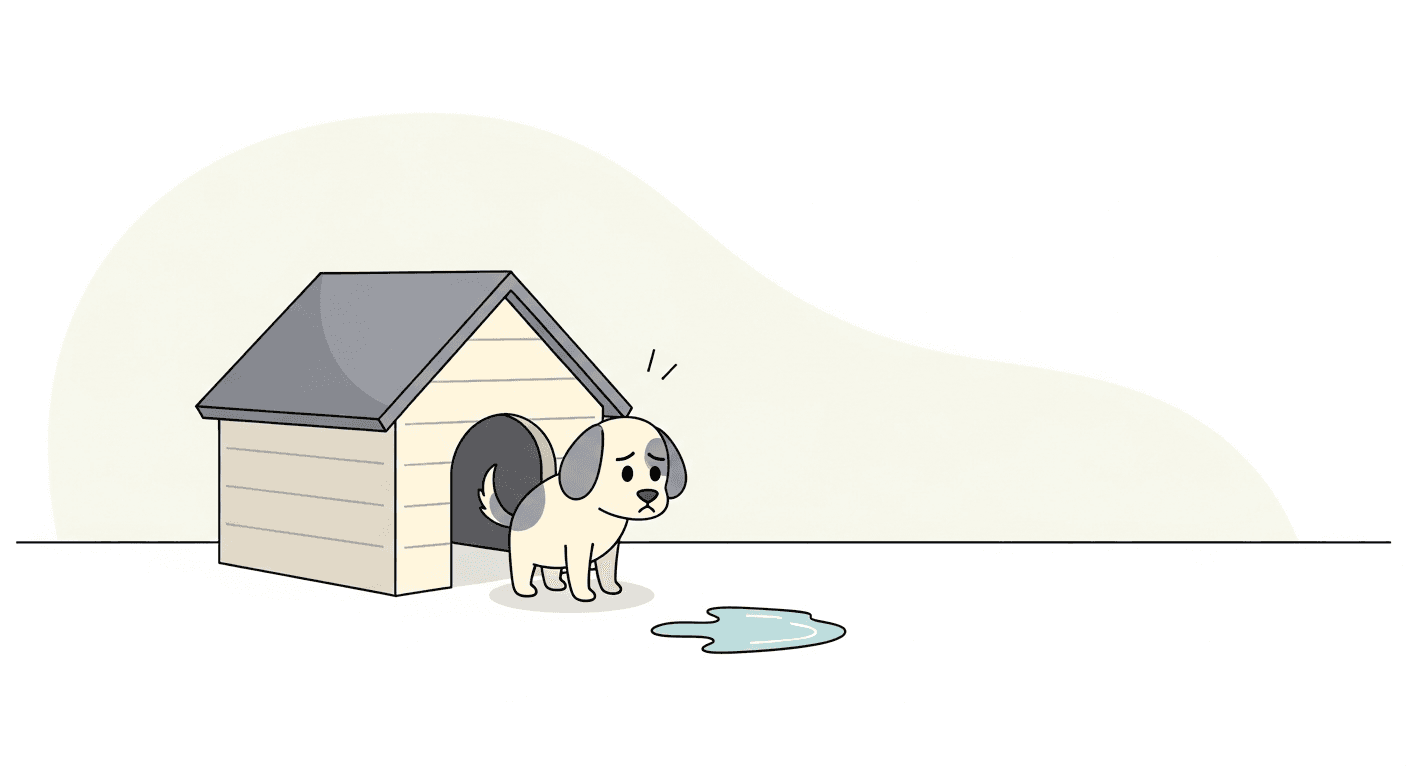
Why Do Dogs Regress in House Training?
A dog that was reliably house-trained suddenly having accidents indoors is both frustrating and often confusing. The natural instinct is to assume the dog is being disobedient — but dogs don't house-soil out of spite. Regression almost always has a cause: medical issues (UTI, bladder stones, kidney disease, diabetes, Cushing's, cognitive decline in seniors), environmental changes (new home, new baby, new pet, schedule disruption), inadequate bathroom opportunities, or incomplete initial training that only appeared complete in a stable environment. Identifying the cause is the first step to solving the problem.
First 3 Steps You Can Take at Home
- Rule out medical causes first — always: Before assuming this is a training problem, consider medical causes, especially if the regression was sudden in a dog with years of reliable house training. Urinary tract infections cause urgency and frequency — the dog literally cannot hold it long enough to wait. Diabetes and kidney disease cause dramatically increased urination volume. Cushing's causes both. A urine sample tested at the vet is fast, inexpensive, and immediately rules in or out the most common medical causes. For older dogs, cognitive dysfunction also causes confusion about appropriate elimination spots.
- Increase supervision and go back to basics temporarily: Even a dog who was house-trained for years may need a structured refresher if their training has regressed. Treat them like a new puppy for 2–4 weeks: take them outside after every meal, every drink of water, every nap, and every bout of play. Reward outdoor elimination immediately and generously. Watch for pre-elimination signs (circling, sniffing, squatting behavior) and interrupt immediately to take outdoors. This reset process is effective when combined with eliminating the medical cause first.
- Clean accidents thoroughly with enzymatic cleaner: Dogs are drawn back to spots where they've previously eliminated, because they can still smell the biological markers even when we can't. Standard household cleaners don't break down the urine proteins that dogs can detect. Use an enzymatic cleaner specifically designed for pet accidents — these break down the odor at the molecular level and significantly reduce re-soiling of the same spot.
When to Go to the Vet Immediately
- Straining to urinate or defecate — possible blockage
- Blood in urine
- Sudden, dramatic increase in urine volume in an older dog
- Incontinence (urine leaking without awareness) rather than intentional elimination
Follow-Up Care Checklist
- ☐ Vet check with urine sample to rule out UTI and other medical causes
- ☐ Increase outdoor bathroom opportunities temporarily — every 2 hours during the day
- ☐ Clean all previous accident sites with enzymatic cleaner
- ☐ Confine to a smaller, manageable space if not able to supervise closely
- ☐ Track accidents on a map of the house — patterns reveal predictable locations to watch
📋 Log This With TailRounds
Log accident times, locations, and outdoor bathroom success in the TailRounds daily log. Time-of-day patterns (always early morning? After meals?) reveal whether this is medical or behavioral.
Start Free →Book a Vet Appointment
Any sudden house-training regression in a previously reliable dog deserves a vet visit to rule out medical causes before retraining efforts begin — treating the wrong problem wastes time and frustrates everyone. Book an appointment at Happy Paws Veterinary Clinic — same-week slots are usually available.
Summary for Your Clinic
Pet concern: Dog House-Training Regression
Age and how long previously reliable: [details], type of accident: [urine/feces/both]
Pattern: [time of day, location], any recent life changes
Medical history: [increased thirst/drinking more, other symptoms]
Questions for vet: Should we test urine? Could this be cognitive decline in an older dog?
Related Articles
Continue Reading
 🐕 Dog Health
Dog Anxiety When Left Alone: Practical Solutions
Understanding and managing dog separation anxiety — from mild distress to severe panic, with practical strategies that actually work.
 🦴 Dog Care
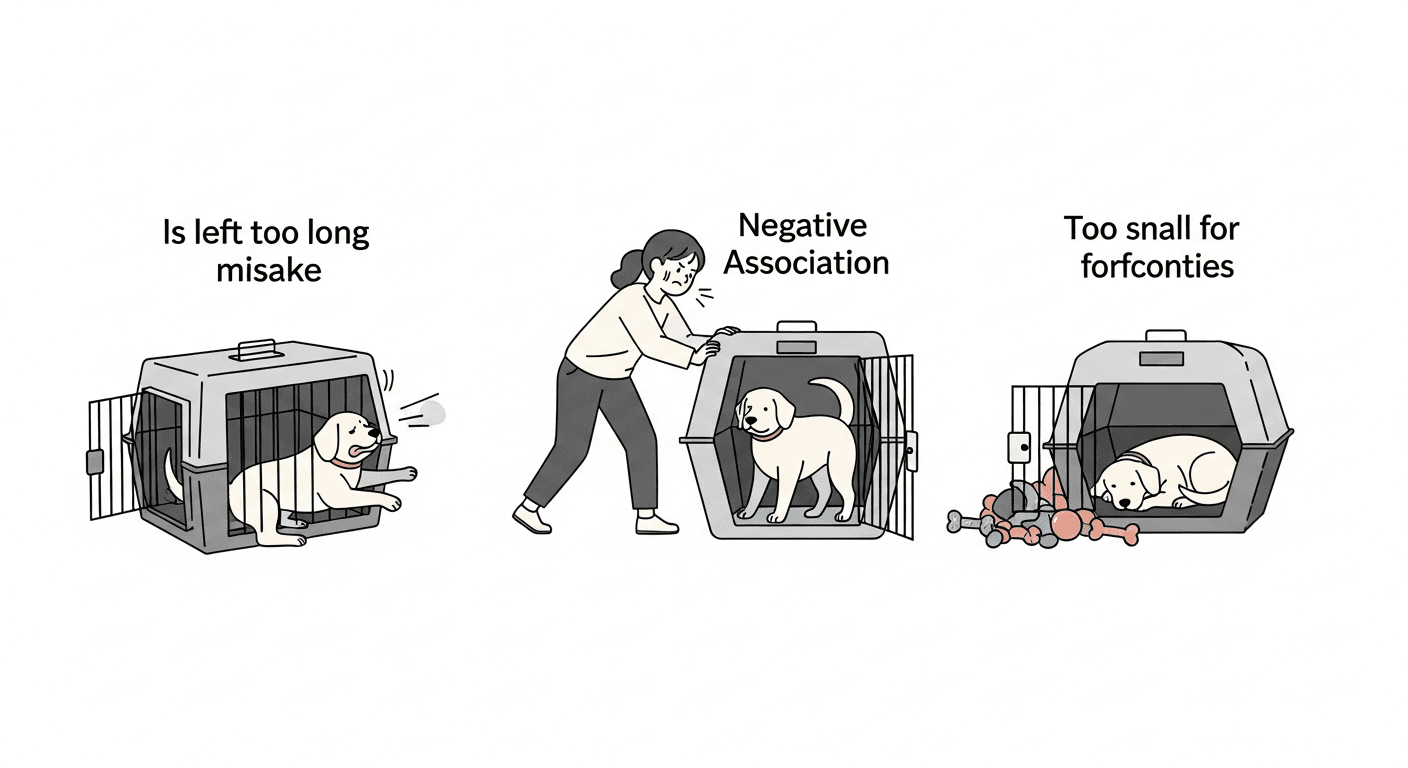
Dog Crate Training Mistakes to Avoid
The most common mistakes owners make with crate training and how to build genuine crate comfort that helps your dog feel safe, not trapped.
 🐕 Dog Health
Dog Drinking Too Much Water: Should You Worry?
Polydipsia in dogs — what excessive thirst signals, from diabetes to kidney disease, and when to get blood work done.