
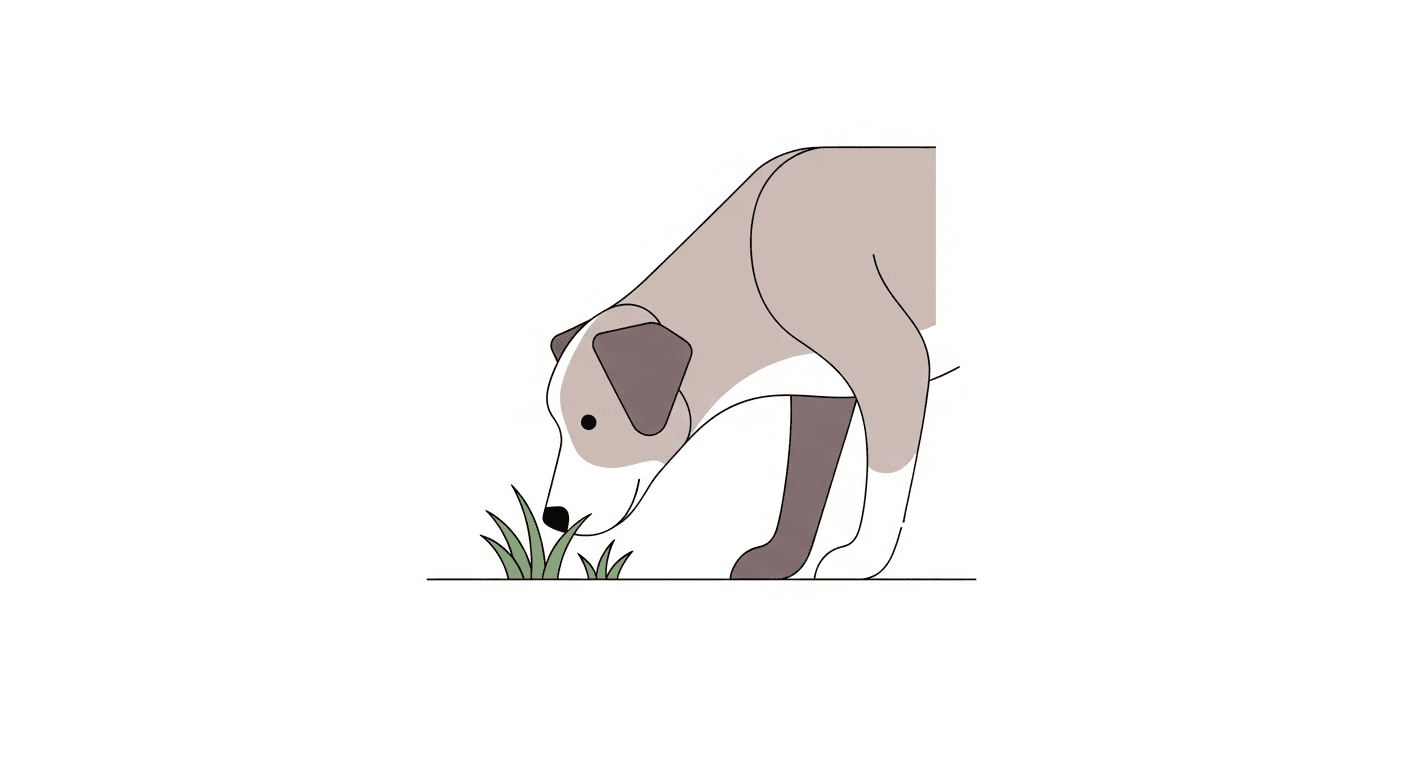
Why Do Dogs Eat Grass?
Almost every dog owner has seen their dog enthusiastically chomping grass at some point — and worried about it. The good news is that grass eating is almost always completely harmless, and despite popular belief, it doesn't reliably predict vomiting or mean your dog is sick. Studies have found that less than 25% of dogs that eat grass actually vomit afterward. Current veterinary thinking suggests dogs eat grass for several possible reasons: it's fibrous and stimulating to chew (the texture is satisfying), it may provide minor minerals or roughage, they may simply like the taste, or in some cases it may help settle a mildly upset stomach. It's a normal dog behavior.
First 3 Steps You Can Take at Home
- Assess what type of grass eating this is: There's a meaningful difference between a dog calmly grazing on a patch of lawn during a walk (normal, low concern) and a dog urgently seeking out and frantically consuming large quantities of grass (potentially signs of nausea). If your dog is eating grass in a panicked, frantic way and then vomiting repeatedly, the grass eating is likely a response to nausea rather than a cause of vomiting. Watch the pattern over several episodes.
- Check that the grass is safe: The grass itself is not the concern in most cases — it's what's been applied to it. Herbicides, pesticides, fertilizers, slug pellets, and other lawn treatments can be toxic to dogs. Avoid letting your dog graze on lawns you know have been chemically treated, on roadsides (car exhaust residue), or near golf courses where chemicals are frequently applied. Offer a clean indoor alternative like growing a small pot of wheatgrass for dedicated grass-eaters.
- Ensure adequate dietary fiber: Some dogs appear to eat grass more when their diet is low in fiber. If your dog is a frequent, enthusiastic grass-eater, adding a small amount of dietary fiber (plain canned pumpkin, cooked sweet potato) may reduce the grass grazing behavior over time. Switch to a high-quality food with adequate fiber content if you're unsure whether the current diet is nutritionally complete.
When to Go to the Vet Immediately
- Frantic, repeated grass consumption followed by repeated vomiting — suggests significant nausea from another cause
- Suspected ingestion of chemically treated grass
- Blood in vomit after grass eating
Follow-Up Care Checklist
- ☐ Observe the pattern — calm grazing vs. frantic consuming
- ☐ Avoid chemically treated lawns
- ☐ Consider growing a pet-safe grass pot indoors for frequent grazers
- ☐ Check diet fiber content — consider adding plain pumpkin
📋 Log This With TailRounds
Log grass eating episodes alongside any GI symptoms in the TailRounds daily log. If frantic grass eating consistently precedes vomiting, this pattern is useful information for your vet to investigate the underlying nausea cause.
Start Free →Book a Vet Appointment
If grass eating is frequent, frantic, and reliably followed by vomiting, a GI check-up is worthwhile. Chronic nausea from gastritis, acid reflux, or GI inflammation can cause this behavior. Book an appointment at Happy Paws Veterinary Clinic — same-week slots are usually available.
Summary for Your Clinic
Pet concern: Dog Eating Grass
Behavior pattern: [calm grazing / frantic consuming], vomiting afterward: [yes/no/sometimes]
Diet: [current food and fiber content], any recent GI symptoms
Questions for vet: Could chronic nausea be driving this? Should we change diet fiber levels?
Related Articles
Continue Reading
 🐕 Dog Health
Dog Vomiting: What to Do First at Home
Learn the first steps to take when your dog vomits, which signs mean danger, and when to call your vet immediately.
 🐕 Dog Health
Dog Diarrhea: When to Worry and When to Wait
A practical guide to dog diarrhea — home care steps, warning signs that need a vet, and how to firm up loose stools safely.
 🐕 Dog Health
Dog Not Eating: Common Causes and What to Do
Why your dog might stop eating, which causes are harmless, and which ones need a vet visit. Practical home steps included.