
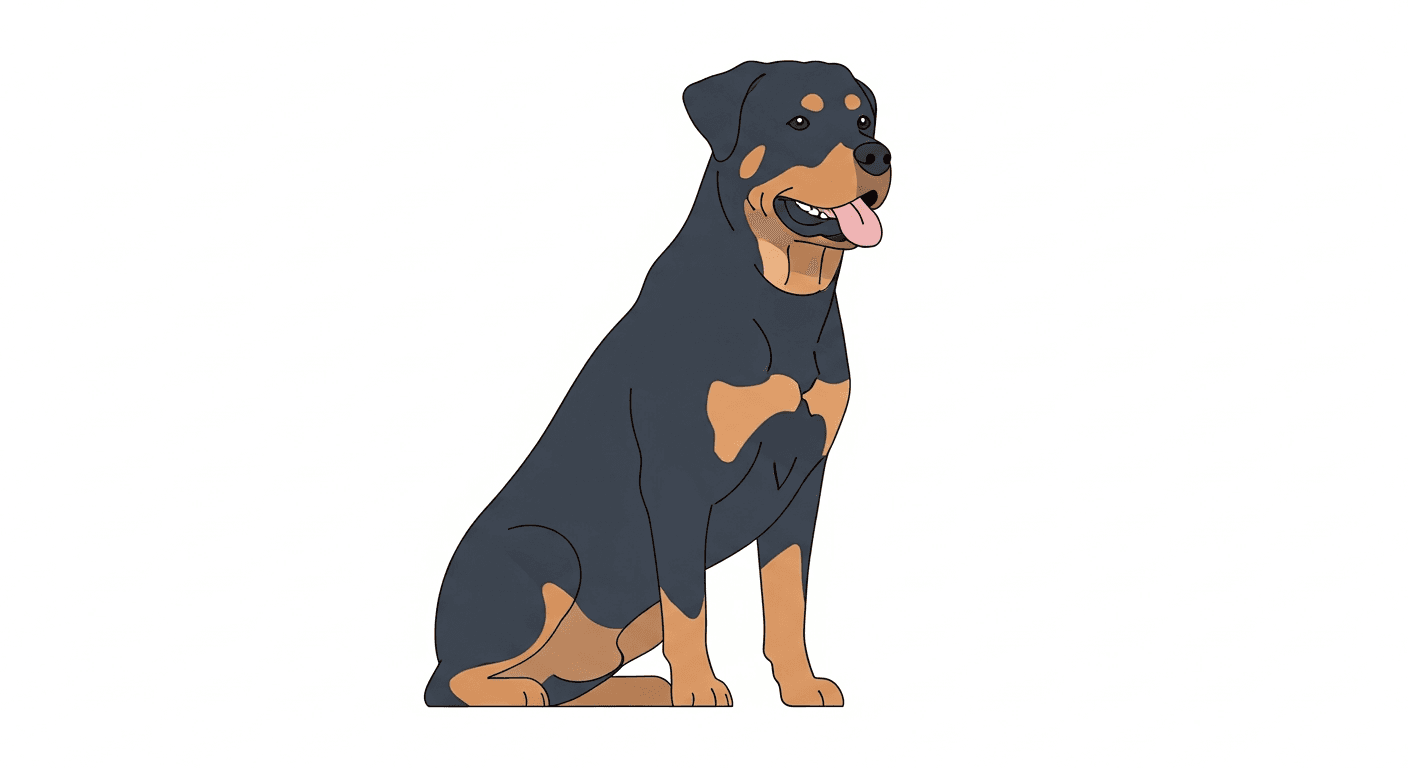
Breed Overview
The Rottweiler is a powerful, intelligent, and deeply loyal breed with a history stretching back to ancient Rome. Roman drover dogs accompanied the Roman legions across Europe, herding cattle and guarding camps. In the German town of Rottweil, these dogs were refined into the "Rottweiler Metzgerhund" (Rottweil butcher's dog), used to herd livestock and pull carts loaded with meat. When cattle drives became obsolete in the 19th century, the breed nearly disappeared before being revived as a police and military dog — a role it excels in to this day.
Rottweilers are large, robust dogs. Males stand 24–27 inches at the shoulder and weigh 95–135 pounds. Females are 22–25 inches and 80–100 pounds. Their distinctive black coat with rust-colored markings on the face, chest, and legs is immediately recognizable. Their broad head, powerful jaw, and compact, muscular body convey strength without excess.
The Rottweiler is widely misunderstood due to media bias and irresponsible ownership. In the hands of a knowledgeable, committed owner, a well-bred, properly trained Rottweiler is a calm, confident, and deeply affectionate companion.
Temperament and Personality
The well-bred Rottweiler is calm, confident, and courageous. They are not aggressive by nature — aggression in Rottweilers is almost always the product of poor breeding, inadequate socialization, or abusive training. True temperament traits include:
- Deeply loyal: Rottweilers form powerful bonds with their families and can be protective in appropriate measure. They are devoted companions who often shadow their owners throughout the day.
- Self-assured: A well-socialized Rottweiler does not react to strangers with fear or unprompted aggression. They observe and assess before reacting.
- Intelligent and trainable: Rottweilers are highly trainable when handled by a confident, consistent owner using positive reinforcement methods with clear boundaries.
- Playful and goofy with family: Behind their imposing exterior, Rottweilers have a surprisingly playful and affectionate side that delights their families.
- Strong-willed: They will test boundaries, especially during adolescence. Consistent, patient leadership is required.
Care Needs
- Grooming: The Rottweiler's short, dense double coat requires weekly brushing and sheds moderately year-round. Bathe every six to eight weeks. Clean ears monthly and trim nails every three to four weeks.
- Training: Obedience training is not optional for a Rottweiler — it is a public safety responsibility. Begin with puppy obedience classes and progress to intermediate and advanced work. The Rottweiler excels in protection sports (Schutzhund), tracking, obedience, and weight pulling. Socialization from puppyhood must be extensive and ongoing.
- Containment: A securely fenced yard is essential. A Rottweiler that escapes and frightens neighbors creates liability issues and damages the breed's reputation.
- Socialization: Expose your Rottweiler puppy to many different people, environments, and situations in a positive context. A well-socialized Rottweiler is a safe, stable dog. A poorly socialized one is not.
Health Risks and Common Conditions
Rottweilers are generally healthy but have some breed-specific predispositions:
- Hip and elbow dysplasia: Common in large, heavy breeds. Purchase from OFA-certified parents and maintain a lean weight throughout life.
- Osteosarcoma (bone cancer): Large breeds, especially Rottweilers, have a disproportionately high risk of osteosarcoma. Limping in an adult Rottweiler warrants prompt veterinary evaluation.
- Bloat (GDV): As a deep-chested large breed, Rottweilers are at significant risk. Feed two smaller meals daily rather than one large meal and avoid vigorous exercise immediately post-feeding.
- Heart disease: Subaortic stenosis and dilated cardiomyopathy appear in the breed. Annual cardiac screening is advisable.
- Joint problems: Their heavy body puts significant stress on joints. Weight management and appropriate exercise protocols protect long-term joint health.
Track your Rottweiler's weight, gait, and appetite in the TailRounds Daily Log. Book a vet appointment at Happy Paws for annual wellness exams and cardiac screening, or find a clinic experienced with large working breeds in your area.
Exercise Needs
Adult Rottweilers need 60–90 minutes of vigorous exercise daily. Good options include:
- Brisk leash walks and jogging
- Structured obedience and protection sport training
- Swimming and retrieving games
- Weight pulling (with appropriate conditioning)
- Off-leash play in a securely fenced area
Is a Rottweiler Right for You?
A Rottweiler is a magnificent companion for an experienced, confident dog owner who understands working breeds and can commit to thorough training, socialization, and daily exercise. They are not suitable for first-time dog owners, owners who cannot or will not invest in training, or people looking for a low-maintenance pet. Check local breed-specific legislation before acquiring a Rottweiler, as some municipalities have restrictions. For the right owner, a well-bred Rottweiler is one of the most loyal, impressive, and rewarding dogs imaginable.
Continue Reading
 🐶 Dog Breeds
German Shepherd: The Ultimate Guide to This Loyal Working Breed
Discover everything about German Shepherds — their intelligence, loyalty, care requirements, health concerns, and whether this iconic breed is right for your home.
 🐶 Dog Breeds
Doberman Pinscher: The Elegant Guardian's Complete Breed Guide
A full guide to the Doberman Pinscher — intelligence, loyalty, health concerns including DCM, training requirements, and what makes this breed an extraordinary companion.
 🐶 Dog Breeds
Great Dane: The Gentle Giant — Living With the World's Tallest Dog
A complete guide to the Great Dane — majestic size, gentle temperament, giant breed health challenges, exercise needs, and what owning one of the world's largest dogs actually looks like.