
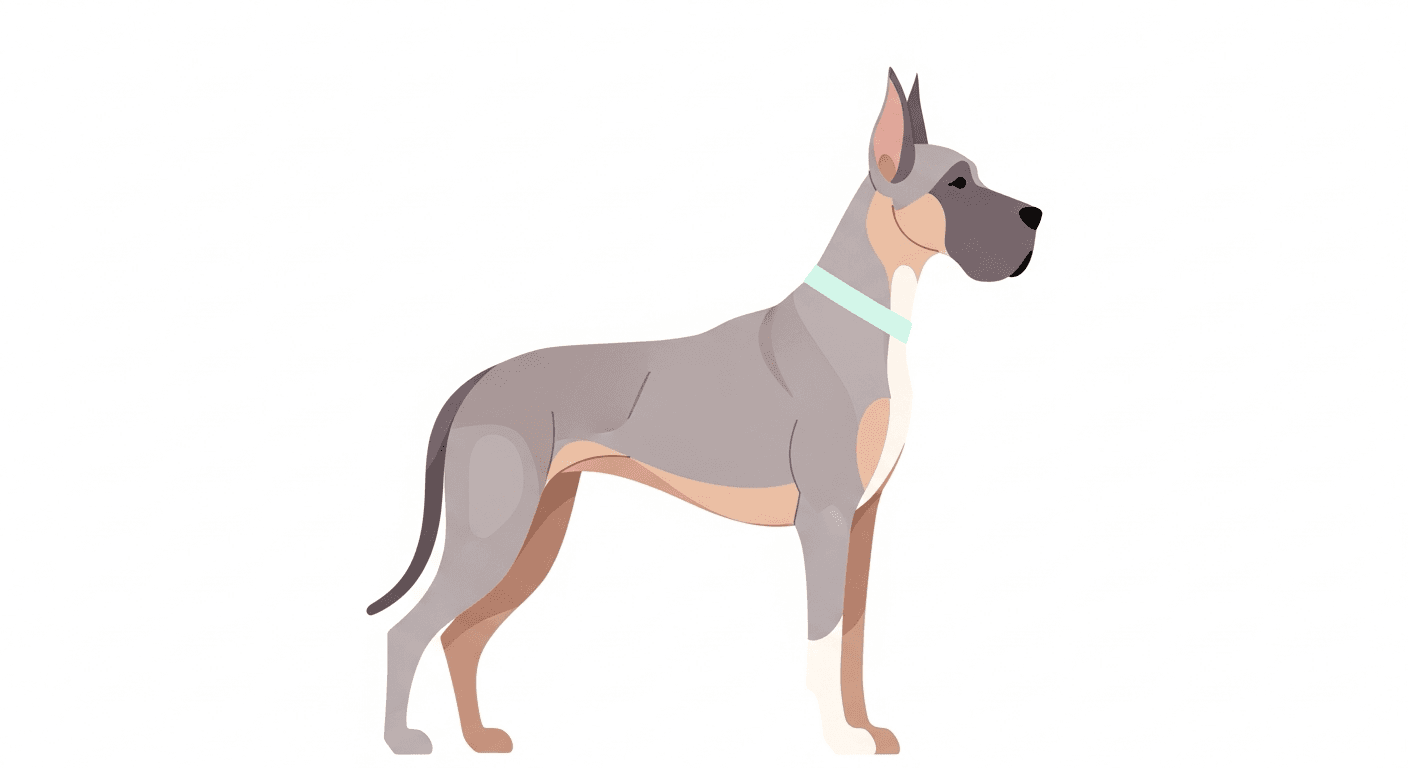
Breed Overview
The Great Dane is the tallest dog breed in the world. Despite its name, the breed originated in Germany, not Denmark — it was developed from large boarhounds used to hunt wild boar and bears in medieval Germany. By the 17th and 18th centuries, these dogs had become status symbols among German nobility, refined into the elegant, aristocratic breed we know today. The Great Dane Club of Germany established the breed standard in 1880. The tallest Great Dane ever recorded (Zeus) stood 44 inches at the shoulder — the height of a small pony.
Males stand 30–32 inches minimum at the shoulder and typically weigh 140–175 pounds. Females stand 28–30 inches and weigh 110–140 pounds. Their coat is short, smooth, and glossy, coming in striking patterns including fawn with black mask, brindle, harlequin (white with irregular black patches), mantle (black with white), blue (steel-blue), and black. Their majestic, elegant carriage belies the enormous gentleness within.
Temperament and Personality
Great Danes are famously called "gentle giants" — and the description is entirely accurate. Despite their imposing size, they are among the most good-natured and affectionate of all breeds:
- Gentle and patient: Great Danes are remarkably gentle with children, other pets, and strangers. Their size can be intimidating, but their temperament is rarely anything but kind.
- Affectionate and devoted: They are very people-oriented dogs that want to be close to their family. Danes frequently attempt to be lap dogs, apparently unaware of their size.
- Even-tempered: Well-bred Great Danes are calm, steady, and unflappable. They are not hyperactive or nervy.
- Friendly with strangers: Most Danes are approachable and welcoming with new people, though they serve as natural deterrents by virtue of their size.
- Sensitive: Despite their size, Great Danes are emotionally sensitive dogs that respond poorly to harsh correction. Positive, gentle training works best.
Care Needs
- Grooming: Their short coat is low-maintenance — weekly brushing with a rubber mitt and occasional bathing are sufficient. They shed moderately year-round.
- Space requirements: Great Danes need adequate indoor space. A dog that weighs 150 pounds requires substantial room to move comfortably. Surprisingly, they can adapt to moderately sized homes and even apartments if exercised adequately, but tiny studio apartments are not appropriate.
- Training: Begin obedience training the day you bring your Dane puppy home. A poorly trained adult Great Dane — with its 150 pounds of enthusiasm — is genuinely unmanageable and potentially dangerous through exuberance alone, not aggression. Positive reinforcement from puppyhood is essential.
- Feeding: Great Danes must be fed from elevated feeders to prevent neck strain. Feed two to three smaller meals daily to reduce bloat risk. Use large-breed puppy food and avoid rapid growth during puppyhood, which worsens skeletal development problems.
- Joint protection: Provide orthopedic beds and ramps where possible. Avoid high-impact exercise on hard surfaces with growing puppies.
Health Risks and Common Conditions
Great Danes have a significantly shorter average lifespan than small breeds — typically 8–10 years — and carry several serious health risks associated with their extreme size:
- Bloat (Gastric Dilatation-Volvulus — GDV): The most immediate life-threatening risk in Great Danes. GDV occurs when the stomach fills with gas and twists, cutting off circulation. It is rapidly fatal without emergency surgery. The risk is so significant that many owners discuss prophylactic gastropexy (surgical prevention) with their veterinarian. Signs include unproductive retching, distended abdomen, and restlessness — this is always an emergency.
- Dilated Cardiomyopathy (DCM): Great Danes are among the breeds most affected by this heart muscle disease. Annual cardiac screening (echocardiogram + Holter monitor) from age two is the standard of care.
- Wobblers Syndrome (Cervical Vertebral Instability): Compression of the spinal cord causing an ataxic, "wobbly" gait. More common in Great Danes than most breeds.
- Hip and elbow dysplasia: Their massive weight stresses joints significantly. OFA certification of breeding stock and maintaining optimal body weight are important preventive measures.
- Bone cancer (Osteosarcoma): Large and giant breeds are at significantly elevated risk. Limping in an adult Dane warrants urgent veterinary evaluation.
Track your Dane's appetite, gait, and cardiac health with the TailRounds Daily Log. Any unproductive retching or abdominal swelling is a GDV emergency — go to an emergency clinic immediately. For routine care, book a vet appointment at Happy Paws or find a clinic experienced with giant breeds near you.
Exercise Needs
Adult Great Danes need 30–60 minutes of moderate daily exercise. Despite their size, they are not high-energy dogs. Appropriate activities include:
- Leisurely leash walks
- Free roaming in a large, securely fenced yard
- Short, gentle play sessions
Avoid high-impact activities, especially during the extended puppyhood growth phase (up to 18–24 months). Growing Dane puppies should not be jogged, made to climb excessive stairs, or allowed to play roughly on hard surfaces.
Is a Great Dane Right for You?
The Great Dane is an extraordinary companion for owners who can accommodate their size physically and financially. Everything about caring for a Great Dane costs more — food, veterinary care, boarding, medications — and their shorter lifespan means that heartbreak comes sooner than with smaller breeds. For those who fall in love with these magnificent gentle giants, the joy they bring is immeasurable. Go in with eyes open about the health realities, invest in pet insurance from day one, and cherish every year.
Continue Reading
 🐶 Dog Breeds
Rottweiler: Power, Loyalty, and What Responsible Ownership Looks Like
A comprehensive guide to the Rottweiler — temperament, training needs, health risks, exercise requirements, and the truth about owning this misunderstood breed.
 🐶 Dog Breeds
Bernese Mountain Dog: The Gentle Swiss Giant With a Heartbreaking Lifespan
A complete guide to the Bernese Mountain Dog — their calm temperament, striking tri-color coat, serious cancer risk, care needs, and what makes the years with a Berner so precious.
 🐶 Dog Breeds
Boxer: The Loyal, Playful, and Energetic Family Guardian
A complete Boxer breed guide — enthusiastic personality, health risks including cancer and heart disease, exercise requirements, and what makes Boxers extraordinary family dogs.