
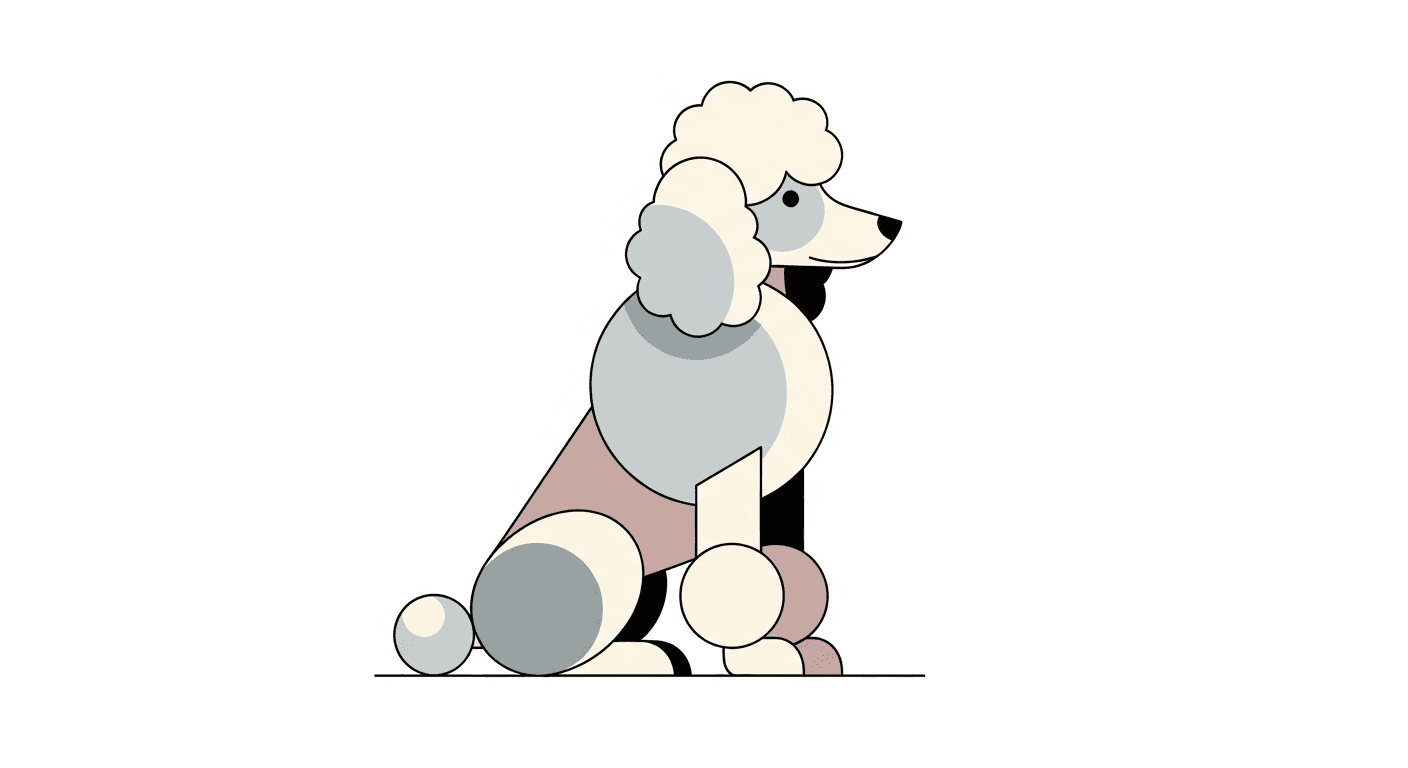
Breed Overview
The Poodle is one of the oldest and most distinguished breeds in the world, despite being commonly associated with France where it is the national dog. Its origins trace to Germany, where the "Pudelhund" (water dog) was developed as a waterfowl retriever. The breed's famous clip cuts were originally functional — reducing drag in water while protecting joints from the cold — and only later became an aesthetic statement. The AKC recognizes three size varieties: Standard (over 15 inches), Miniature (10–15 inches), and Toy (under 10 inches), all sharing the same breed standard in miniature.
Poodles have a single-layer, curly or wavy coat that sheds minimally, making them one of the most popular choices for people with allergies. However, "hypoallergenic" is a misnomer — no dog is entirely allergy-free, but Poodles produce less dander and shed less than most breeds. Their intelligence, trainability, and elegant appearance have made them beloved across all social classes and lifestyles for centuries.
The Standard Poodle is a true athlete — graceful, powerful, and tireless. The Miniature and Toy varieties retain the intelligence and personality of the Standard in a compact package, making them suitable for apartment living and urban environments.
Temperament and Personality
Beneath the stylized haircuts lies one of the most intelligent and sensitive dogs in existence. Poodle personality traits include:
- Exceptional intelligence: Ranked second only to the Border Collie in Stanley Coren's intelligence rankings. Poodles learn new commands in under five repetitions and retain them with remarkable reliability.
- Eager to please: Poodles thrive on human approval and respond beautifully to positive reinforcement. They are among the easiest breeds to train.
- Sensitive and emotionally aware: Poodles pick up on their owner's moods and can become anxious in tense or chaotic environments. A calm, consistent home suits them best.
- Athletic and energetic (especially Standards): Do not mistake the Poodle's elegant appearance for fragility. Standards in particular are high-energy athletes that need substantial daily exercise.
- Playful and fun-loving: Poodles maintain a joyful, silly side throughout their lives and are excellent companions for active households.
- Alert and vocal: Poodles can be prone to barking at unfamiliar stimuli. Early training to manage barking is advisable.
Care Needs
The Poodle's coat is its most demanding care requirement:
- Grooming: Because Poodle hair grows continuously rather than shedding, it mats easily without regular attention. Professional grooming every six to eight weeks is essential. Between appointments, brush at least three to four times per week — daily for longer styles. Keep the face, feet, and tail trimmed short for manageability.
- Ear care: Poodles grow hair inside their ear canals, which traps moisture and creates an environment prone to ear infections. Ask your groomer to remove this hair during appointments and clean ears monthly.
- Training: Poodles excel at virtually every dog sport and activity. Channel their intelligence into obedience, agility, tracking, or trick training. A bored Poodle is a mischievous Poodle.
- Dental care: Toy and Miniature Poodles are especially prone to dental disease due to their small mouths. Brush teeth daily and schedule annual professional dental cleanings.
Health Risks and Common Conditions
Each Poodle variety has its own health profile, though some conditions cut across all three sizes:
- Hip dysplasia: Primarily affects Standard Poodles. OFA certification of parents is important when purchasing a Standard Poodle puppy.
- Sebaceous Adenitis (SA): An inflammatory skin disease that destroys sebaceous glands, causing hair loss and skin scaling. More common in Standards; DNA testing is available.
- Progressive Retinal Atrophy (PRA): A hereditary eye disease causing gradual blindness, present in all three varieties. DNA testing can identify carriers.
- Bloat (GDV): Standard Poodles, as deep-chested large dogs, are at elevated risk of life-threatening gastric dilatation-volvulus. Feed multiple small meals and rest after eating.
- Addison's Disease: Poodles are disproportionately affected by this adrenal gland disorder, which causes weakness, vomiting, and potentially life-threatening adrenal crises. Know the symptoms.
- Epilepsy: Idiopathic epilepsy has a higher incidence in Poodles than in many other breeds.
- Luxating Patella: A kneecap that slips out of position is common in Miniature and Toy varieties and may require surgical correction.
Schedule semi-annual wellness visits, especially for older Poodles. Use the TailRounds Daily Log to record daily observations and book a vet appointment at Happy Paws if you notice skin changes, eye cloudiness, or episodes of weakness. Find a clinic near you for regular check-ups.
Exercise Needs
Exercise requirements vary significantly by variety:
- Standard Poodle: 60–90 minutes of vigorous daily exercise. Running, swimming, agility, and fetch are ideal.
- Miniature Poodle: 45–60 minutes of daily exercise. Brisk walks, fetch, and agility work well.
- Toy Poodle: 30 minutes of daily activity — indoor play sessions and short walks typically suffice, though they enjoy more if offered.
Is a Poodle Right for You?
Poodles are outstanding companions for a wide range of owners. Allergy sufferers often do better with Poodles than other breeds. Their intelligence and trainability make them rewarding for first-time and experienced owners alike. The grooming commitment is real and ongoing — factor in grooming costs before choosing this breed. Standards need active owners; Minis and Toys suit apartment living well. Whatever your lifestyle, there is likely a Poodle variety that fits it beautifully.
Continue Reading
 🐶 Dog Breeds
Maltese: The Ancient Aristocrat of Toy Dog Breeds
A complete guide to the Maltese dog — elegant temperament, silky coat care, health considerations, gentle exercise needs, and why this ancient breed suits apartment living perfectly.
 🐶 Dog Breeds
Yorkshire Terrier: Big Personality in a Tiny Package
Everything you need to know about the Yorkshire Terrier — feisty temperament, silky coat care, health concerns, exercise needs, and what living with a Yorkie is really like.
 🐶 Dog Breeds
Cocker Spaniel: The Sweet, Silky-Eared Family Companion
Everything about the American Cocker Spaniel — gentle nature, ear care demands, health conditions, exercise needs, and why this beloved breed has won so many families over the decades.