
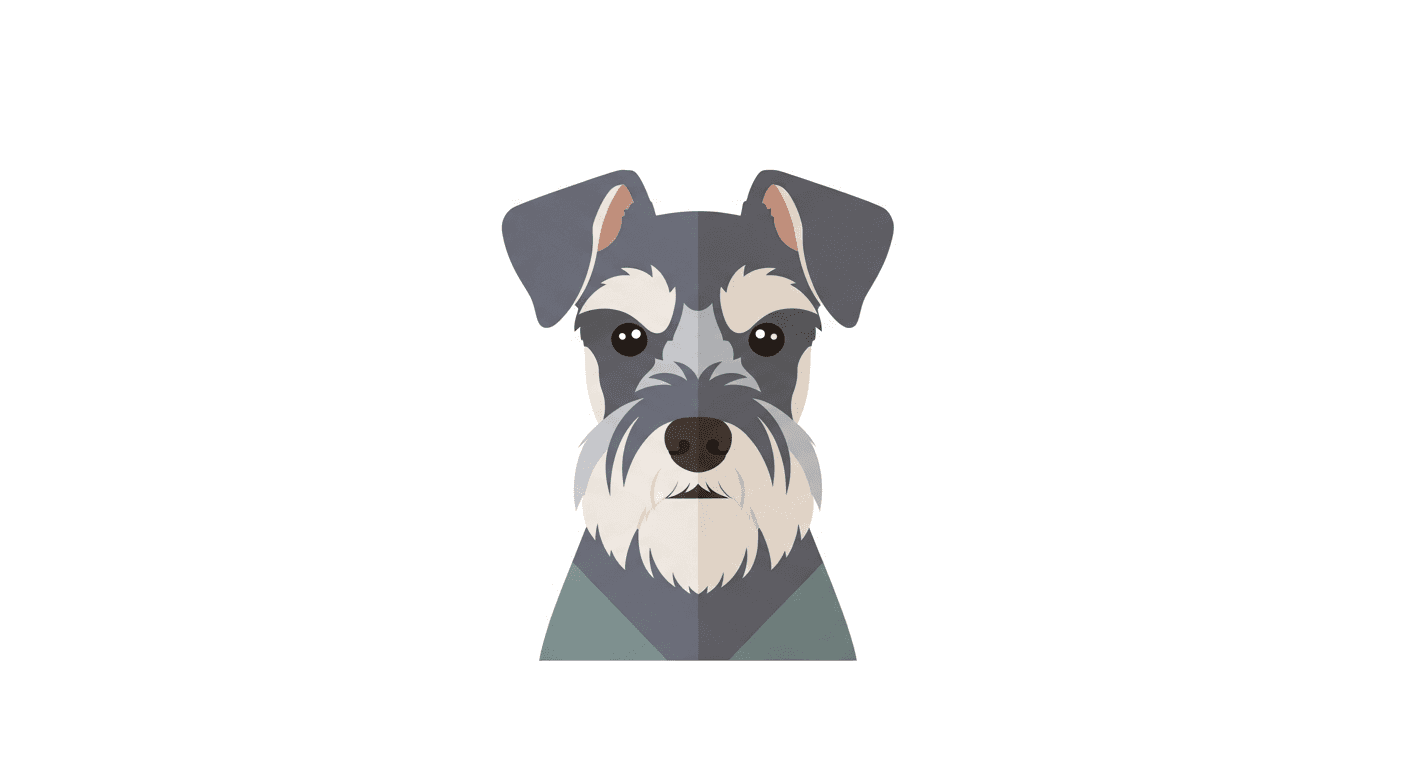
Breed Overview
The Miniature Schnauzer is the smallest of the three Schnauzer varieties (Standard and Giant being the others) and the most popular. Developed in Germany in the late 19th century by crossing the Standard Schnauzer with smaller breeds including the Affenpinscher and possibly the Poodle, Mini Schnauzers were ratters on farms — small enough to pursue vermin into tight spaces while possessing the Schnauzer's characteristic intelligence and alert temperament. Today they are primarily companion dogs and consistently rank among the top twenty most popular breeds in the United States.
Miniature Schnauzers stand 12–14 inches and weigh 11–20 pounds. Their most distinctive features are their bushy eyebrows, prominent beard, and double coat — wiry on the outside, soft underneath. They come in salt and pepper (the most classic), black and silver, solid black, and white (not AKC-recognized but widely seen). Their square, compact build and dignified expression give them an almost professorial appearance.
Temperament and Personality
The Miniature Schnauzer combines terrier spunk with surprising trainability and family devotion:
- Alert and spirited: Mini Schnauzers are lively, curious, and engaged with the world around them. They are rarely passive observers.
- Friendly and affectionate: Unlike some terrier breeds with strong independent streaks, Mini Schnauzers tend to be quite people-oriented and enjoy being part of family activities.
- Good with children and other dogs: When well-socialized, they are generally excellent family dogs. They can be less tolerant of rough handling from young children, so supervision is important.
- Intelligent and trainable: Mini Schnauzers are relatively easy to train using positive reinforcement. They pick up commands quickly and enjoy learning new things.
- Vocal: They have a strong bark and use it freely to announce visitors, squirrels, mail carriers, passing cars, and their own thoughts. Training to manage barking is advisable.
Care Needs
- Grooming: The Mini Schnauzer's wiry coat requires either hand-stripping (for show dogs) or clipping (for pets) every six to eight weeks. Between professional appointments, brush two to three times per week to prevent matting of the softer undercoat. The beard accumulates food and moisture and needs daily wiping.
- Diet: Feed a low-fat diet — this is important for Mini Schnauzers, which are prone to pancreatitis and hyperlipidemia. Avoid high-fat treats and table scraps entirely. Many veterinarians recommend a commercial food specifically designed for this breed's metabolic tendencies.
- Training: Begin obedience training and socialization from puppyhood. Mini Schnauzers respond well to positive reinforcement and enjoy trick training. Recall may be imperfect due to their prey drive — a secured environment for off-leash play is advisable.
- Dental care: Regular tooth brushing and annual professional cleanings prevent dental disease, which is common in small breeds.
Health Risks and Common Conditions
- Hyperlipidemia (elevated blood fats): Mini Schnauzers are uniquely prone to high triglycerides and cholesterol, which can cause pancreatitis, eye conditions, and neurological problems. Annual blood panels to screen lipid levels are recommended.
- Pancreatitis: Inflammation of the pancreas, often triggered by high-fat meals. Signs include vomiting, abdominal pain, and lethargy. Chronic pancreatitis can lead to diabetes. A low-fat diet throughout life is the primary prevention.
- Urinary stones (uroliths): Mini Schnauzers are prone to calcium oxalate and struvite bladder stones. Signs include straining to urinate, blood in urine, and frequent urination. Diet modification and increased water intake can reduce risk.
- Mycobacterium avium complex (MAC): A rare but serious infection seen almost exclusively in Mini Schnauzers, causing chronic illness and wasting. A genetic component is suspected.
- Cataracts: Juvenile and adult-onset cataracts are seen in the breed. Annual ophthalmic exams are advisable.
- Comedo syndrome: A skin condition causing blackhead-like lesions along the back. Manageable with medicated shampoos.
Annual blood panels including lipid levels are essential for this breed. Log your Schnauzer's diet, urination patterns, and energy levels with the TailRounds Daily Log. Book a vet appointment at Happy Paws if you notice any digestive upset or urinary changes. Find a clinic near you for regular wellness care.
Exercise Needs
Miniature Schnauzers are moderately active and need about 45–60 minutes of daily exercise. They enjoy:
- Brisk walks in the neighborhood
- Fetch games in a secure area
- Agility and obedience training
- Interactive indoor games
Is a Miniature Schnauzer Right for You?
The Miniature Schnauzer suits apartment dwellers, families with older children, and anyone seeking a friendly, intelligent, and spirited companion. Their grooming costs are real and ongoing, and their dietary sensitivity to fat means owners must be diligent about what goes into their bowl. For those prepared for consistent preventive care and a low-fat dietary regimen, a Mini Schnauzer is a delightful, adaptable, and personality-packed companion.
Continue Reading
 🐶 Dog Breeds
Yorkshire Terrier: Big Personality in a Tiny Package
Everything you need to know about the Yorkshire Terrier — feisty temperament, silky coat care, health concerns, exercise needs, and what living with a Yorkie is really like.
 🐶 Dog Breeds
Dachshund: The Spirited Sausage Dog and Everything You Need to Know
A complete guide to the Dachshund — covering temperament, back health risks, care, exercise limitations, and whether this feisty little hound is right for your home.
 🐶 Dog Breeds
Pomeranian: The Fluffy Little Fox Dog With an Enormous Personality
A complete Pomeranian guide — bold personality, double coat care, health considerations including luxating patella and tracheal collapse, and what makes Poms such captivating companions.