
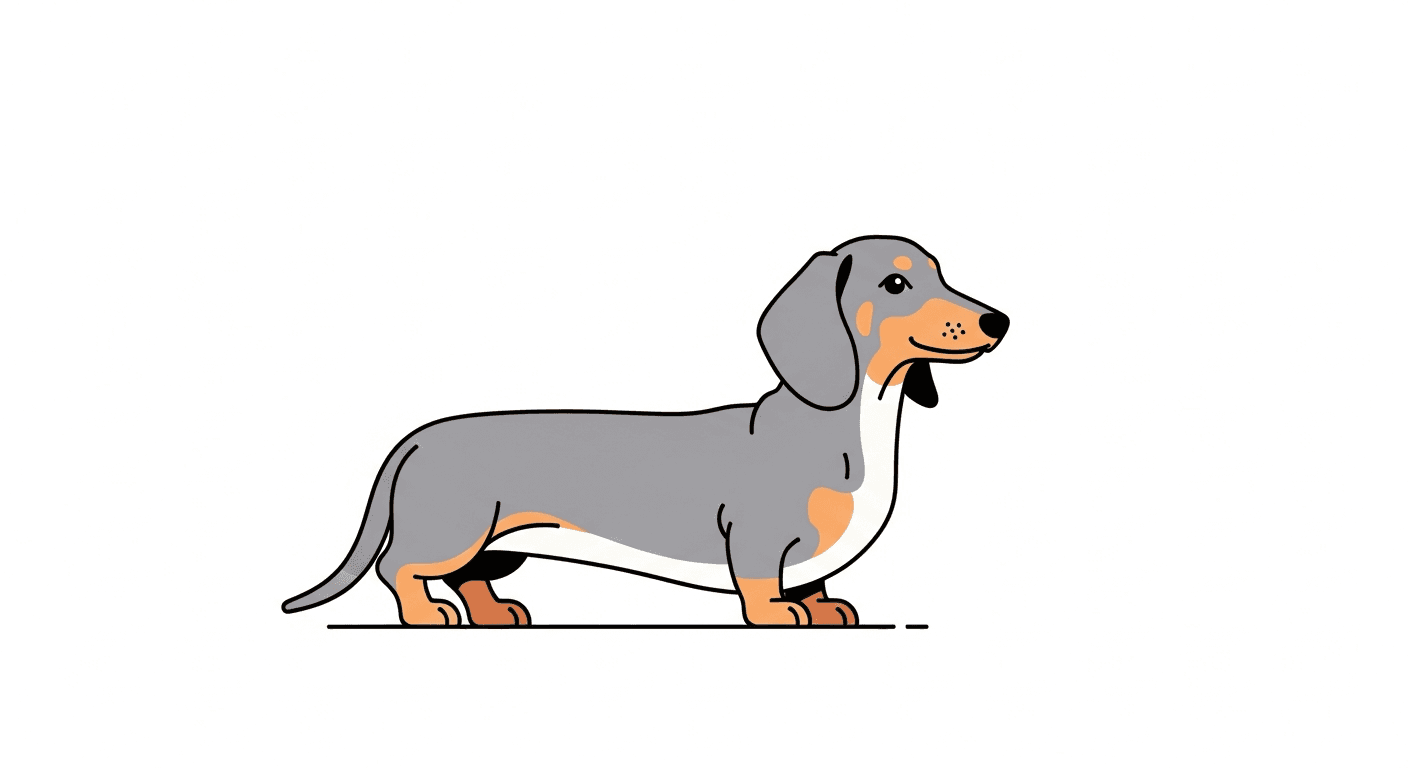
Breed Overview
The Dachshund, whose name literally means "badger dog" in German, was developed in Germany during the 17th century to hunt badgers and other burrowing animals. Their distinctive long body, short legs, and powerful digging paws were purpose-built for pursuing quarry underground. Dachshunds come in two sizes — Standard (16–32 pounds) and Miniature (under 11 pounds) — and three coat varieties: smooth (short), wirehaired, and longhaired. Each coat variety has slightly different personality nuances, with wirehareds often described as the most mischievous and longhaireds as the gentlest.
The Dachshund's elongated, low-slung silhouette is immediately recognizable worldwide and has earned them the affectionate nickname "sausage dog" or "wiener dog." Despite their small stature, they are bold, confident, and sometimes surprisingly stubborn hounds that bring enormous personality to any home.
Temperament and Personality
Dachshunds have a complex personality that blends hound independence with terrier tenacity and surprising affection:
- Courageous out of all proportion to their size: Bred to face badgers underground — an animal well capable of injuring a dog — Dachshunds have no concept of backing down. This boldness can be charming but also concerning when directed toward larger dogs.
- Affectionate and loyal: Dachshunds bond intensely with their primary person and can be jealous of attention given to others, including other pets.
- Stubborn and independent: Their hound lineage means they follow their nose and their own judgment rather than their owner's direction. Training requires patience and high-value rewards.
- Vocal: Dachshunds have a surprisingly loud, deep bark for their size and use it freely. This can be an issue in apartments.
- Diggers and chasers: Instinct drives them to dig and pursue small animals. Secure fencing is essential.
Care Needs
- Grooming: Smooth-coated Dachshunds need only weekly brushing and occasional bathing. Longhaired varieties require brushing several times per week. Wirehaired coats need hand-stripping or clipping every few months.
- Weight management: Maintaining a lean body weight is critically important in Dachshunds, as excess weight dramatically increases spinal stress and the risk of disc herniation.
- Ramp and step training: Teach your Dachshund to use ramps rather than jumping on and off furniture or navigating stairs. The impact of jumping significantly increases IVDD risk.
- Training: Begin early with positive reinforcement. Dachshunds respond poorly to harsh correction. Consistency is key — they will test limits repeatedly if boundaries are not maintained.
- Housetraining: Dachshunds have a reputation for being difficult to housetrain. Crate training and an unwavering schedule are the most effective approaches.
Health Risks and Common Conditions
The Dachshund's most defining health challenge stems directly from the feature that makes them so distinctive:
- Intervertebral Disc Disease (IVDD): The Dachshund's long spine and chondrodystrophic (short-legged) body type create extreme susceptibility to spinal disc herniation. Approximately 25% of Dachshunds will experience IVDD in their lifetime. The condition ranges from pain and weakness to sudden paralysis requiring emergency surgery. Prevention focuses on weight management, avoiding jumping, and using ramps.
- Obesity: A particularly dangerous condition in Dachshunds given its direct impact on spinal health. Strict portion control throughout life is essential.
- Progressive Retinal Atrophy (PRA): Gradual vision loss, particularly in Miniature Dachshunds. DNA testing identifies carriers.
- Cushing's Disease: Overproduction of cortisol, more common in older Dachshunds. Signs include increased thirst, urination, pot-bellied appearance, and hair loss.
- Dental disease: Common in Miniature Dachshunds due to their small mouths. Daily tooth brushing is recommended.
- Ear infections: Their long, floppy ears trap moisture and are prone to infection. Monthly cleaning is recommended.
Record your Dachshund's weight weekly and note any changes in gait, posture, or willingness to use stairs with the TailRounds Daily Log. Signs of IVDD — back arching, crying when touched, reluctance to move — require emergency veterinary care. Book a vet appointment at Happy Paws immediately or find an emergency clinic near you.
Exercise Needs
Dachshunds need moderate daily exercise — about 30–60 minutes — but with specific precautions:
- Leash walks on level ground are ideal
- Avoid repetitive jumping, rough play that involves sudden twisting, or activities that stress the spine
- Swimming can be excellent low-impact exercise for fit Dachshunds
- Interactive puzzle toys provide mental stimulation without physical stress
Is a Dachshund Right for You?
Dachshunds are irresistibly charming and bring abundant personality to any home. They suit apartment living, couples, seniors, and families with older children. Be realistic about the IVDD risk — pet insurance that covers spinal conditions is strongly recommended and can save owners from devastating out-of-pocket costs. If you can commit to weight management, lifestyle modifications to protect the spine, and consistent positive training, a Dachshund will reward you with fierce loyalty, endless entertainment, and devoted affection.
Continue Reading
 🐶 Dog Breeds
Beagle: The Cheerful Hound That Lives to Sniff
A complete Beagle breed guide covering their curious personality, scent-driven behavior, care needs, health risks, and whether this merry hound suits your home.
 🐶 Dog Breeds
Yorkshire Terrier: Big Personality in a Tiny Package
Everything you need to know about the Yorkshire Terrier — feisty temperament, silky coat care, health concerns, exercise needs, and what living with a Yorkie is really like.
 🐶 Dog Breeds
Miniature Schnauzer: The Spirited Little Dog With a Big Personality
Complete guide to the Miniature Schnauzer — feisty temperament, distinctive look, health conditions including pancreatitis and urinary stones, care needs, and apartment suitability.