
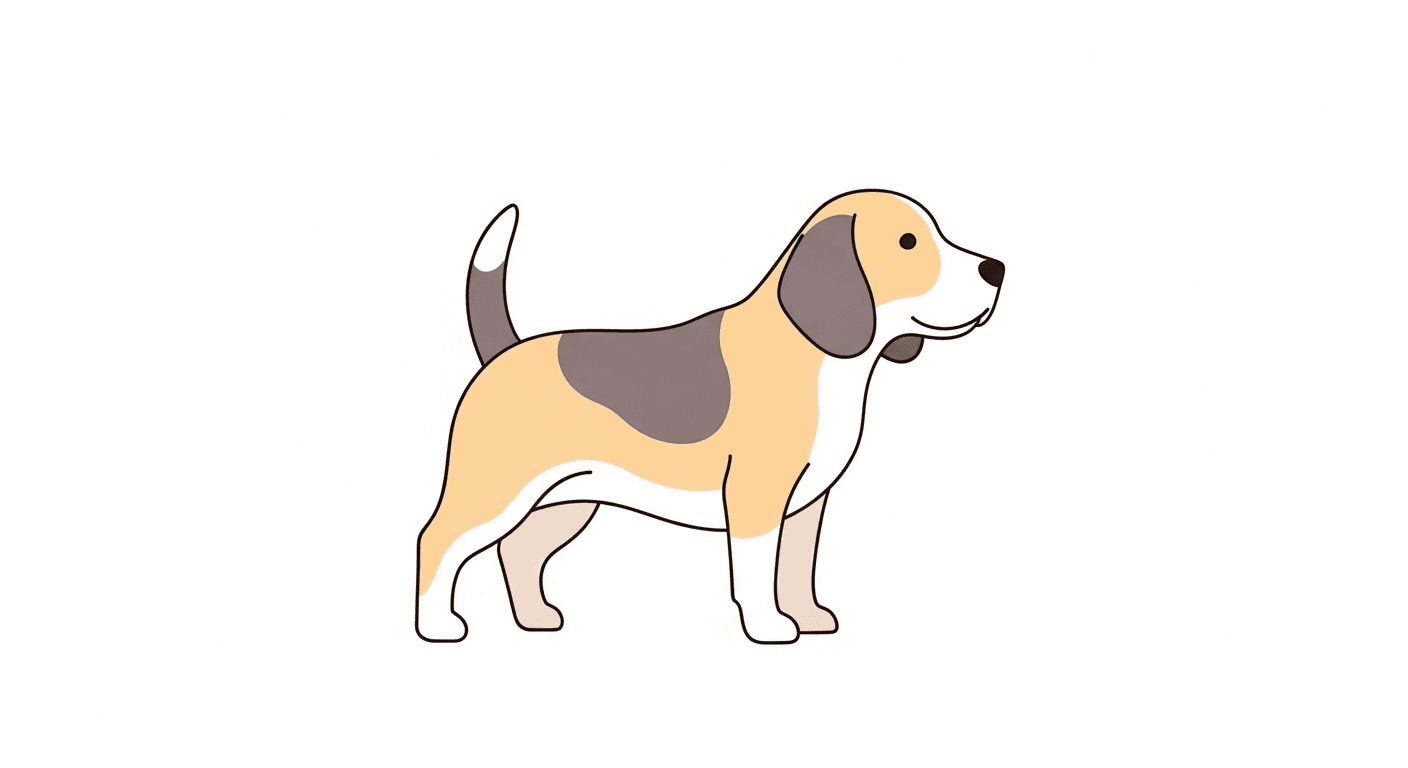
Breed Overview
The Beagle is a small-to-medium scent hound with roots stretching back to ancient Greece, though the modern breed was developed in England during the 1800s for tracking rabbits and small game. Their extraordinary nose — containing approximately 225 million scent receptors compared to a human's 5 million — made them invaluable hunting companions. Today, Beagles are among the most popular family pets globally and are also widely used as detection dogs in airports and border control.
Beagles typically stand 13–15 inches tall and weigh 20–30 pounds. They have a short, dense coat in classic tricolor (black, tan, and white) or various combinations of lemon, red, and white. Their big, expressive eyes, long velvety ears, and perpetually wagging tail give them an irresistible, soulful appearance. Their melodious bay — a loud, melodious howl used while tracking — is iconic but can be a significant issue in apartments or noise-sensitive neighborhoods.
Temperament and Personality
Beagles are merry, curious, and determined little dogs with an agenda largely set by their nose. Their personality is best understood through the lens of their hound heritage:
- Friendly and social: Beagles love people and are generally excellent with children and other dogs. They are pack animals by nature and do better with canine company than alone.
- Curious and scent-driven: An interesting smell can cause a Beagle to completely tune out all other input, including their owner's commands. This is not defiance — it is deeply ingrained instinct.
- Vocal: Beagles were bred to bay loudly to alert hunters. This vocalization trait persists and can be a significant challenge in urban environments.
- Escape artists: Following a scent, a Beagle will dig under, squeeze through, or jump over fencing without hesitation. Secure containment is essential.
- Friendly but independent: Unlike breeds bred for close human teamwork (such as retrievers), hounds were bred to work somewhat independently. This makes Beagles moderately challenging to train.
Care Needs
- Grooming: The Beagle's short, dense coat is low maintenance. Weekly brushing and monthly bathing are sufficient. Their long ears require weekly checking and cleaning to prevent infections — ear problems are common in the breed.
- Training: Beagles can absolutely be trained, but owners must work with their nose-first mentality. Scent-based games and rewards work better than correction-based approaches. Keep training sessions short, fun, and food-motivated. Recall training is critical — a Beagle on a scent trail has selective hearing.
- Containment: Never allow a Beagle off-leash in an unsecured area. A fenced yard must have secure footing at the base (to prevent digging escapes) and adequate height.
- Mental stimulation: Provide ample scent work opportunities — nose work classes, tracking activities, and hide-and-seek games with treats are perfect outlets for their natural drives.
Health Risks and Common Conditions
Beagles are generally a hardy breed, but several conditions deserve attention:
- Obesity: Beagles are enthusiastic eaters with a poorly regulated sense of fullness. They will eat until ill if given the opportunity. Strict portion control is non-negotiable.
- Ear infections: Their long, floppy ears restrict airflow into the ear canal, creating warm, moist conditions perfect for yeast and bacteria. Weekly ear checks and cleaning are essential preventive measures.
- Epilepsy: Idiopathic epilepsy is more prevalent in Beagles than in many other breeds.
- Hypothyroidism: Underactive thyroid gland leading to weight gain, skin changes, and lethargy. Manageable with daily medication.
- Intervertebral Disc Disease (IVDD): While more common in Dachshunds, disc disease can also affect Beagles.
- Eye conditions: Cherry eye and glaucoma appear with some frequency in the breed.
Log your Beagle's eating habits, weight, and ear health regularly with the TailRounds Daily Log. Book a vet appointment at Happy Paws if your Beagle is scratching at its ears, shaking its head, or gaining unexplained weight. Find a clinic near you for annual wellness exams.
Exercise Needs
Beagles need at least 60 minutes of exercise daily. Activities should emphasize sniffing and exploration:
- Long leash walks in varied environments with plenty of sniff time
- Nose work and tracking classes
- Securely fenced off-leash play areas
- Interactive puzzle feeders to burn mental energy indoors
Is a Beagle Right for You?
Beagles are joyful, loving, and endlessly entertaining companions. They thrive in active households that enjoy outdoor exploration and can accommodate their vocal tendencies. If you live in a noise-sensitive apartment, have limited fencing, or want a breed with reliable off-leash recall without intensive training investment, a Beagle may frustrate you. For families with yards, children, and a sense of humor, Beagles make gloriously fun and devoted family members.
Continue Reading
 🐶 Dog Breeds
Dachshund: The Spirited Sausage Dog and Everything You Need to Know
A complete guide to the Dachshund — covering temperament, back health risks, care, exercise limitations, and whether this feisty little hound is right for your home.
 🐶 Dog Breeds
Labrador Retriever: Complete Breed Guide for New and Experienced Owners
A full guide to the Labrador Retriever — America's most popular dog. Learn about temperament, care routines, health issues, and exercise requirements.
 🐶 Dog Breeds
Cocker Spaniel: The Sweet, Silky-Eared Family Companion
Everything about the American Cocker Spaniel — gentle nature, ear care demands, health conditions, exercise needs, and why this beloved breed has won so many families over the decades.