
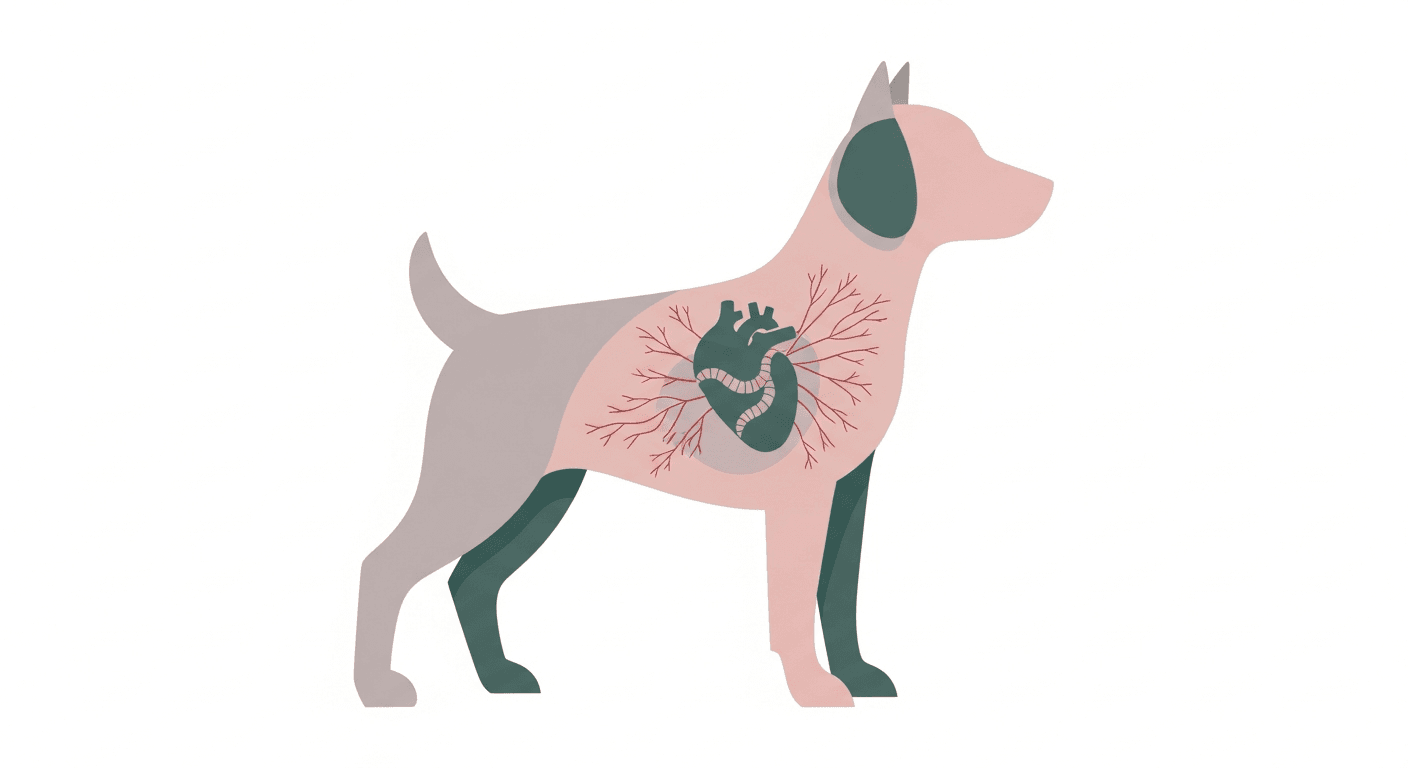
What Is Heartworm Disease?
Heartworm disease is a serious and potentially fatal parasitic infection caused by Dirofilaria immitis, a worm that can grow up to 30 centimeters long and lives in the heart, lungs, and associated blood vessels of infected dogs. The disease causes lasting damage to the heart, lungs, and arteries, and can result in heart failure, lung disease, and death if left untreated. What makes heartworm particularly insidious is that it develops silently over months before symptoms become obvious.
The disease is transmitted exclusively through the bite of infected mosquitoes — it cannot pass directly from dog to dog. The mosquito ingests microscopic heartworm larvae (microfilariae) when feeding on an infected animal, and those larvae mature within the mosquito before being transmitted to a new host during the next feeding. Once inside a dog, larvae migrate through tissue for several months before settling in the heart and pulmonary vessels.
Causes and Risk Factors
Any dog bitten by an infected mosquito is at risk. Specific risk factors include:
- Geographic location — heartworm is present on every continent except Antarctica, with highest prevalence near water sources and in warm, humid climates
- No monthly preventative — this is the single most controllable risk factor
- Outdoor lifestyle — dogs who spend significant time outdoors have more mosquito exposure
- Hunting and working dogs with extensive outdoor exposure
- Living near wildlife — coyotes, wolves, and foxes are reservoir hosts
- Gaps in preventative treatment — even missing one or two doses creates a window of vulnerability
Warning Signs and Symptoms
Heartworm disease is classified in four stages. Early stages may produce no symptoms at all:
Class 1 (mild):
- No symptoms, or occasional, mild cough
- Detected only by blood test
Class 2 (moderate):
- Persistent cough
- Exercise intolerance — the dog tires quickly
- Mild radiographic changes in the lungs and pulmonary arteries
Class 3 (severe):
- Persistent cough and difficulty breathing
- Significant exercise intolerance
- Fainting or collapse after moderate activity
- Weight loss despite normal appetite
- Abnormal heart sounds
Class 4 — Caval Syndrome (life-threatening):
- Sudden cardiovascular collapse
- Dark, bloody or coffee-colored urine
- Pale gums
- Rapid, labored breathing
- Death without emergency surgery
When to Go to the Vet Immediately
If your dog shows any of the following, treat it as an emergency:
- Sudden collapse or fainting after activity
- Dark urine combined with respiratory distress
- Persistent, worsening cough with severe exercise intolerance
- Rapid breathing at rest
- A dog known to be on an inconsistent preventative schedule suddenly showing respiratory signs
Annual heartworm testing is recommended for all dogs regardless of prevention status. Use the TailRounds AI Triage for immediate guidance if your dog's symptoms worry you.
At-Home Care and Monitoring
Heartworm treatment is intensive and requires strict exercise restriction — sometimes for months — because dead and dying worms can cause life-threatening pulmonary thromboembolism if the dog exerts itself. The treatment protocol typically involves:
- Pre-treatment with doxycycline to weaken the worms
- Melarsomine injections (the only FDA-approved adulticide) given in a staged protocol over months
- Absolute exercise restriction — cage rest in severe cases
- Anti-inflammatory medications and other supportive care as needed
During and after treatment, keep detailed logs of your dog's breathing, cough frequency, and energy levels using the TailRounds Daily Log. Any increase in coughing or respiratory distress during treatment is an emergency.
Prevention and Long-Term Management
Prevention is far safer, cheaper, and more effective than treatment. Prevention options include:
- Monthly oral preventatives — ivermectin-based (Heartgard) or milbemycin-based (Interceptor)
- Topical monthly preventatives — selamectin-based products
- Six-month injectable prevention (ProHeart 6 and ProHeart 12)
- Annual heartworm blood test — even dogs on prevention should be tested annually to catch breakthrough infections
- Consistent year-round use — do not skip months even in colder climates
Never Skip a Preventative Dose
Monthly prevention is the most important thing you can do for your dog's heart health. Keep track of dosing dates with the TailRounds Daily Log. If your dog is due for a heartworm test or you have concerns about symptoms, Book a vet appointment at Happy Paws today. Find a Clinic Near You for your nearest testing and prevention source, and use TailRounds AI Triage for urgent symptom evaluation.
Continue Reading
 🩺 Diseases & Symptoms
Lyme Disease in Dogs: Tick-Borne Risk, Symptoms, and Prevention
Lyme disease in dogs can cause joint pain, kidney damage, and serious illness. Learn how to spot symptoms, treat it effectively, and prevent tick bites.
 🩺 Diseases & Symptoms
Roundworms in Pets: A Common Parasite Every Pet Owner Should Know
Roundworms are extremely common in puppies and kittens and can infect humans too. Learn how to detect, treat, and prevent roundworm infections in your pets.
 🩺 Diseases & Symptoms
Tapeworms in Pets: How They Spread and How to Eliminate Them
Tapeworms are flat intestinal parasites that spread through fleas or raw prey. Learn how to spot them, treat your pet effectively, and prevent reinfection.
 🩺 Diseases & Symptoms
Cushing's Disease in Dogs: Symptoms, Diagnosis, and Treatment
Cushing's disease causes excess cortisol in dogs. Recognize the symptoms, understand diagnosis options, and learn how to manage this chronic but treatable condition.