
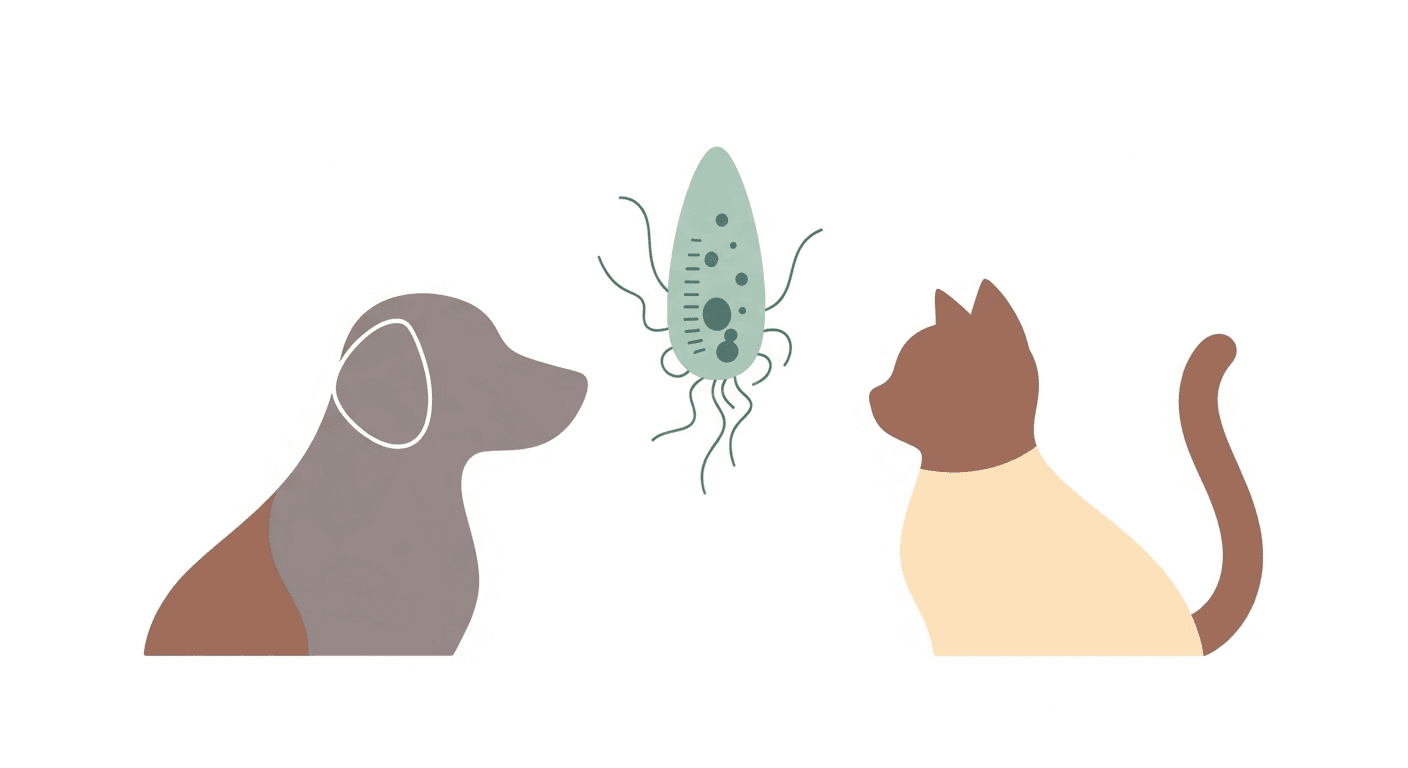
What Is Giardia?
Giardia is a microscopic single-celled intestinal parasite (Giardia duodenalis, also known as G. intestinalis or G. lamblia) that infects the small intestine of dogs, cats, and many other mammals, including humans. Unlike most intestinal worms that are visible to the naked eye, Giardia exists in two forms: the trophozoite (the active, feeding form that lives in the intestine) and the cyst (the hardy, infectious form shed in feces that can survive in the environment for months). Infection occurs when an animal ingests cysts from contaminated water, food, or surfaces.
Giardia is one of the most common intestinal parasites in pets worldwide. Prevalence studies estimate infection rates of 2–7% in healthy pet dogs and cats, and much higher rates in kennels, shelters, and other high-density environments. Many infected animals show no symptoms at all — they are silent carriers who continue shedding cysts into the environment.
Causes and Risk Factors
Giardia spreads via the fecal-oral route — a pet ingests cysts that were shed in the feces of an infected animal. Transmission occurs through:
- Drinking contaminated water (lakes, puddles, streams, shared water bowls)
- Grooming or licking paws contaminated with infected feces
- Direct contact with infected feces
- Contaminated soil or surfaces
Risk factors include:
- Young animals — puppies and kittens are most susceptible
- High-density environments — kennels, shelters, doggy daycares
- Access to natural water sources
- Immunocompromised status
- Shared living spaces in multi-pet households
Warning Signs and Symptoms
Many infected pets show no signs at all. When symptoms occur, they typically involve the gastrointestinal tract:
- Soft, mushy, or watery diarrhea — often pale, greasy, and foul-smelling
- Intermittent diarrhea — episodes of soft stool alternating with normal stool
- Increased stool frequency
- Mucus in the stool
- Weight loss in chronic or severe cases
- Poor body condition and lack of thrive in young animals
- Vomiting — less common than diarrhea
- Lethargy and reduced appetite in moderate to severe cases
Blood in the stool is uncommon with Giardia alone — if present, other causes should be investigated.
When to Go to the Vet Immediately
Schedule a veterinary appointment soon (within 24–48 hours) if:
- Diarrhea is severe, watery, or has been present for more than 48 hours
- The pet is a young puppy or kitten — dehydration develops rapidly
- Signs of dehydration are present
- Blood is present in the stool
- The pet is losing significant weight
Use the TailRounds AI Triage to assess urgency, and Book a vet appointment at Happy Paws for fecal testing. Diagnosis requires a fecal antigen ELISA test or zinc sulfate centrifugal flotation — regular fecal flotation alone often misses Giardia.
At-Home Care and Monitoring
Giardia treatment typically involves antiparasitic medications and thorough environmental decontamination:
- Fenbendazole (Panacur) — a five-day course; safe for young animals, pregnant pets, and cats
- Metronidazole (Flagyl) — commonly used, often in combination with fenbendazole for refractory cases; not recommended in pregnant animals
- Probiotics — support intestinal recovery during and after treatment
- Bland diet during active diarrhea — boiled chicken and rice
- Hydration — ensure the pet is drinking sufficient water
Environmental decontamination is essential for preventing reinfection:
- Wash all bedding in hot water
- Disinfect food bowls, water bowls, and litter boxes with quaternary ammonium compounds (not bleach alone — Giardia cysts are resistant to many disinfectants)
- Bathe the pet at the start and end of treatment to remove cysts from the coat
- Promptly remove all feces from the environment
- Prevent access to natural water sources during treatment
Log stool consistency, frequency, and appearance daily using the TailRounds Daily Log.
Prevention and Long-Term Management
- Provide fresh, clean drinking water at all times — do not allow pets to drink from puddles, streams, or shared community water sources
- Promptly clean up feces in the yard and in public spaces
- Regular fecal testing — at least annually, or every 6 months for at-risk pets
- Giardia is zoonotic — wash hands thoroughly after handling pets or cleaning litter boxes, especially if a pet is being treated
- Test all household pets if one is diagnosed and treat simultaneously if positive
Track Your Pet's Digestive Health with TailRounds
Persistent soft stool in a pet deserves investigation. Log stool consistency and frequency using the TailRounds Daily Log and share the records with your vet. Book a fecal exam at Book a vet appointment at Happy Paws, find local testing at Find a Clinic Near You, and get immediate guidance for concerning diarrhea through the TailRounds AI Triage.
Continue Reading
 🩺 Diseases & Symptoms
Roundworms in Pets: A Common Parasite Every Pet Owner Should Know
Roundworms are extremely common in puppies and kittens and can infect humans too. Learn how to detect, treat, and prevent roundworm infections in your pets.
 🩺 Diseases & Symptoms
Tapeworms in Pets: How They Spread and How to Eliminate Them
Tapeworms are flat intestinal parasites that spread through fleas or raw prey. Learn how to spot them, treat your pet effectively, and prevent reinfection.
 🩺 Diseases & Symptoms
Parvovirus in Dogs: Symptoms, Treatment, and Survival
Parvovirus is a deadly threat to unvaccinated dogs. Learn the warning signs, how treatment works, and how to protect your dog with vaccination.
 🩺 Diseases & Symptoms
Dental Disease in Dogs and Cats: The Silent Epidemic in Pet Health
Over 80% of pets over 3 years have dental disease. Learn how to recognize it, what happens without treatment, and how dental care at home and at the vet prevents pain.