
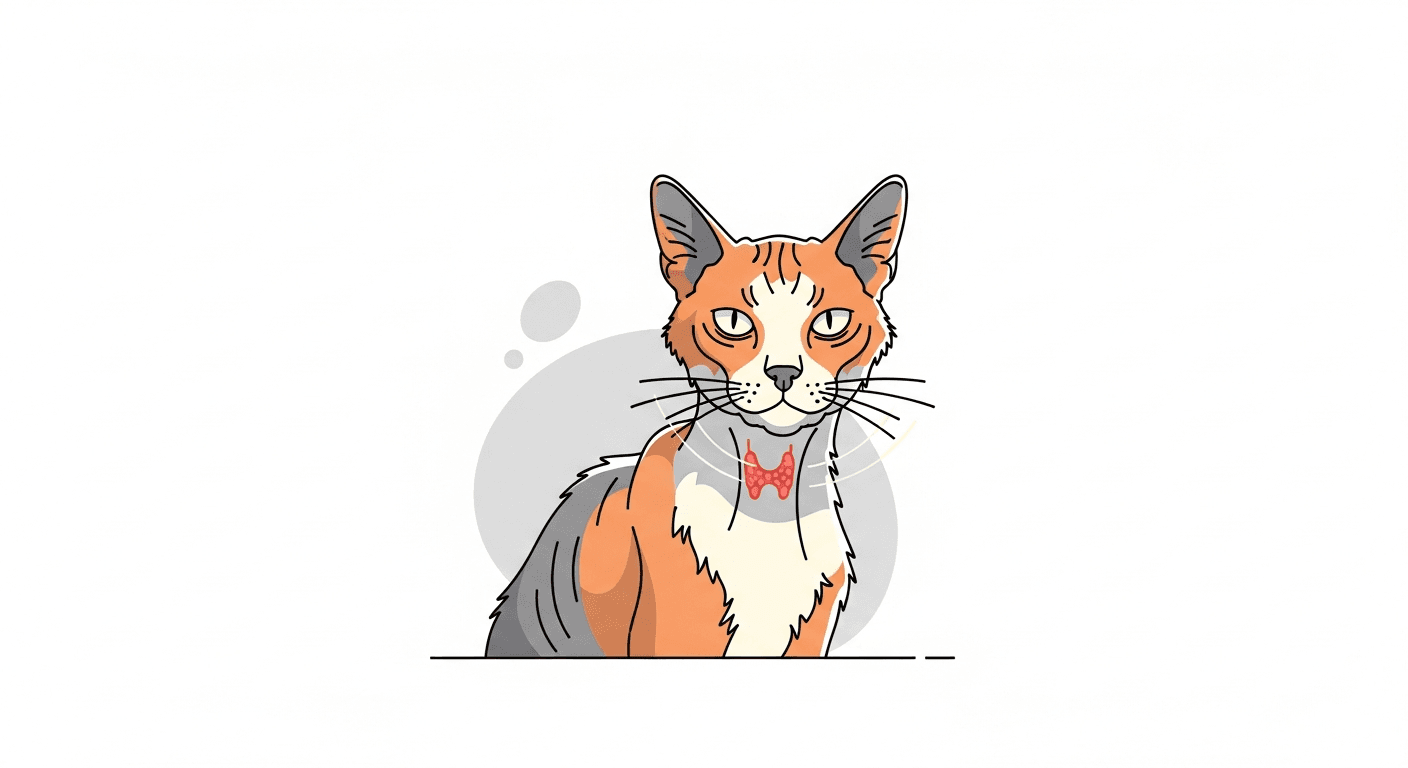
What Is Hyperthyroidism in Cats?
Hyperthyroidism is the most common hormonal (endocrine) disorder in cats and one of the most frequently diagnosed conditions in senior felines overall. It occurs when the thyroid glands — two small glands located on either side of the trachea in the neck — produce excessive amounts of thyroid hormone (T3 and T4). These hormones regulate metabolism, and when they are overproduced, they essentially put the cat's entire body into a state of metabolic overdrive.
In approximately 97–98% of cases, hyperthyroidism is caused by a benign (non-cancerous) tumor called an adenoma or adenomatous hyperplasia affecting one or both thyroid lobes. Rarely, a malignant thyroid carcinoma is responsible. The condition almost exclusively affects middle-aged to older cats, with the average age at diagnosis being approximately 13 years. The good news is that hyperthyroidism is very treatable, and most cats respond extremely well to appropriate therapy.
Causes and Risk Factors
The precise cause of thyroid adenoma formation is not fully understood, but research has identified several risk factors:
- Age — rare before 7 years; incidence rises sharply after 10 years
- Diet — feeding exclusively canned food, particularly fish or liver-flavored varieties, has been associated with higher risk in some studies; iodine content and endocrine-disrupting compounds in food packaging (BPA) may play a role
- Indoor lifestyle — paradoxically linked to higher risk, possibly through exposure to fire retardants (PBDEs) in furniture and carpets
- Breed — Siamese and Himalayan cats appear to have lower risk, while non-pedigree cats are at higher risk
- Nutritional factors — iodine excess or deficiency
Warning Signs and Symptoms
The classical presentation is a weight-losing cat with a voracious appetite. Other common signs include:
- Weight loss despite increased or ravenous appetite — often the first sign owners notice
- Increased thirst and urination
- Hyperactivity and restlessness — an "old cat acting like a kitten" is sometimes hyperthyroid
- Vomiting and diarrhea
- Unkempt coat — cats stop grooming properly
- Palpable enlarged thyroid gland — your vet can feel this during examination
- Heart murmur or rapid heart rate — excess thyroid hormone stresses the heart
- Hypertension — secondary high blood pressure affects the eyes, kidneys, brain, and heart
- Increased vocalization, especially at night
- Muscle weakness — ventroflexion (neck dropping down) in severe cases
When to Go to the Vet Immediately
Schedule a veterinary appointment soon if your cat shows classic hyperthyroidism signs. However, seek immediate care if:
- The cat is in respiratory distress (open-mouth breathing, labored breathing) — may indicate thyroid-induced heart failure
- Sudden blindness — hypertension-induced retinal detachment
- Acute collapse or extreme weakness
- Thyroid storm (rare) — acute crisis of extreme hyperthyroid symptoms, high fever, rapid heart rate
The TailRounds AI Triage can help assess urgency, and Book a vet appointment at Happy Paws for diagnosis. Diagnosis is confirmed by a simple blood test measuring total T4.
At-Home Care and Monitoring
Treatment options for hyperthyroidism are highly effective. Each has advantages and disadvantages to discuss with your vet:
- Methimazole (oral or transdermal) — daily medication that blocks thyroid hormone production; most common initial treatment; requires regular blood monitoring and may have side effects
- Radioactive iodine (I-131) — a single injection destroys overactive thyroid tissue; considered the gold standard; requires a brief hospital stay for radiation safety
- Surgical thyroidectomy — surgical removal of the affected gland(s); curative but carries anesthetic risk in older cats
- Low-iodine diet (Hill's y/d) — must be the exclusive diet; controls but does not cure hyperthyroidism
Important caveat: treating hyperthyroidism can unmask pre-existing chronic kidney disease. Monitoring kidney function carefully after treatment starts is essential. Track daily food intake, weight, and water consumption using the TailRounds Daily Log.
Prevention and Long-Term Management
There is no proven way to prevent thyroid adenomas, but early detection through regular screening makes management much easier:
- Annual or biannual wellness bloodwork including T4 in cats over 7 years
- Blood pressure monitoring at every senior wellness visit
- Regular ophthalmoscopy to screen for hypertensive retinal changes
- Kidney function monitoring (creatinine, SDMA) especially when starting treatment
- Long-term dietary management if pharmacological therapy is chosen
Senior Cat Care Made Easier with TailRounds
Hyperthyroidism is manageable and cats can live many comfortable years after diagnosis. Track your cat's weight, appetite, and medication schedule using the TailRounds Daily Log. Schedule regular T4 checks and blood pressure monitoring at Book a vet appointment at Happy Paws. Find a Clinic Near You for radioactive iodine therapy centers, and use the TailRounds AI Triage for any concerning acute changes.
Continue Reading
 🩺 Diseases & Symptoms
Chronic Kidney Disease in Cats: Early Detection and Management
Chronic kidney disease affects 1 in 3 senior cats. Learn the early signs, how to slow progression through diet and care, and how to maximize your cat's quality of life.
 🩺 Diseases & Symptoms
Diabetes in Cats: Symptoms, Insulin, and the Path to Remission
Feline diabetes is unique — many cats can achieve remission with proper management. Learn the signs, treatment options, and how diet and insulin work together for cats.
 🩺 Diseases & Symptoms
Feline Leukemia Virus (FeLV): What Cat Owners Must Know
FeLV is one of the most serious infectious diseases in cats. Learn how it spreads, what symptoms to watch for, how to manage an FeLV-positive cat, and prevention.