
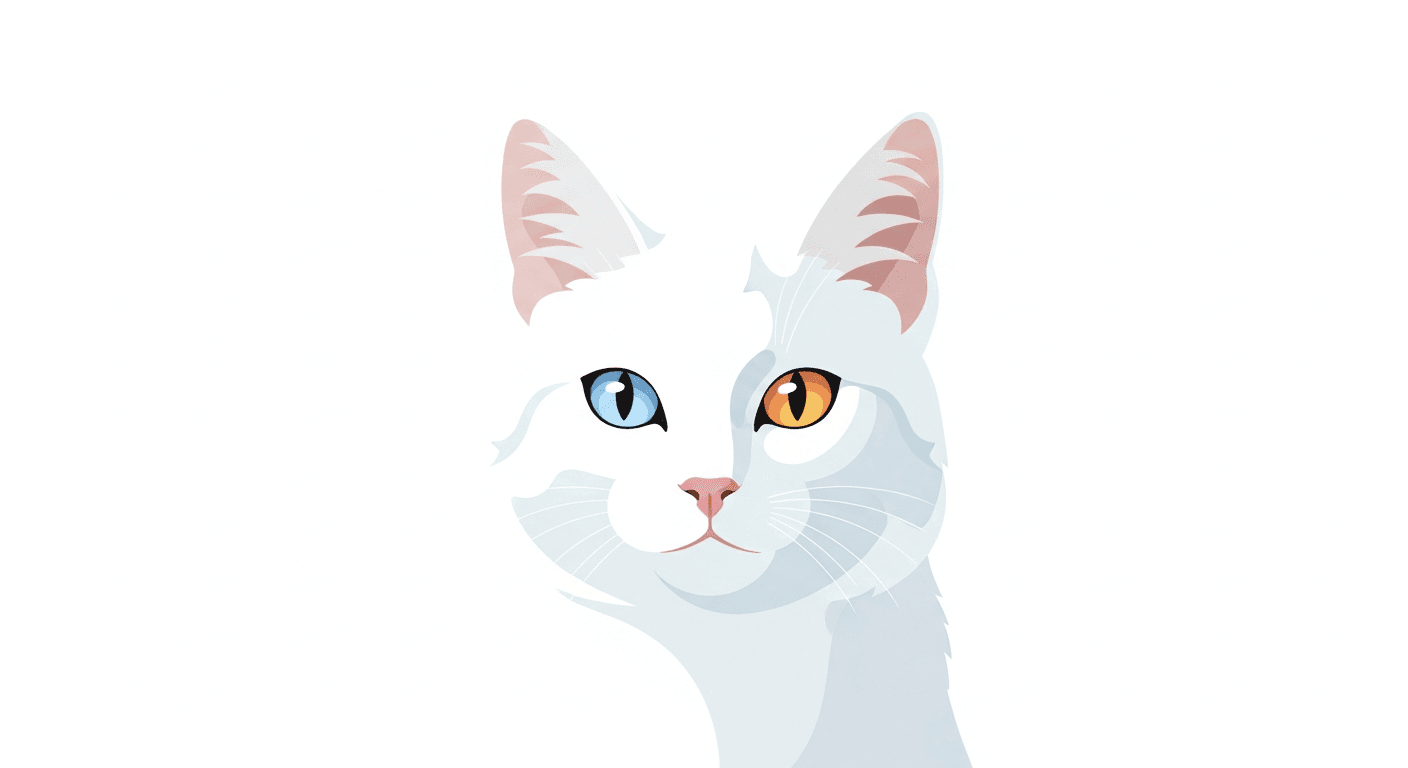
Turkish Van Overview
The Turkish Van is one of the oldest and rarest natural cat breeds in the world, originating from the Lake Van region of eastern Turkey. These cats developed in isolation for thousands of years, resulting in a uniquely adapted breed with a cashmere-like water-resistant semi-long coat and an extraordinary love of water — earning them the nickname "the Swimming Cat." Turkish Vans are still relatively rare outside of their homeland, though they have dedicated breeders worldwide.
Turkish Vans are large, powerfully built cats with a long, sturdy body and a broad, wedge-shaped head. They are distinctively colored with the "Van pattern" — an almost entirely white body with colored markings restricted to the head (around the ears and eyes) and a fully colored, plumed tail. The Van pattern gene can appear in cats of many breeds, but the Turkish Van is its origin. Colors include red, cream, black, blue, and tabby variations. Their eyes are typically amber, blue, or odd-colored (a particularly valued trait in Turkey, where odd-eyed Van cats are considered lucky).
Personality and Temperament
Turkish Vans have an energetic, spirited, and self-assured personality that distinguishes them sharply from calmer breeds.
- Athletic and energetic: Turkish Vans are powerful jumpers and runners. They need substantial space and vertical enrichment. Cat trees alone may not be sufficient — they prefer to run and interact at full speed.
- Fascinated by water: Unlike almost every other domestic cat, Turkish Vans actively seek out water. They may join you in the shower, dip their paws in the toilet, splash in the sink, and — if given access — swim. A shallow, supervised water play area is a wonderful enrichment option.
- Independent and strong-willed: They are not cuddly lap cats by nature. They show affection on their terms and can be selective about being held or restrained.
- Playful well into adulthood: Turkish Vans retain high energy and kitten-like play drive much longer than many breeds.
- Intelligent: They are problem-solvers and benefit from puzzle feeders and interactive toys.
- Can be dominant: In multi-cat homes, Turkish Vans often assert themselves. Careful introductions are essential.
Turkish Vans do not thrive in sedentary households. They need room to run, things to explore, and owners who engage in daily interactive play. They are not well suited to tiny apartments without significant enrichment.
Grooming Needs
Despite their semi-long, luxurious coat, Turkish Vans are surprisingly easy to maintain due to the coat's unique structure.
- No dense undercoat: Like the Turkish Angora, the Van's coat is a single layer without a thick undercoat, which means it does not mat nearly as easily as double-coated long-haired breeds.
- Brushing: Two to three times per week with a medium comb is sufficient. Increase during seasonal shedding.
- Coat texture: The cashmere-like texture resists water and does not stick together when wet — useful for a cat that loves to splash.
- Bathing: Rarely necessary given the coat's self-cleaning properties, but Turkish Vans often enjoy baths as enrichment. Use a gentle cat shampoo.
- Seasonal coat: Turkish Vans grow a thicker winter coat and shed it significantly in spring. More frequent brushing during this period is helpful.
The Turkish Van's coat condition is a good health indicator — a dull or matted coat in a breed that normally maintains a lustrous coat warrants veterinary investigation.
Health Risks and Common Conditions
The Turkish Van is a naturally developed breed without human-imposed physical extremes, which contributes to its general robustness. However, several areas deserve monitoring.
- Hypertrophic Cardiomyopathy (HCM): As with most cat breeds, HCM has been reported in Turkish Vans. Annual cardiac auscultation and periodic echocardiography are advisable.
- Obesity: Turkish Vans have strong appetites and can easily become overweight if overfed or under-exercised. Weigh regularly and use measured meals.
- Deafness (white coat associated): The high proportion of white in their coat means Turkish Vans can carry the W gene. Odd-eyed Van cats may be deaf on the blue-eyed side. BAER testing is advisable for all white-coated kittens, particularly odd-eyed individuals.
- Joint health: Their large, athletic build means joint health matters. Maintain healthy weight to reduce stress on joints.
- Dental disease: Regular dental care including brushing and professional cleanings is important.
Book a vet appointment at Happy Paws to set up a wellness plan including cardiac monitoring and weight management for your Turkish Van. Track activity and weight trends using the TailRounds Daily Log. Find a Clinic near you for a full health assessment.
Ideal Home, Cost, and Availability
Turkish Vans suit active owners with space and time for an energetic, independent cat. They do best in larger homes, enriched apartments with room to run, or homes with outdoor catio access. They can coexist with patient children and other pets if properly introduced.
Purchase cost: $800–$1,500. Turkish Vans are rare outside of Turkey and dedicated international breeders. Verify that the breeder registers with a recognized cat association and can provide health testing documentation.
Lifespan: 13–17 years. A naturally robust breed; longevity is good with proper preventive care and weight management.
Continue Reading
 🐈 Cat Breeds
Turkish Angora: Complete Breed Guide — Personality, Grooming & Health
A full guide to the Turkish Angora: its ancient heritage, silky single coat, athletic personality, deafness risk in white cats, and ideal home environment.
 🐈 Cat Breeds
Maine Coon Cat: Complete Breed Guide — Personality, Care & Health
Discover everything about the Maine Coon: its dog-like personality, impressive size, grooming routine, health risks like HCM, and the ideal home environment.
 🐈 Cat Breeds
Norwegian Forest Cat: Complete Guide — Personality, Grooming & Health
Everything about Norwegian Forest Cats: their Viking-era history, semi-long weather-resistant coat, outdoor-ready personality, HCM and GSD IV risks, and ownership costs.