
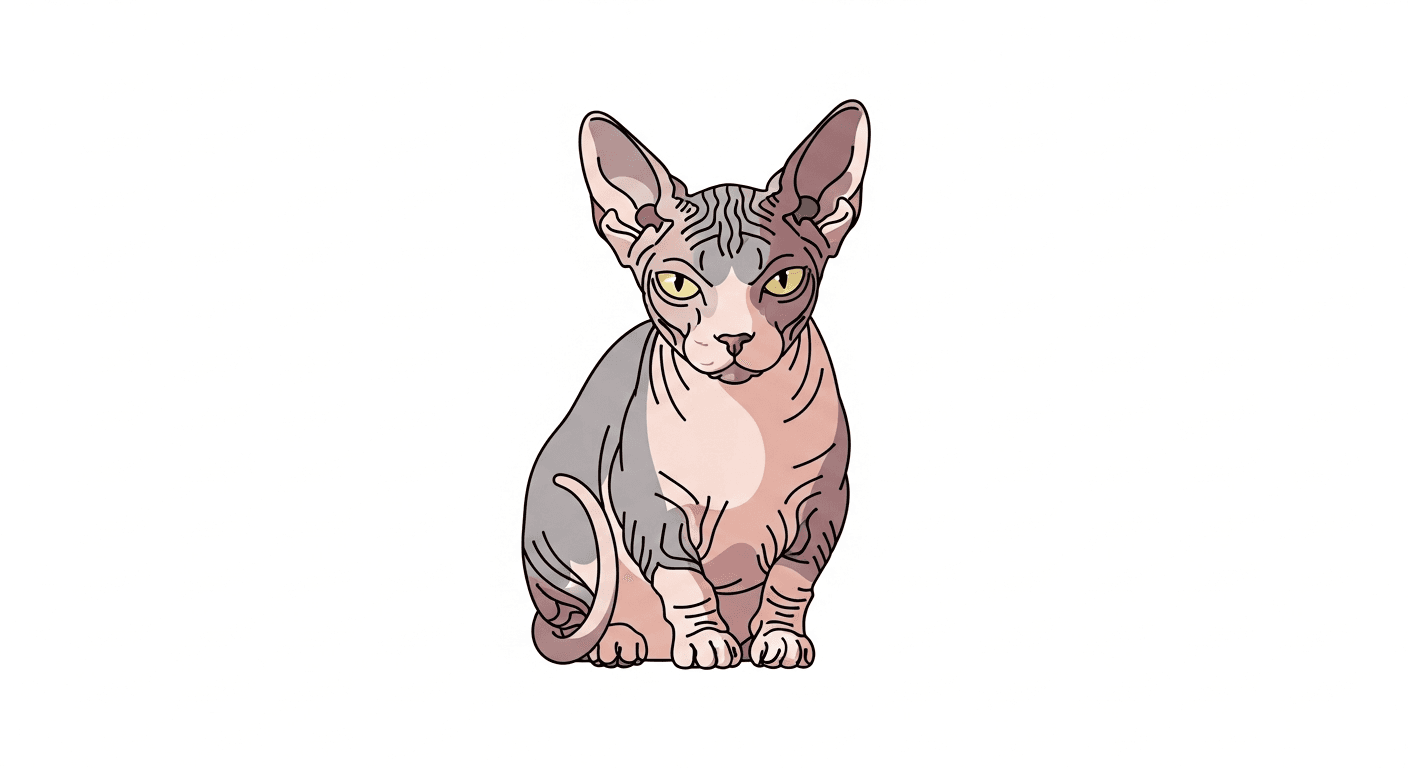
Sphynx Cat Overview
The Sphynx is the world's most famous hairless cat, born from a natural genetic mutation first identified in a domestic cat in Toronto, Canada in 1966. Despite the name evoking Egyptian mystery, the Sphynx is a thoroughly modern breed — developed through careful selective breeding over the past six decades. Today it is recognized worldwide and is one of the most popular exotic breeds, beloved for its extraterrestrial appearance and intensely affectionate personality.
Sphynx cats are not truly hairless — they are covered in a fine layer of downy fuzz that feels like warm suede or a peach skin. This peach-fuzz coat is invisible from a distance, giving the impression of complete nakedness. Sphynx are medium-sized cats with a barrel chest, prominent cheekbones, large ears, and deeply wrinkled skin (especially around the head, shoulders, and knees). Their skin displays all the colors and patterns that a cat's coat would, as the pigment is in the skin itself.
Personality and Temperament
The Sphynx is often the first cat that converts lifelong "I don't like cats" people into devoted cat lovers. Their personality is nothing short of extraordinary.
- Extremely affectionate: Sphynx cats are famously "velcro cats" — they want to be on you, under the covers with you, in the bathroom with you. They seek body heat and constant physical contact.
- Highly social: They are excellent with children, strangers, other cats, and dogs. They rarely hiss or scratch. They greet everyone like a long-lost friend.
- Attention-seeking: Sphynx are theatrical. They perform for attention, learn tricks easily, and use vocalizations and body language to communicate constantly.
- Intelligent and curious: They investigate everything and need mental stimulation. Puzzle feeders, interactive toys, and cat trees are important.
- Energetic: Despite their exotic appearance, Sphynx are athletic and playful. They are not couch cats by default — they need daily active play.
- Indoor only: Without a fur coat, Sphynx are vulnerable to sunburn, cold temperatures, and skin injury. They must live exclusively indoors.
The Sphynx is known as the "dog of the cat world" alongside the Abyssinian and Maine Coon. They do not tolerate being alone for long periods and should have a companion — ideally another Sphynx or similarly social breed.
Grooming Needs — Skin Care is Everything
Counterintuitively, the Sphynx requires MORE grooming than a typical short-haired cat. Without fur to absorb the natural oils produced by skin sebaceous glands, these oils accumulate on the skin and in skin folds.
- Weekly bathing: This is non-negotiable. Use a gentle, unscented cat shampoo. Without regular baths, the Sphynx develops a greasy film on its skin that can cause body odor and skin irritation.
- Skin fold cleaning: Deep wrinkles around the neck, under the chin, and in the limb joints trap oil and debris. Wipe these areas with a soft, damp cloth or unscented baby wipes between baths.
- Ear cleaning: Sphynx ears accumulate extraordinary amounts of dark, waxy debris — far more than furred cats. Clean ears weekly with a vet-approved solution.
- Nail cleaning: The nail beds accumulate a dark, oily buildup. Clean around the nails at each bath and trim nails every 2 weeks.
- Eye cleaning: Without eyelashes to catch debris, Sphynx cats can have eye discharge. Wipe gently with a damp cloth daily.
- Sun protection: Limit direct sunlight exposure. The skin can sunburn. Cat-safe sunscreen can be applied to ears and nose for cats with outdoor-facing window spots.
Temperature regulation is also a concern — Sphynx cats run warm (their metabolism is higher) but can become cold quickly. Provide cat sweaters for winter months and keep the home at a comfortable temperature.
Health Risks and Common Conditions
Sphynx cats are generally healthy but have a significant known health predisposition that all owners must take seriously.
- Hypertrophic Cardiomyopathy (HCM): The single most significant health concern in Sphynx cats. The breed has an extremely high prevalence of HCM — studies suggest affected rates of 30–50% in some populations. An HCM-associated gene mutation (MYBPC3 A31P) has been identified in Sphynx. Regular echocardiograms are essential — annually from age 2 onwards.
- Hereditary Myopathy: A muscular disease causing generalized muscle weakness. Affected kittens show difficulty swallowing, muscle tremors, and abnormal gait.
- Skin conditions: Urticaria pigmentosa, a skin mast cell condition, occurs in Sphynx. Lesions appear as crusty bumps on the skin. Treatment with steroids is effective.
- Periodontal disease: Routine dental care is critical.
- Cold sensitivity: Not a disease, but an important welfare consideration. Cold stress can exacerbate respiratory issues.
HCM screening is the most critical health investment for a Sphynx owner. Book a vet appointment at Happy Paws for an echocardiogram and establish a cardiac monitoring schedule. Track your Sphynx's breathing rate and exercise tolerance daily using the TailRounds Daily Log. Early HCM detection dramatically improves outcomes. Find a Clinic with a veterinary cardiologist on staff or referral network.
Ideal Home, Cost, and Availability
Sphynx cats suit affectionate, engaged owners who want a highly interactive companion and can commit to the skin care regimen. They adapt well to families, multi-pet homes, and attentive single owners.
Purchase cost: $1,500–$4,000 from reputable breeders who screen for HCM. Sphynx cats are occasionally surrendered to rescues by owners who underestimated the grooming and attention needs.
Ongoing costs: Higher than average due to bathing supplies, frequent vet visits (cardiac monitoring), potential specialist care, cat clothing, and premium nutrition to support their higher metabolic rate.
Lifespan: 8–14 years. The high HCM prevalence significantly impacts longevity in affected individuals; proactive cardiac monitoring is essential.
Continue Reading
 🐈 Cat Breeds
Devon Rex: Complete Breed Guide — Personality, Coat Care & Health
A full guide to the Devon Rex: its elf-like appearance, curly coat, mischievous personality, muscular dystrophy risk, and what makes this breed ideal for some and challenging for others.
 🐈 Cat Breeds
Cornish Rex: Complete Breed Guide — Personality, Coat Care & Health
Everything about Cornish Rex cats: their distinctive egg-shaped head, incredibly soft wavy coat, kitten-like energy, unique grooming needs, health considerations, and ideal owners.
 🐈 Cat Breeds
Russian Blue Cat: Complete Breed Guide — Personality, Care & Health
A complete guide to Russian Blue cats: their shy yet loving personality, stunning silver-blue coat, low allergen qualities, health risks, and ideal home environment.