
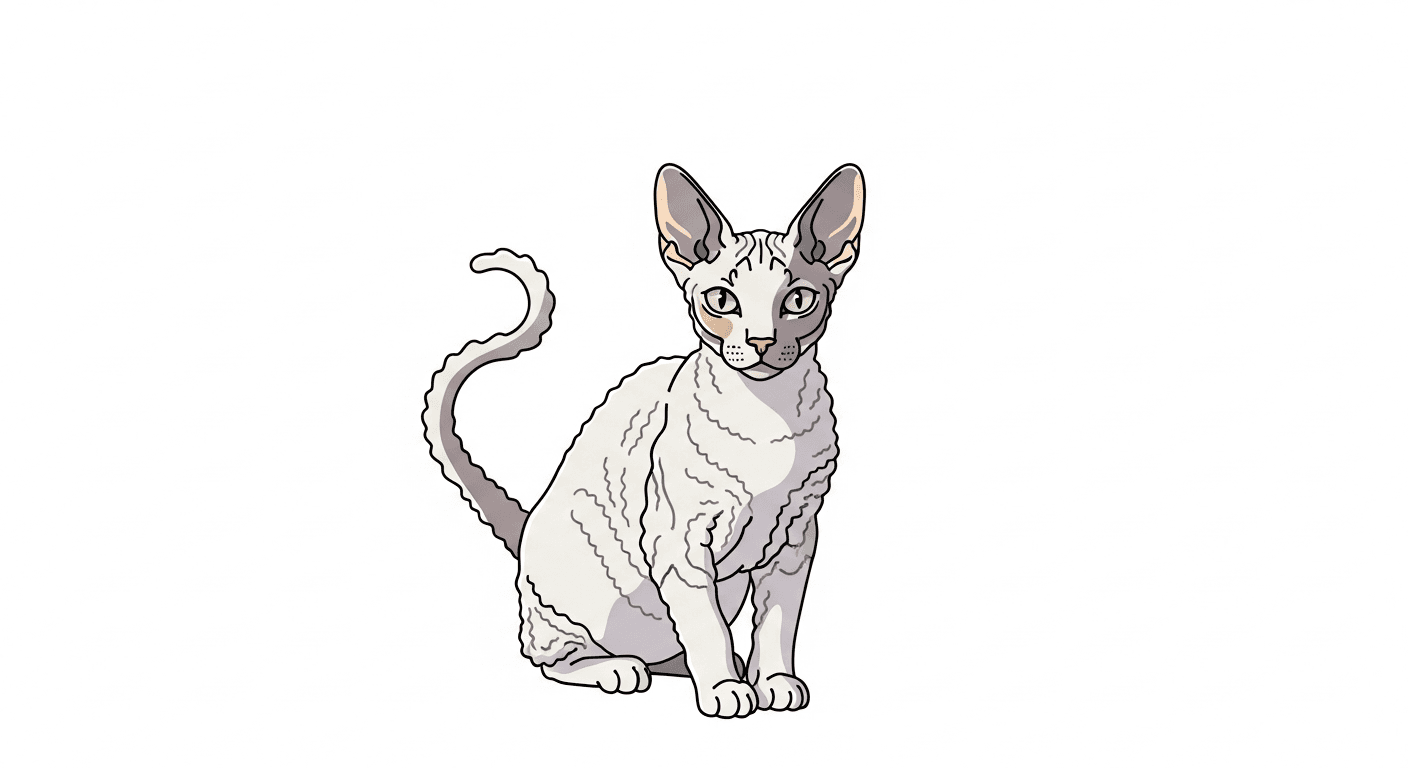
Cornish Rex Overview
The Cornish Rex is one of the most unique-looking cats in the world. With an egg-shaped head, large bat-like ears, arched body, and an extraordinarily soft, rippling wavy coat, the Cornish Rex looks — and often behaves — unlike any other breed. The breed originated from a spontaneous mutation in a litter of kittens born on a Cornish farm in England in 1950. A kitten named Kallibunker had a curly coat caused by a recessive gene now known as the "r" gene (different from the Devon Rex "re" gene).
Cornish Rex are slender, elegant cats with a distinctively arched backbone that gives them a perpetual "ready to spring" posture. Their coat consists only of the soft downy undercoat — the guard hairs and awn hairs are absent, leaving behind a plush, incredibly soft, rippling layer that has been compared to velvet or silk. They are small to medium in size (males 6–9 pounds, females 4–7 pounds) and come in virtually every color and pattern.
Personality and Temperament
Cornish Rex cats are perpetual kittens in spirit — playful, active, and bursting with personality well into old age.
- Kitten-like energy throughout life: Cornish Rex maintain high play drive and curiosity far longer than most breeds. Expect an active, engaging companion at age 8 that plays like it is 8 months old.
- Extremely fast and agile: The arched body gives them exceptional speed and leaping ability. They can move in short bursts that seem impossibly quick for a small cat.
- Social and outgoing: Cornish Rex are not shy. They greet strangers, interact with visitors, and thrive in busy, people-filled homes.
- Affectionate and warm-seeking: Like Devon Rex, Cornish Rex actively seek warm spots — and warmth means people. Expect them in bed with you, on your laptop, and on any heated surface available.
- Enjoy interactive play: Fetch, wand toys, puzzle feeders — the Cornish Rex approaches every interaction as a game. Daily dedicated play sessions are important.
- Adaptable: Cornish Rex generally adapt well to different household compositions, including families, multi-pet homes, and active individuals.
The Cornish Rex is best suited to households that are home often and can engage daily with an active, social cat. They are not suited to long periods of isolation.
Grooming Needs
The Cornish Rex coat requires specific and somewhat counterintuitive care. Like the Devon Rex, the fragile undercoat-only structure is easily damaged by conventional grooming tools.
- No brushing with stiff tools: Stiff brushes break the delicate wave pattern and cause bald patches. Use only a soft rubber grooming mitt or a chamois cloth to smooth the coat gently.
- Bathing frequency: Every 2–4 weeks. Like Sphynx and Devon Rex, the Cornish Rex produces skin oils that accumulate without a full coat to absorb them. Regular bathing prevents greasiness and body odor.
- Shampoo selection: Use a gentle, residue-free shampoo. Dry thoroughly after bathing — their minimal coat provides almost no insulation when wet, and they can become chilled rapidly.
- Ear cleaning: Large, prominent ears accumulate wax and debris. Check and clean weekly.
- Temperature sensitivity: Cornish Rex feel cold easily. Provide warm cat beds, blankets, and consider cat sweaters in drafty homes or cool climates.
Diet plays a significant role in Cornish Rex coat quality. A high-protein diet with adequate fatty acids maintains the characteristic ripple and soft texture.
Health Risks and Common Conditions
Cornish Rex are generally a healthy breed with relatively few hereditary conditions compared to some other pedigree breeds.
- Hypertrophic Cardiomyopathy (HCM): As in most cat breeds, HCM has been documented. Annual cardiac auscultation is recommended.
- Alopecia: Temporary hair loss can occur when the cat is under stress, during illness, or hormonal changes. The wave pattern may grow back unevenly. Monitor and report to your vet.
- Blood type B: Cornish Rex have a higher prevalence of blood type B than the general cat population — important for emergency medical care and breeding.
- Skin conditions: The minimal coat means skin is more exposed to irritants. Some Cornish Rex develop seborrhea or contact dermatitis. Avoid harsh cleaning products near the cat's living areas.
- Periodontal disease: Regular dental care, including brushing and annual professional cleanings, is important.
- Hyperthermia and hypothermia sensitivity: Their reduced insulation makes temperature regulation a welfare concern. Avoid exposure to extreme temperatures.
Book a vet appointment at Happy Paws for blood typing and a full wellness assessment for your Cornish Rex. Track temperature comfort, coat condition, and skin health with the TailRounds Daily Log. Find a Clinic near you with experience in Rex breed care.
Ideal Home, Cost, and Availability
Cornish Rex are ideal for energetic, engaged owners who want a playful, social companion. They suit families, active individuals, and multi-pet homes with other social cats or cat-friendly dogs.
Purchase cost: $800–$1,500 from reputable breeders. Cornish Rex are less common than some breeds but can be sourced through breed clubs and specialized catteries.
Lifespan: 11–15 years. A healthy, active breed that ages gracefully with proper preventive care and regular veterinary monitoring.
Continue Reading
 🐈 Cat Breeds
Devon Rex: Complete Breed Guide — Personality, Coat Care & Health
A full guide to the Devon Rex: its elf-like appearance, curly coat, mischievous personality, muscular dystrophy risk, and what makes this breed ideal for some and challenging for others.
 🐈 Cat Breeds
Sphynx Cat: Complete Breed Guide — Care, Personality & Health
Everything about Sphynx cats: their surprising warmth and affection, skin care requirements, HCM risk, ideal home environment, and what it really costs to own a hairless cat.
 🐈 Cat Breeds
Abyssinian Cat: Complete Breed Guide — Personality, Care & Health
A full guide to the Abyssinian cat: its athletic personality, ticked coat, moderate grooming needs, health risks including PRA and renal amyloidosis, and ideal home.