
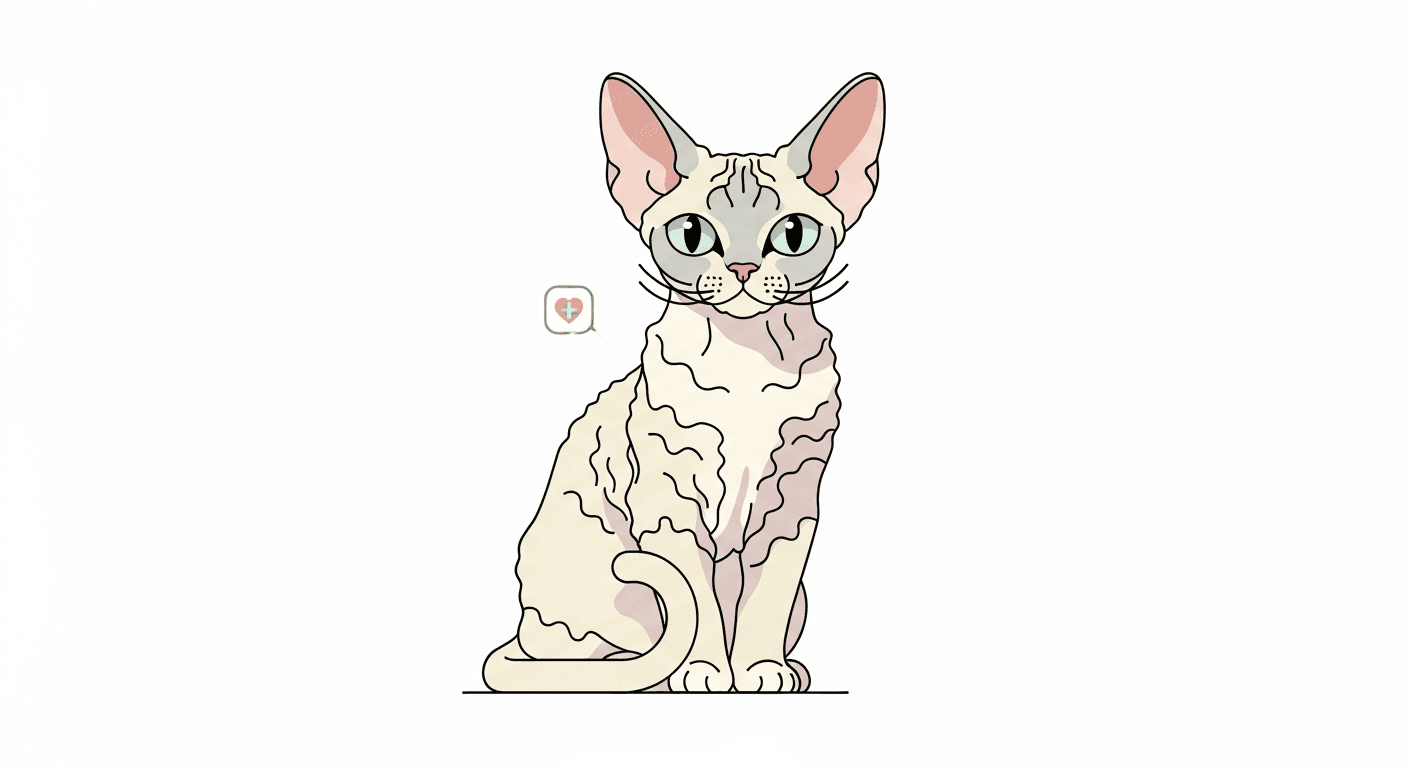
Devon Rex Overview
The Devon Rex is one of the most distinctive-looking cat breeds — with enormous ears, large impish eyes, prominent cheekbones, and a curly, wavy coat that seems impossibly soft. This breed originated from a single curly-coated kitten named Kirlee, found in Devonshire, England in 1960. Unlike the Cornish Rex (another curly-coated breed), the Devon Rex's curl is caused by a completely different gene, meaning the two breeds cannot interbreed to produce reliably curly offspring.
Devon Rex cats are small to medium-sized, with a fine-boned, slender body and a short, wavy coat that lies in loose ringlets and waves. The coat is thinnest on the temples, behind the ears, and on the belly, which can give the appearance of partial baldness in some individuals — particularly kittens. Colors and patterns are varied. Males typically weigh 7–9 pounds; females 5–7 pounds. Their pixie-like appearance has earned them nicknames like "elf cat," "alien cat," and "poodle cat."
Personality and Temperament
Devon Rex cats are famously mischievous, entertaining, and deeply people-oriented. They have been described as having the personality of a monkey in a cat's body.
- Velcro cats: Devon Rex want to be on you — on your shoulder, in your lap, under the covers. They seek body warmth constantly and follow their owners everywhere.
- Playful and clownish: They have an extraordinary sense of play and will invent their own entertainment if not provided with enough toys. They enjoy fetch, learning tricks, and interactive games.
- Extremely social: Devon Rex crave constant companionship. Left alone, they can become anxious and destructive. A feline companion is strongly recommended for working households.
- Intelligent: They learn quickly — including how to open cabinets, steal food, and find any hiding spot you've designated as off-limits.
- Food-motivated: Devon Rex are famous food thieves. They will steal food from plates, knock over food containers, and beg constantly. Secure food storage is essential.
Devon Rex are highly interactive cats that form deep bonds. They are not suited to independent, hands-off ownership. Their energy and social needs are significant, but for the right owner, they are endlessly entertaining companions.
Grooming Needs
The Devon Rex coat requires different care than most cat breeds. The fragile, wavy coat breaks easily, so traditional brushing can cause bald patches.
- No traditional brushing: Avoid stiff bristle brushes and fine-toothed combs. The fragile curl structure breaks easily, leaving bald spots.
- Gentle handling: Use a soft rubber grooming mitt or simply smooth with a damp hand to remove loose hairs and redistribute skin oils.
- Bathing: More frequently than most cats — every 2–4 weeks. The Devon Rex produces normal amounts of skin oil, but without thick fur to absorb it, oil accumulates on the skin. Use a gentle, unscented cat shampoo.
- Ear cleaning: Devon Rex ears are large and can accumulate wax and debris. Check and clean weekly with a vet-approved ear solution.
- Nail cleaning: Oil accumulates in nail beds. Clean around nails at each bath.
Devon Rex cats benefit from cat sweaters in cooler climates — their minimal fur provides less insulation than most breeds. They are heat-seekers by necessity as much as by preference.
Health Risks and Common Conditions
Devon Rex are generally healthy cats but have several notable breed-specific health concerns.
- Devon Rex Myopathy (Spasticity): A hereditary muscular condition causing generalized muscle weakness, head and neck tremors during eating, and difficulty swallowing. It is caused by a recessive gene. Severely affected cats may die or require euthanasia; mildly affected cats can live with management. DNA testing is available.
- Hypertrophic Cardiomyopathy (HCM): Heart disease has been documented in Devon Rex. Annual cardiac monitoring is recommended.
- Hip Dysplasia: A skeletal abnormality affecting the hip joint. Occurs in Devon Rex more frequently than in many other breeds. Limping, reluctance to jump, and pain are signs.
- Blood type B prevalence: Devon Rex have a high prevalence of blood type B (rare in cats). This is critical if a transfusion is ever needed or for breeding purposes.
- Periodontal disease: Regular dental care is essential.
Request myopathy DNA testing from Devon Rex breeders. Book a vet appointment at Happy Paws for blood typing, cardiac evaluation, and hip assessment. Use the TailRounds Daily Log to track eating patterns and muscle function indicators. Find a Clinic near you familiar with Rex breeds and myopathy management.
Ideal Home, Cost, and Availability
Devon Rex suit highly engaged, affectionate owners who spend significant time at home. They are excellent for families, couples, and active single cat lovers willing to provide constant companionship and frequent bathing.
Purchase cost: $800–$1,800 from reputable breeders with myopathy DNA testing. Devon Rex rescues occasionally have cats in need of rehoming.
Lifespan: 9–15 years. Myopathy severity significantly impacts lifespan in affected individuals; DNA-clear cats from health-tested parents enjoy normal longevity.
Continue Reading
 🐈 Cat Breeds
Cornish Rex: Complete Breed Guide — Personality, Coat Care & Health
Everything about Cornish Rex cats: their distinctive egg-shaped head, incredibly soft wavy coat, kitten-like energy, unique grooming needs, health considerations, and ideal owners.
 🐈 Cat Breeds
Sphynx Cat: Complete Breed Guide — Care, Personality & Health
Everything about Sphynx cats: their surprising warmth and affection, skin care requirements, HCM risk, ideal home environment, and what it really costs to own a hairless cat.
 🐈 Cat Breeds
Oriental Shorthair: Complete Breed Guide — Personality, Care & Health
A full guide to the Oriental Shorthair: its dramatic appearance, extraordinary range of colors, Siamese-like personality, health risks, and why this breed is not for the faint of heart.