
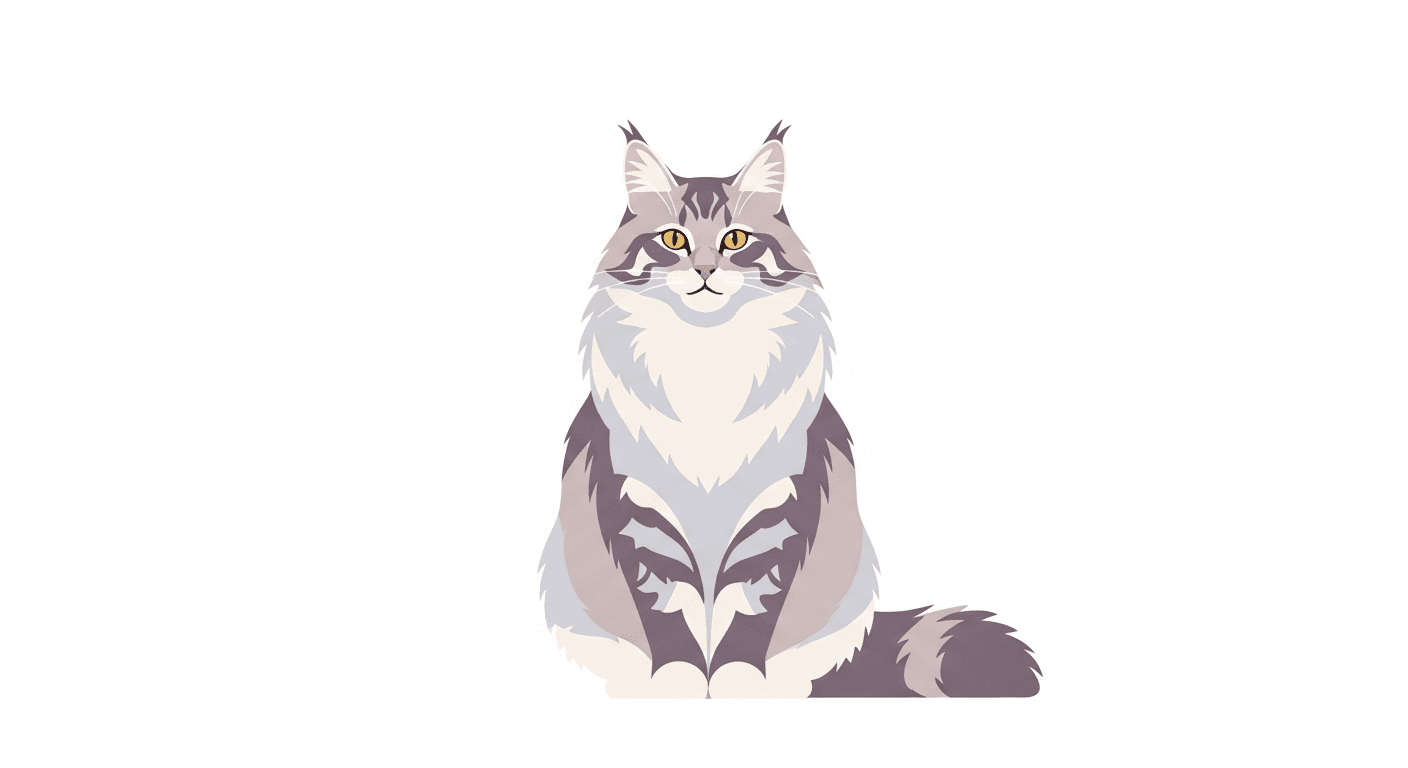
Siberian Cat Overview
The Siberian cat is Russia's national treasure — a large, ancient, naturally occurring breed that developed over centuries in the harsh climate of the Siberian taiga. References to large, semi-wild forest cats in Russia date back over 1,000 years. The Siberian became a recognized pedigree breed in the late 1980s when the Soviet Union began exporting cats to Europe and North America, and today they are one of the fastest-growing breeds in terms of global popularity.
Siberian cats are large to very large — males commonly reach 15–20 pounds, making them one of the biggest domestic cat breeds — though they mature slowly, reaching full size only at 4–5 years. They have a powerful, barrel-chested body, a broad, slightly rounded head, large tufted paws, and a full, bushy tail. Their most remarkable feature is their triple-layered, water-resistant semi-long coat: a dense, insulating undercoat, a middle layer of awn hairs, and a coarser, water-repelling guard coat — a natural adaptation to sub-zero temperatures. The coat comes in virtually every color and pattern.
Personality and Temperament
The Siberian's personality is as impressive as its size. These are confident, gentle, and surprisingly interactive cats that form strong bonds with their entire household.
- Dog-like behavior: Siberians follow their owners, greet them at the door, respond to their name, and can be leash-trained. Their loyalty is comparable to a dog's.
- Agile and athletic despite size: Siberians are exceptional jumpers and climbers. Their powerful hind legs give them extraordinary leaping ability. Tall, sturdy cat trees are essential.
- Intelligent problem-solvers: They investigate new objects thoroughly and can figure out puzzle feeders, door latches, and environmental challenges.
- Calm and confident: Unlike more anxious breeds, Siberians are self-assured and tend not to be startled by household commotion. They adapt well to changes.
- Affectionate without being clingy: They enjoy being near their people and will seek out interaction, but they also tolerate alone time better than highly dependent breeds.
- Water-curious: Like other northern breeds, Siberians are often fascinated by water — expect paw-dipping in water bowls and curiosity about running taps.
Siberians are suitable for families, multi-pet homes, and first-time cat owners. Their even temperament, adaptability, and warm nature make them genuinely enjoyable companions across a wide range of household types.
Grooming Needs
The Siberian's impressive triple coat requires consistent but not excessive grooming effort. The coat's natural structure resists matting better than many long-haired breeds.
- Brushing frequency: Two to three times per week throughout the year with a wide-toothed stainless steel comb. Increase to daily during spring and fall when the undercoat is shed in significant quantities.
- Seasonal moult: Siberian cats go through two dramatic moults per year. During these periods, undercoat can be removed in handfuls. A de-shedding tool used weekly reduces loose fur dramatically.
- Bathing: Every 4–6 weeks. The triple coat requires thorough wetting — allow adequate time for water to penetrate the water-repelling outer layer. Use a de-shedding shampoo for best results.
- Ruff and tail: The full neck ruff and bushy tail need focused attention during every brushing session. Tangles form most quickly at the ruff base.
- Dental care: Brush teeth 2–3 times per week and schedule professional cleanings annually.
- Ear cleaning: Check monthly. The ear tufts can accumulate debris — clean carefully without probing into the ear canal.
Despite the full coat, many Siberian owners find grooming sessions pleasurable bonding experiences due to the breed's cooperative, gentle nature. Start grooming routines from kittenhood for the easiest adult experience.
Health Risks and Common Conditions
Siberian cats are one of the healthier large cat breeds, but several conditions are documented and warrant preventive care.
- Hypertrophic Cardiomyopathy (HCM): The most significant health concern in Siberians. HCM is documented in the breed, with an HCM-associated gene mutation (MYBPC3) found in some lines. DNA testing is available. Annual echocardiography from age 3 is strongly recommended.
- Polycystic Kidney Disease (PKD): Has been reported in some lines. DNA testing is available for the PKD1 gene mutation. Ask breeders for test results.
- Hereditary Cancer: As with all large breeds, Siberians can develop lymphoma and other cancers. Annual wellness screenings from age 6 help with early detection.
- Hip Dysplasia: Occasional reports exist in large breeds. Maintaining healthy weight reduces joint stress.
- Low Fel d 1 allergen production: Siberian cats produce lower levels of the Fel d 1 protein — the primary cat allergen — than most breeds. This makes them a frequent recommendation for allergy sufferers, though no cat is truly hypoallergenic. Individual sensitivity varies; always spend time with a Siberian before committing if you have cat allergies.
The combination of low allergen potential and robust health makes the Siberian a particularly accessible breed for households that otherwise thought cat ownership was impossible. Book a vet appointment at Happy Paws to establish HCM screening and PKD DNA testing for your Siberian. Track weight and respiratory rate with the TailRounds Daily Log — important early cardiac indicators. Find a Clinic near you equipped for large cat cardiac and kidney assessments.
Ideal Home, Cost, and Availability
Siberian cats suit a remarkably wide range of households — families, multi-pet homes, active individuals, and even some allergy sufferers. They are adaptable, patient, and genuinely easy to live with.
Purchase cost: $1,200–$2,500 from reputable breeders with HCM and PKD testing. Siberian cats are increasingly available globally through breed clubs and registered catteries. Demand has grown rapidly, so expect waiting lists from quality breeders.
Lifespan: 12–15 years on average, with individuals regularly reaching 16–18 years. Their robust natural constitution, combined with modern preventive veterinary care, supports excellent longevity. Establish a preventive care partnership with your vet from day one for the best possible health outcomes throughout your Siberian's life.
Continue Reading
 🐈 Cat Breeds
Norwegian Forest Cat: Complete Guide — Personality, Grooming & Health
Everything about Norwegian Forest Cats: their Viking-era history, semi-long weather-resistant coat, outdoor-ready personality, HCM and GSD IV risks, and ownership costs.
 🐈 Cat Breeds
Maine Coon Cat: Complete Breed Guide — Personality, Care & Health
Discover everything about the Maine Coon: its dog-like personality, impressive size, grooming routine, health risks like HCM, and the ideal home environment.
 🐈 Cat Breeds
Turkish Angora: Complete Breed Guide — Personality, Grooming & Health
A full guide to the Turkish Angora: its ancient heritage, silky single coat, athletic personality, deafness risk in white cats, and ideal home environment.