
Oriental Shorthair Overview
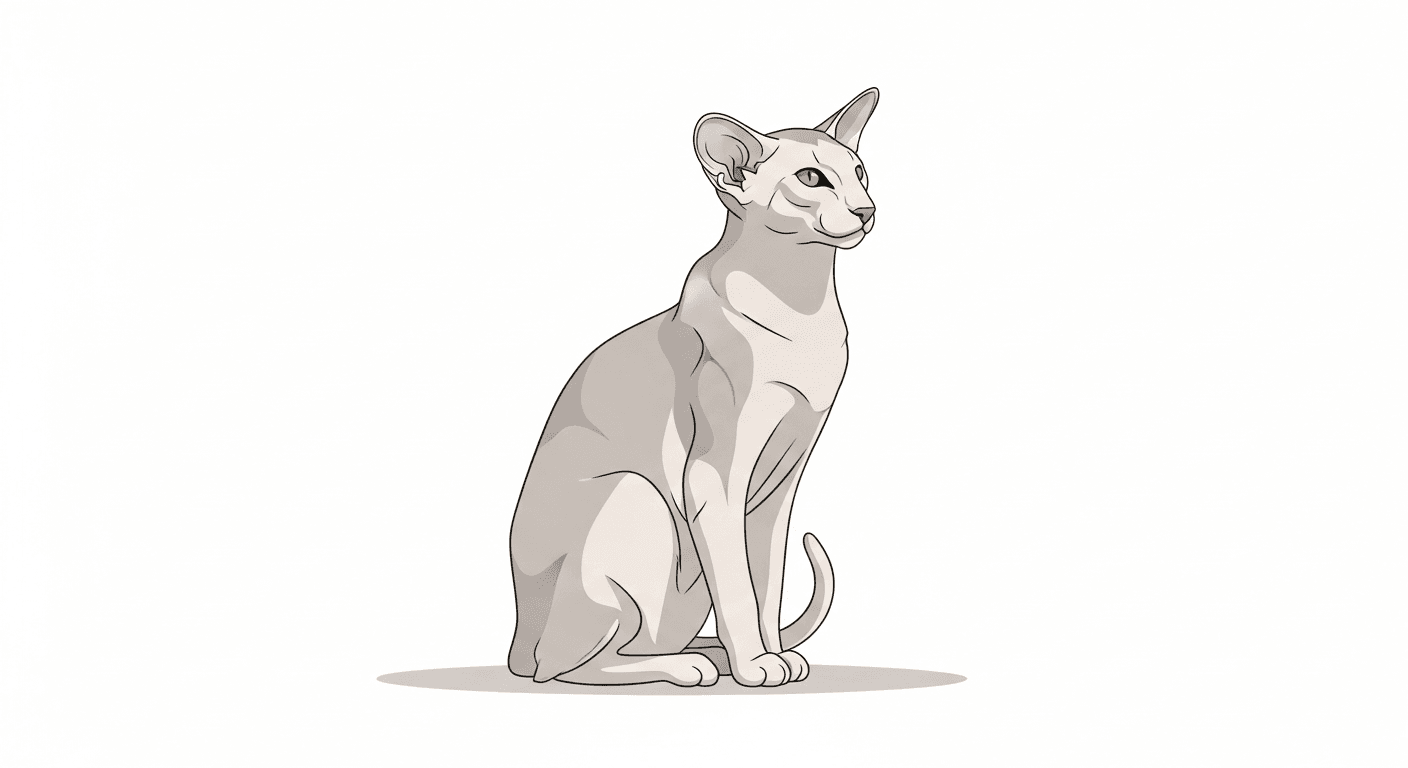
The Oriental Shorthair is essentially a Siamese cat in a non-pointed, rainbow of colors. Developed from Siamese breeding programs in the 1950s and 1960s by crossing Siamese with domestic shorthairs and other breeds, the Oriental Shorthair was recognized as its own breed by TICA in 1979. The breed shares the Siamese body type — long, angular, and elegant — but comes in over 300 color and pattern combinations, making it the most color-diverse cat breed in existence.
Oriental Shorthairs are medium-sized, slender, and angular cats with a long wedge-shaped head, very large ears that continue the lines of the wedge, large almond-shaped eyes (which can be green, blue, or odd in some white Orientals), and long, whippy tails. The coat is short, fine, and lies close to the body. A long-haired variant exists (Oriental Longhair) with the same personality. Males typically weigh 8–10 pounds; females 5–8 pounds.
Personality and Temperament
If the Siamese is famously vocal and demanding, the Oriental Shorthair is the Siamese turned up to eleven. This is a breed that commands attention and refuses to be ignored.
- Extremely vocal: Oriental Shorthairs talk constantly. They have strong opinions about food timing, your absence, your attention level, and the temperature of the room. Their voice is loud and insistent.
- Highly demanding: They want — and require — significant daily interaction. A bored Oriental is a destructive, depressed, or anxious cat.
- Intensely bonded: They form powerful bonds with their primary person. They follow, vocalize, and demand interaction in ways that rival dogs.
- Intelligent and curious: They investigate everything, learn tricks rapidly, can be leash-trained, and benefit from complex environmental enrichment.
- Can be jealous: Some Orientals are territorial over their person's attention. Introduce other pets carefully and ensure everyone gets adequate attention.
- Active and athletic: They are excellent jumpers and runners. Vertical space and interactive play are essential.
The Oriental Shorthair is not a cat that tolerates being left alone for long periods. If you work full-time away from home, an Oriental will not thrive without a companion animal and significant environmental enrichment.
Grooming Needs
The Oriental Shorthair's short, close-lying coat is one of the easiest to maintain of any breed.
- Brushing: Once a week with a rubber grooming glove or fine-toothed comb removes loose hairs and distributes skin oils. Their coat has natural luster that grooming enhances.
- Bathing: Rarely necessary. Orientals are meticulous self-groomers.
- Dental care: Particularly important in this breed. Brush teeth 2–3 times per week and schedule annual professional cleanings. Siamese-type breeds are prone to periodontal disease.
- Ear cleaning: Their very large ears can collect debris. Check and clean weekly.
- Coat health indicator: A dull or unkempt coat in an Oriental is a meaningful health signal — this breed normally maintains a high-gloss coat through self-grooming. Seek veterinary advice promptly if coat quality changes.
Health Risks and Common Conditions
Oriental Shorthairs share many health traits with the Siamese from which they descend.
- Mediastinal Lymphoma: The Siamese/Oriental type has a documented elevated risk of this chest cavity cancer. Symptoms include respiratory distress, dysphagia, and weight loss. Early detection improves outcomes.
- Progressive Retinal Atrophy (PRA): Hereditary blindness from retinal degeneration. DNA testing is available and breeders should screen for it.
- Amyloidosis: Protein deposits in the liver (and occasionally kidneys) leading to organ failure. No cure; supportive care and early detection through blood work are key.
- Periodontal disease: Highly prevalent. Preventive dental care from kittenhood is strongly advised.
- Hypertrophic Cardiomyopathy (HCM): Cardiac disease occurs in the breed. Annual screening is advised.
- Crossed eyes (strabismus): A historical Siamese/Oriental trait, largely bred out in modern show lines, but occasionally present.
Book a vet appointment at Happy Paws for comprehensive blood work including liver panels and PRA DNA testing for your Oriental Shorthair. Track your cat's respiratory rate and energy daily using the TailRounds Daily Log — early lymphoma signs are subtle. Find a Clinic near you experienced in Siamese-type health concerns.
Ideal Home, Cost, and Availability
The Oriental Shorthair is best suited to highly engaged households — active families, home-based workers, or owners who keep multiple social cats. They are not suitable for people seeking a quiet, independent cat.
Purchase cost: $600–$1,500 from reputable breeders with PRA testing. Their extraordinary color range makes some color combinations more sought-after and expensive.
Lifespan: 12–15 years. Lymphoma risk means that wellness screening after age 6 becomes particularly important. Proactive monitoring extends quality life years significantly.
Continue Reading
 🐈 Cat Breeds
Siamese Cat: Complete Breed Guide — Personality, Care & Health
A full guide to the Siamese cat: its famously vocal personality, striking blue eyes, minimal grooming needs, health risks, and ideal living environment.
 🐈 Cat Breeds
Tonkinese Cat: Complete Breed Guide — Personality, Care & Health
Everything about Tonkinese cats: their Siamese-Burmese heritage, mink coat pattern, chatty personality, good health record, and why they are one of the most sociable cat breeds.
 🐈 Cat Breeds
Abyssinian Cat: Complete Breed Guide — Personality, Care & Health
A full guide to the Abyssinian cat: its athletic personality, ticked coat, moderate grooming needs, health risks including PRA and renal amyloidosis, and ideal home.