
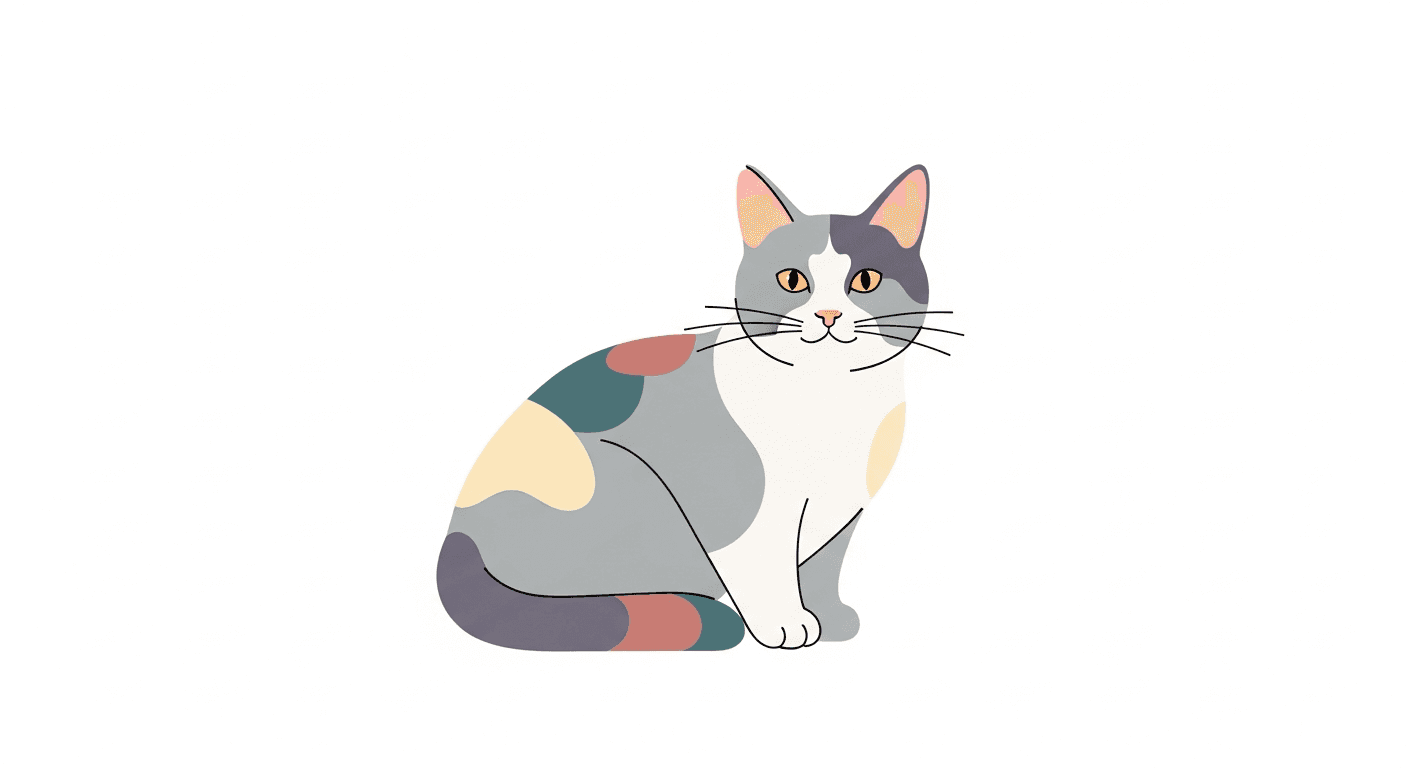
Manx Cat Overview
The Manx is one of the most distinctive domestic cat breeds, famous for its naturally tailless or short-tailed body caused by a spontaneous genetic mutation that arose on the Isle of Man in the Irish Sea centuries ago. The island's isolation allowed this recessive-appearing dominant tail mutation to proliferate through the cat population, eventually creating a distinct breed. Manx cats are one of the oldest recognized breeds, featured in early cat shows in the 19th century.
Manx cats come in four tail variations: "Rumpy" (completely tailless, with a small dimple where the tail base would be), "Risers" (a small rise of cartilage without vertebrae), "Stumpies" (a short stub tail of 1–3 vertebrae), and "Longies" (a near-full-length tail). Rumpies are the show standard. The Manx is a rounded, compact cat with a broad chest, short back, long hind legs (higher than the front, creating a bunny-like hopping gait), and a dense double coat. Both short-haired and long-haired (Cymric) varieties exist. Colors and patterns are extensive.
Personality and Temperament
Manx cats have a reputation for personality that surprises people who expect a typical aloof cat. They are loyal, playful, and surprisingly dog-like in their behavior.
- Dog-like loyalty: Manx cats often follow their chosen person around the house, learn to come when called, play fetch, and greet owners at the door. Their devotion is exceptional.
- Playful and athletic: Despite their compact build, Manx are excellent jumpers and hunters. They retain high play drive throughout life and need regular interactive play.
- Protective instinct: Manx cats are known to growl or posture in response to unfamiliar noises or strangers — a behavior more common in dogs than in cats. They are sometimes called "guard cats."
- Gentle with family: Despite their bold, protective streak, Manx are gentle and patient with family members, including children.
- Intelligent: They learn quickly and can be taught tricks and leash walking.
- May be reserved with strangers: Like many territorial animals, Manx can be cautious with unfamiliar people until properly introduced.
Manx make excellent companions for families, singles, and older children. Their combination of loyalty and self-confidence makes them uniquely engaging cats.
Grooming Needs
Grooming needs vary by coat type. Short-haired Manx are easy to maintain; Cymric (long-haired Manx) require more regular attention.
- Short-haired Manx: Brush once or twice a week with a medium comb or slicker brush. Their dense double coat sheds moderately and requires more frequent brushing during seasonal transitions.
- Cymric (long-haired): Brush 3–4 times per week to prevent mats, especially on the belly, behind the ears, and in the ruff.
- Bathing: Every 4–6 weeks is beneficial for both varieties. Manx generally tolerate bathing well.
- Tail area (stumpies and risers): Keep the tail stub area clean. Monitor for signs of arthritis in stub tails, which can cause pain as the cat ages.
- Dental care: Brush teeth 2–3 times per week. Annual professional cleanings are recommended.
Health Risks and Common Conditions
The Manx gene responsible for taillessness also affects spinal development, creating significant health concerns that all owners and breeders must understand.
- Manx Syndrome: The most serious health concern in Rumpies. The tailless gene (M) in homozygous form (MM) is lethal — all homozygous kittens die in utero. Heterozygous Manx (Mm) are viable, but the gene affects not only tail vertebrae but also the rest of the spine. Some Manx develop spinal problems including spina bifida, sacrococcygeal agenesis, and urinary/fecal incontinence. Manx Syndrome symptoms include incontinence, hopping gait, hindlimb weakness, and megacolon. Severity varies widely; severely affected kittens typically show signs by 4 months.
- Corneal dystrophy: Cloudy deposits in the cornea have been reported in some Manx lines. Vision impairment varies.
- Arthritis in stub tails: Short stub tails can develop arthritis as the cat ages. Monitor for pain signs when touching the tail area.
- Hypertrophic Cardiomyopathy (HCM): Cardiac disease is documented in Manx. Annual cardiac auscultation is recommended.
- Megacolon: A consequence of sacral nerve abnormalities affecting bowel motility. Signs include infrequent, large, hard stools and constipation. Dietary management and veterinary treatment are effective.
Ask breeders specifically about Manx Syndrome incidence in their lines. Book a vet appointment at Happy Paws for a spinal and neurological assessment and to establish baseline urinary and gastrointestinal health monitoring. Use the TailRounds Daily Log to track litter box habits — changes in urination or defecation are early Manx Syndrome indicators. Find a Clinic near you with feline neurology experience.
Ideal Home, Cost, and Availability
Manx cats suit a wide range of household types — families, singles, and multi-pet homes. Their loyalty and playfulness make them rewarding companions at virtually any life stage.
Purchase cost: $500–$1,200 from reputable breeders. Manx are moderately common in the United States and UK. Breed-specific rescues occasionally have Manx cats available for adoption.
Lifespan: 14–16 years for healthy individuals without significant Manx Syndrome involvement. Cats with managed conditions like megacolon can still enjoy excellent quality of life with proper veterinary support.
Continue Reading
 🐈 Cat Breeds
American Shorthair: Complete Breed Guide — Personality, Care & Health
Everything about American Shorthair cats: their working-cat heritage, adaptable personality, silver tabby popularity, common health risks, and why they are one of the best family cats.
 🐈 Cat Breeds
British Shorthair: Complete Breed Guide — Personality, Care & Health
A full guide to the British Shorthair cat: its calm personality, plush coat, breed-specific health risks like HCM and PKD, ideal home environment, and ownership costs.
 🐈 Cat Breeds
Scottish Fold: Complete Breed Guide — Personality, Care & Ethical Concerns
A complete guide to Scottish Fold cats: their distinctive folded ears, sweet personality, osteochondrodysplasia risks, grooming needs, and the ongoing ethical debate around the breed.