
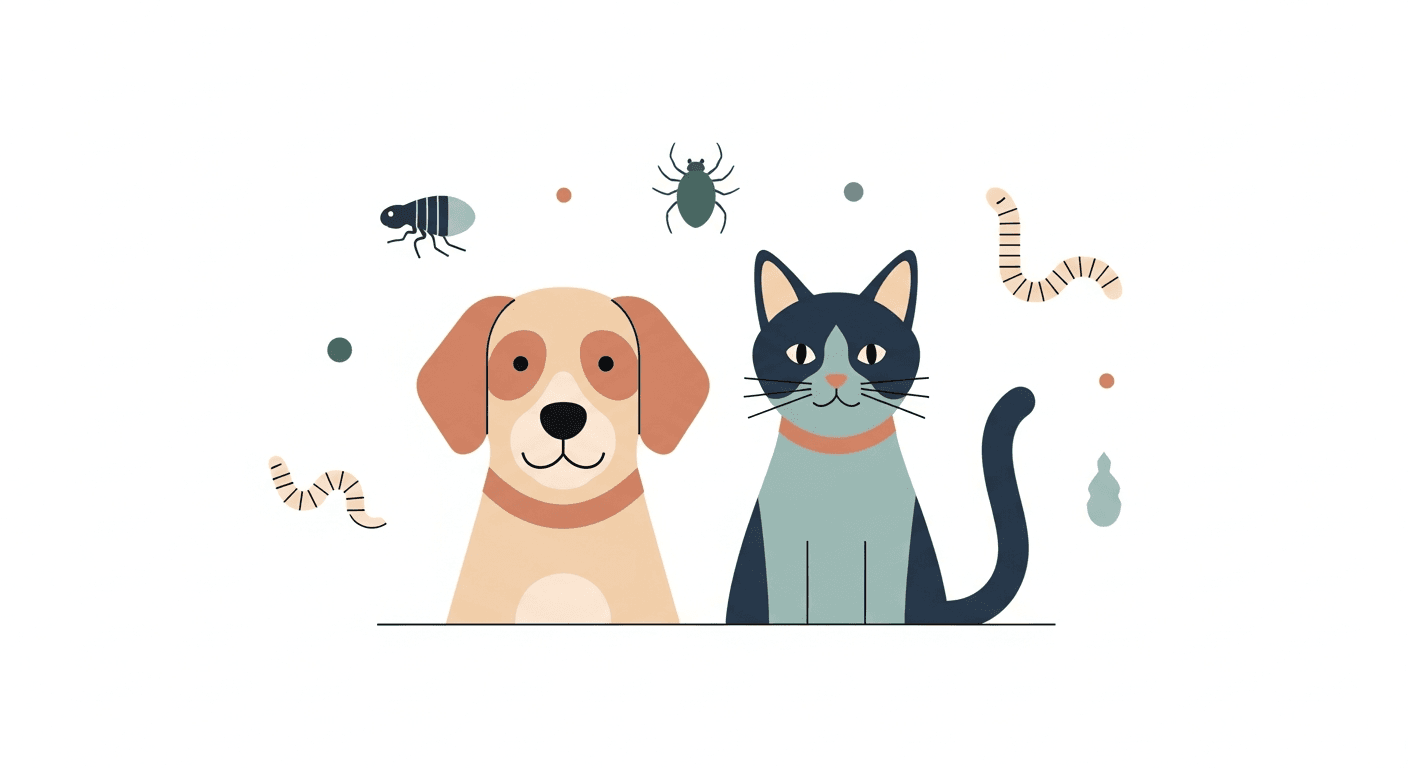
The Parasite Landscape: What Your Pet Faces
Parasites are organisms that live on or in a host animal and derive benefit at the host's expense. For pets, the parasite landscape falls into two main categories: external parasites (ectoparasites) that live on the skin and coat, and internal parasites (endoparasites) that live inside the body. Both categories include organisms that can seriously harm pets and some that are transmissible to humans.
A comprehensive prevention strategy addresses both categories simultaneously. Prevention is always more effective, less expensive, and less stressful than treatment. Book a vet appointment at Happy Paws to set up a complete parasite prevention plan. Or find a clinic near you.
External Parasites: Prevention and Control
Fleas: The most common external parasite globally. Cause flea allergy dermatitis, tapeworm infection (when ingested), and anemia in severe infestations. Adult fleas visible on the pet represent only 5% of the total infestation — the rest are in the environment as eggs, larvae, and pupae. Year-round prevention with an effective product combined with environmental treatment is the only way to control fleas.
Ticks: Vectors for Lyme disease, ehrlichiosis, anaplasmosis, Rocky Mountain spotted fever, and more. Active whenever temperatures exceed 4°C (40°F). Prevention with isoxazoline products or tick-repelling topicals, daily coat checks, and the Lyme vaccine in high-risk areas form a layered defense.
Mites:
- Sarcoptes scabiei (scabies/mange): Intensely itchy, transmissible to humans. Treated with isoxazoline products or ivermectin.
- Demodex canis/cati (demodectic mange): generally not itchy, not contagious, associated with immune suppression. Treated with isoxazolines.
- Otodectes cynotis (ear mites): Common in cats, cause intense ear irritation. Treated with topical ear medications.
Internal Parasites: Prevention and Testing
Heartworm: Transmitted by mosquitoes. Fatal if untreated. Prevented with monthly oral or topical preventives, or 6–12 month injectable products. Annual blood testing required.
Roundworms: Near-universal in puppies and kittens. Deworm all puppies and kittens starting at 2 weeks. Adult pets with outdoor access should have fecal tests every 6 months. Many heartworm preventives also cover roundworms monthly.
Hookworms: Blood-sucking intestinal worms causing anemia and protein loss. Infective larvae penetrate skin directly. Prevented with the same heartworm/intestinal preventive regimen.
Tapeworms: Transmitted via fleas (Dipylidium) or prey animals (Taenia). Not covered by standard preventives — require praziquantel treatment when identified on fecal exam.
Whipworms (dogs only): Inhabit the large intestine, cause chronic diarrhea. Eggs persist in soil for years. Treated with fenbendazole or febantel.
Building Your Year-Round Prevention Protocol
A practical monthly protocol for most dogs:
- Monthly: Oral heartworm and intestinal parasite preventive (covers heartworm, roundworms, hookworms)
- Monthly: Flea and tick preventive (oral isoxazoline preferred; topical alternative)
- Annually: Heartworm blood test, fecal flotation exam, full physical exam
- As needed: Tapeworm and whipworm treatment when identified
For cats, use feline-specific products — never permethrin or many dog-label products. Monthly topical for fleas, ticks, and heartworm prevention. Annual fecal testing. Store all prevention records and test results in My Pets on TailRounds. Use the TailRounds AI Triage tool to assess diarrhea severity in your pet while you arrange a vet visit.
Continue Reading
 💉 Vaccines & Preventive Care
Heartworm Prevention Year-Round
Heartworm disease is preventable but fatal if left untreated. Learn about prevention options, testing schedules, and why year-round protection matters.
 💉 Vaccines & Preventive Care
Flea and Tick Prevention Guide
A complete guide to protecting your dog or cat from fleas and ticks year-round, including product types, application tips, and environmental control.
 💉 Vaccines & Preventive Care
Deworming Schedule for Dogs and Cats
A practical guide to deworming schedules for puppies, kittens, and adults — covering roundworms, hookworms, tapeworms, and whipworms.
 💉 Vaccines & Preventive Care
Annual Vet Checkup: What Happens
Demystify your pet's annual wellness visit. Here is exactly what the vet checks, why each part matters, and how to get the most from the appointment.