
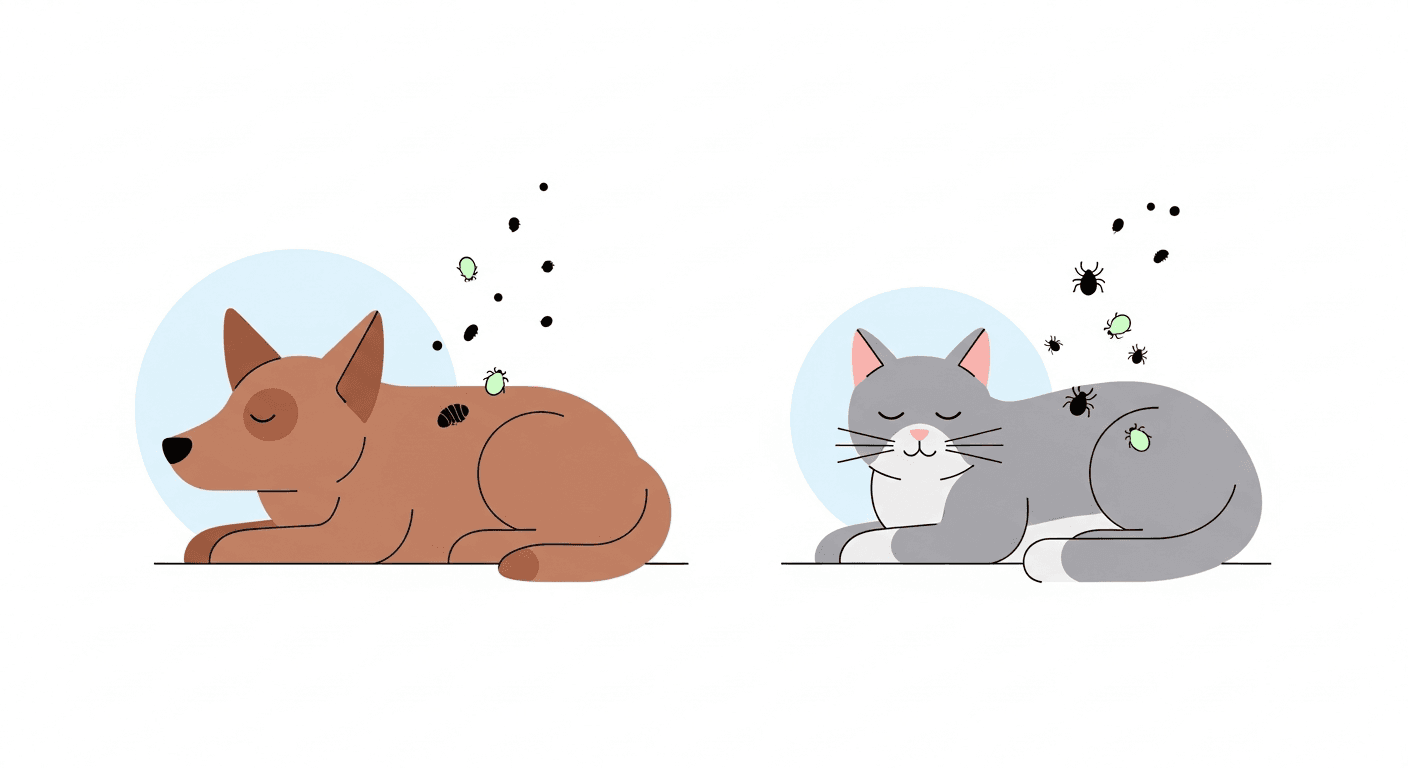
Why Flea and Tick Prevention Matters
Fleas and ticks are more than just a nuisance — they are vectors for serious diseases. A single flea infestation can cause flea allergy dermatitis (the most common skin disease in dogs and cats), tapeworm infection, and in heavy infestations, anemia. Ticks transmit Lyme disease, Rocky Mountain spotted fever, ehrlichiosis, anaplasmosis, babesiosis, and more. Many of these diseases affect both pets and humans.
Prevention is simpler, cheaper, and far less stressful than treating an established infestation or tick-borne disease. A single flea that lands on your pet can lay 50 eggs per day — within weeks, your entire home can be infested. Start and maintain prevention before the problem begins.
Types of Flea and Tick Prevention Products
Modern veterinary medicine offers a wide range of prevention options:
- Oral chewables (dogs): Isoxazoline class products (fluralaner, afoxolaner, lotilaner, sarolaner) are highly effective, fast-acting, and provide 1–3 months of protection against fleas and ticks. They work by disrupting the insect nervous system and are very safe for dogs.
- Topical spot-ons: Applied between the shoulder blades monthly. Effective for both fleas and ticks. Options include imidacloprid, fipronil, permethrin (dogs only — toxic to cats), and pyriproxyfen combinations.
- Flea and tick collars: Modern prescription collars release active ingredients over several months. More convenient than monthly application but effectiveness varies by product.
- Sprays and shampoos: Useful for treating an active infestation but do not provide lasting prevention.
Never use dog-specific flea products (especially permethrin-based) on cats — they can cause fatal neurological toxicity. Always confirm a product is labeled for your specific species. Book a vet appointment at Happy Paws to get a personalized product recommendation, or find a clinic near you.
Flea Prevention: Environmental Control
Treating the pet alone is not enough to end an infestation. Up to 95% of flea life cycle stages (eggs, larvae, pupae) live off the pet — in carpets, bedding, furniture, and cracks in floors. A complete flea control plan includes:
- Treating all pets in the household simultaneously
- Vacuuming thoroughly and frequently (dispose of the vacuum bag immediately)
- Washing pet bedding weekly in hot water
- Treating the home environment with a veterinary-approved flea spray or fogger containing an insect growth regulator (IGR) to break the life cycle
- Treating outdoor areas where pets spend time
It takes at least 3 months of consistent prevention and environmental treatment to break a flea cycle. Do not stop products early.
Tick Prevention and Safe Removal
Ticks are active in temperatures above 4°C (40°F) — in many regions, that means year-round vigilance. After any time outdoors, run your fingers through your pet's coat, paying special attention to the head, neck, ears, between the toes, and under the tail.
If you find a tick:
- Use fine-tipped tweezers or a tick removal tool — grasp as close to the skin as possible
- Pull steadily upward without twisting or jerking
- Do not crush the tick with your fingers
- Clean the bite area with rubbing alcohol or soap and water
- Place the tick in a sealed bag for identification if disease symptoms develop later
If your pet lives in a tick-endemic area, discuss adding the Lyme vaccine to their preventive care plan alongside tick prevention products. Track all prevention records in My Pets on TailRounds.
Year-Round vs. Seasonal Prevention
Many owners ask whether they need prevention year-round or only in summer. Veterinary consensus is clear: year-round prevention is recommended for fleas and, in most regions, for ticks as well. Fleas thrive indoors year-round in warm homes, and ticks can be active on warm winter days. The TailRounds AI Triage tool can help you assess whether symptoms like excessive scratching or skin irritation may be flea-related between vet visits.
Continue Reading
 💉 Vaccines & Preventive Care
Heartworm Prevention Year-Round
Heartworm disease is preventable but fatal if left untreated. Learn about prevention options, testing schedules, and why year-round protection matters.
 💉 Vaccines & Preventive Care
Deworming Schedule for Dogs and Cats
A practical guide to deworming schedules for puppies, kittens, and adults — covering roundworms, hookworms, tapeworms, and whipworms.
 💉 Vaccines & Preventive Care
Complete Parasite Prevention Guide
Internal and external parasites threaten your pet year-round. This comprehensive guide covers prevention of all major parasites with a clear action plan.
 💉 Vaccines & Preventive Care
Annual Vet Checkup: What Happens
Demystify your pet's annual wellness visit. Here is exactly what the vet checks, why each part matters, and how to get the most from the appointment.