
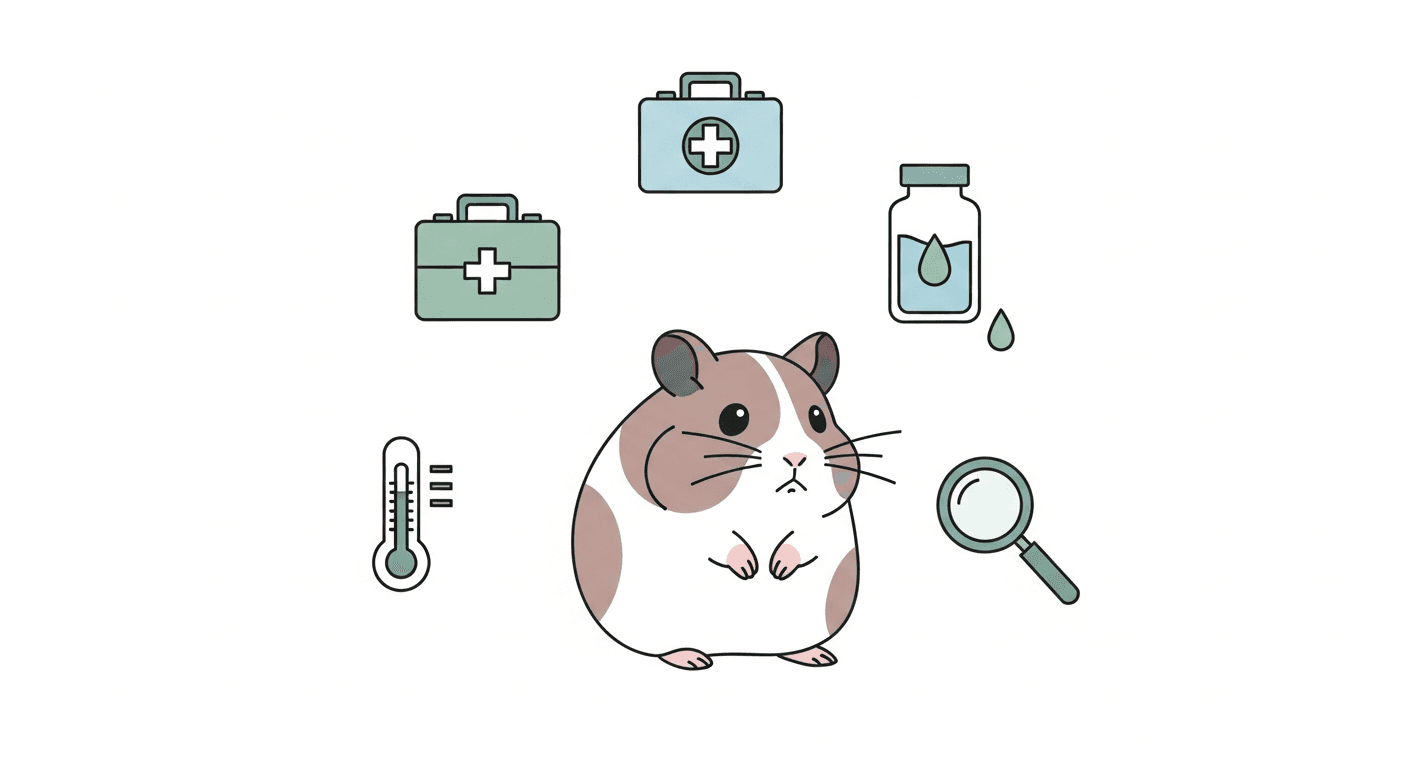
Why Hamster Emergencies Require Immediate Action
Hamsters have among the fastest metabolisms of any pet mammal. A condition that would allow a cat or dog 24–48 hours to seek treatment can kill a hamster in 4–12 hours. Wet tail kills in under 48 hours without treatment. Gut stasis is rapidly fatal. Respiratory infections escalate overnight. This rapid timeline means that hesitating in a hamster emergency is not a neutral choice — it is a dangerous one.
Know the emergency signs and have your response planned before you need it.
First 3 Steps at Home
- Distinguish torpor from death or critical illness: A hamster that appears motionless and stiff may be in torpor (a temporary hibernation-like state), not dead or critically ill. Gently warm the animal in your hands or against your body for 10–15 minutes. If it is torpor, you will see gradual increase in warmth and eventually movement within 20–30 minutes. If there is no response at all, seek emergency vet care immediately.
- Stabilize temperature and minimize stress: Place the hamster in a small, warm, quiet box with a soft cloth. Target ambient temperature of 22–25°C. Do not attempt to force feed or give water to an unresponsive animal. Keep the environment dark and quiet to reduce panic response.
- Call the exotic vet immediately: Do not search online or wait to see if the hamster improves. Call the vet, describe symptoms, and ask for guidance on immediate transport. Some clinics will prepare supportive care in advance of your arrival.
When to Go to the Vet Immediately
- Wet, matted, or soiled rear end — possible wet tail (proliferative ileitis)
- Labored, audible breathing or open-mouth breathing
- Seizures or convulsions
- Unresponsive and not recovering from warming — possible cardiac or neurological emergency
- Profuse diarrhea — more than two watery stools in an hour
- Any visible prolapsed tissue from any body opening
- Complete refusal to eat for more than 8 hours
- Sudden severe weight loss over 24–48 hours
Follow-Up Care Checklist
- Keep an emergency exotic vet contact accessible — identify one before you need it
- Maintain a carrier lined with warm fleece ready for fast transport
- Know your hamster's normal baseline — weight, water intake, droppings, activity level
- Have a digital scale for weekly weight checks — weight loss is often the first detectable sign of illness
- Keep a log so you can tell a vet when symptoms started, not just that they exist
Track Health Daily with TailRounds
The TailRounds Daily Log is the most effective emergency preparedness tool available to you. Owners who log daily can provide vets with precise timelines, which dramatically improves diagnostic accuracy and treatment speed.
Book a Vet Appointment
Establish care with an exotic-experienced vet before an emergency occurs. Book a wellness visit at Happy Paws to meet our team and ensure your hamster is in our records before a crisis develops.
Summary for Your Clinic Visit
Bring your health log, note the exact time symptoms started, list all recent diet and environment changes, and bring any medications currently being given. The more information you provide, the faster your vet can act.
Continue Reading
 🐭 Hamster Health
Wet Tail in Hamsters: Emergency Recognition and Treatment
Wet tail is the most common cause of death in young hamsters. Learn to recognize it within the first hours and why immediate treatment is essential.
 🐭 Hamster Health
Hamster Hibernation and Torpor: What You Must Know
Pet hamsters are not adapted to hibernate safely. Torpor from cold exposure can be fatal. Learn to prevent it, recognize it, and respond correctly.
 🐭 Hamster Health
Senior Hamster Care: Health Changes After 18 Months
Hamsters age rapidly — what's senior in a 2.5-year lifespan requires different care. Learn the age-related conditions to watch for and how to improve quality of life.
 🐭 Hamster Health
Daily Hamster Care Routine: Health Monitoring Checklist
A consistent daily routine is the best early warning system for hamster health problems. Learn what to check every day and how to build a baseline.