
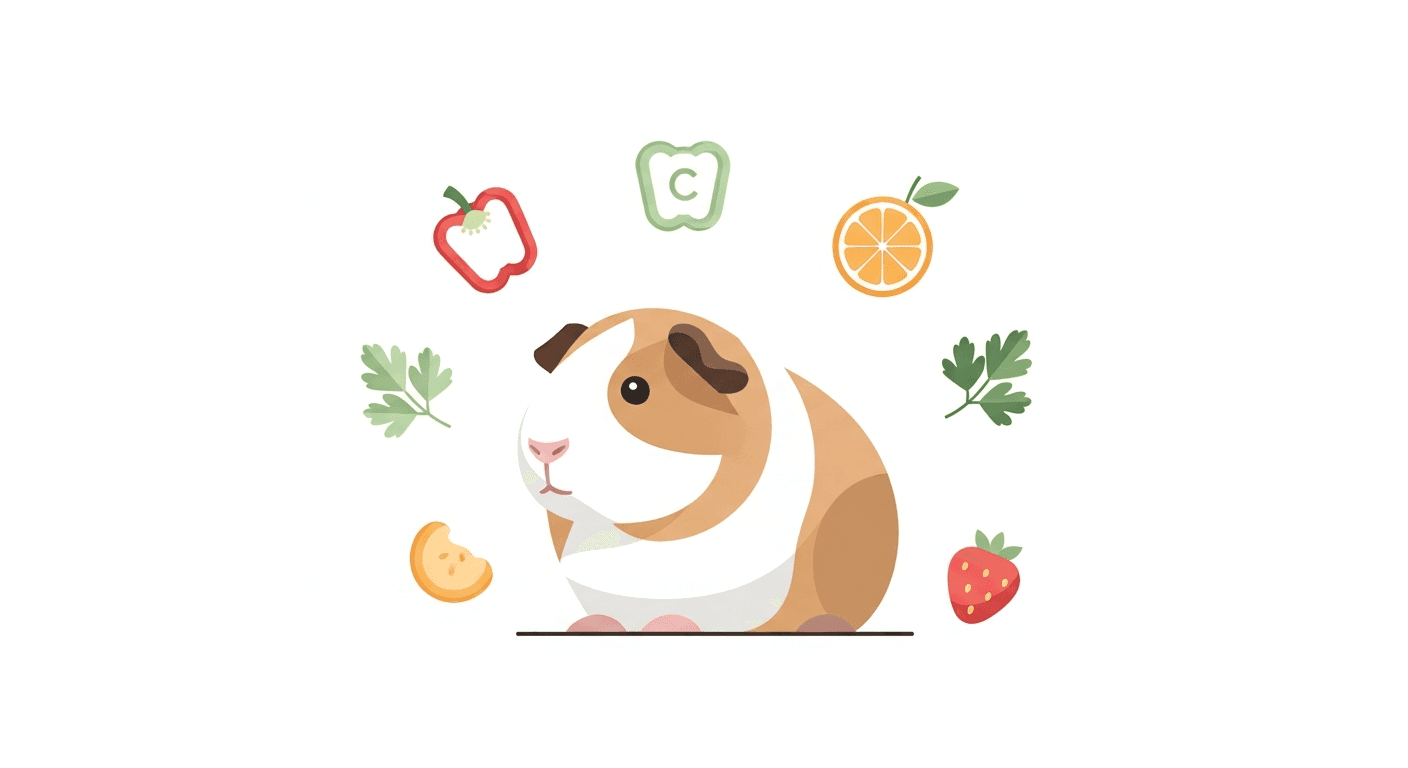
Why Vitamin C Is Non-Negotiable for Guinea Pigs
Guinea pigs share a rare trait with humans: they cannot synthesize their own vitamin C due to a genetic mutation that disabled a key enzyme. Without daily dietary sources, they develop scurvy within weeks. Scurvy causes joint pain, poor wound healing, bleeding gums, and death. This is entirely preventable with the right foods.
The daily requirement is approximately 10–30 mg of vitamin C per kilogram of body weight, with higher amounts needed for pregnant, nursing, ill, or growing guinea pigs.
First 3 Steps at Home
- Make bell pepper your daily staple: Red bell pepper contains roughly 190 mg of vitamin C per 100g — more than fresh orange. A thin strip (about 30g) daily provides well above the minimum requirement safely. Green peppers also work but have less vitamin C. Yellow and orange peppers are intermediate.
- Use leafy greens as variety: Romaine lettuce, kale, parsley, and cilantro all contain meaningful amounts of vitamin C and can be rotated daily. Avoid iceberg lettuce — it has almost no nutritional value and can cause loose stools.
- Do not rely on water-added supplements: Vitamin C degrades within hours of being added to water, especially in light. Many water-added vitamin C supplements provide minimal actual benefit. Food sources are always more reliable.
When to Go to the Vet Immediately
- Limping or apparent joint pain despite adequate diet — early scurvy
- Bleeding gums or abnormal fur coat quality
- Weight loss and lethargy in a guinea pig with uncertain diet history
- Any guinea pig acquired second-hand with unknown feeding history showing these signs
Follow-Up Care Checklist
- Offer fresh vegetables daily — never assume pellets alone provide enough vitamin C (it degrades in storage)
- Rotate leafy greens to avoid overconsumption of any one (calcium from kale, oxalates from spinach)
- Wash all vegetables thoroughly before offering
- Introduce new vegetables gradually to avoid digestive upset
- Check pellet bags for vitamin C content — look for stabilized ascorbic acid, not ascorbate
Track Vitamin C Intake with TailRounds
Log daily vegetable intake in the TailRounds Daily Log to make sure you're consistently hitting the vitamin C target. This also helps identify whether a health issue correlates with any gap in the feeding routine.
Book a Vet Appointment
Annual wellness exams should include a dietary review. If you're unsure whether your guinea pig's diet is meeting vitamin C needs, ask your vet. Book at Happy Paws with our exotic team today.
Summary for Your Clinic Visit
Bring a list of everything your guinea pig eats daily including vegetables, pellets, and hay. Note the freshness of your current pellet supply and whether you use any vitamin C supplements.
Continue Reading
 🐹 Guinea Pig Health
Guinea Pig Scurvy: Vitamin C Deficiency Signs and Treatment
Guinea pigs cannot make their own vitamin C. Deficiency causes scurvy — painful, debilitating, and entirely preventable. Learn the signs and correct daily dose.
 🐹 Guinea Pig Health
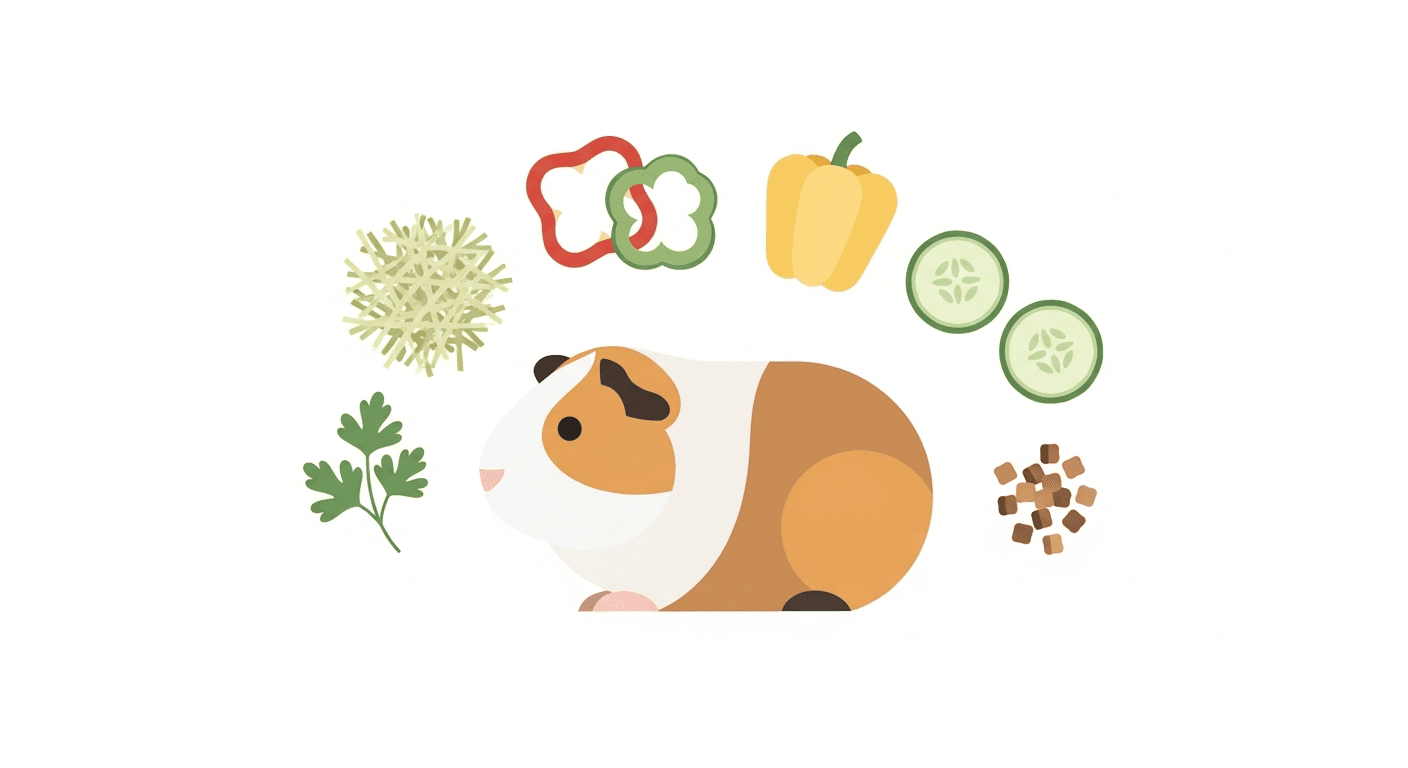
Complete Guinea Pig Diet Guide: What to Feed for Optimal Health
The right diet prevents most common guinea pig diseases. Learn the correct proportions of hay, vegetables, vitamin C sources, and pellets for healthy guinea pigs.
 🐹 Guinea Pig Health
Why Hay Is the Most Important Food for Guinea Pigs
Hay prevents the most common guinea pig diseases. Learn why it's so critical, how much to provide, and how to get a pellet-addicted guinea pig to accept more hay.