
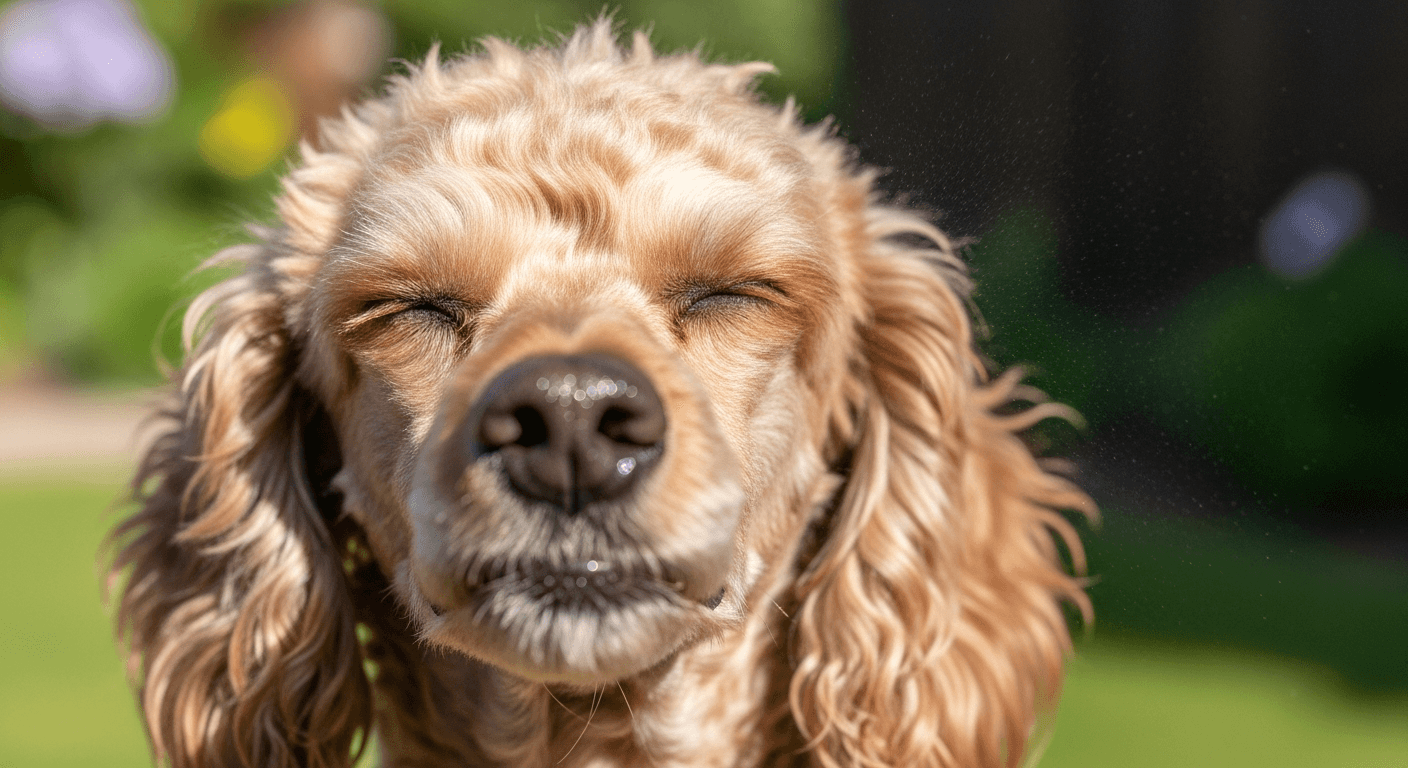
What Causes Frequent Sneezing in Dogs?
Dogs sneeze for many reasons — most of them completely harmless. A quick burst of sneezing after sniffing something interesting, a bit of grass in the nose, or excitement during play are all normal. But when sneezing becomes frequent, persistent, or is paired with nasal discharge, nosebleeds, or facial swelling, it's time to pay attention. Causes range from seasonal allergies and nasal foreign bodies to infections, dental disease (yes, really — upper tooth root abscesses can cause nasal discharge), and in rare cases, nasal tumors. Context is everything.
First 3 Steps You Can Take at Home
- Watch the discharge: Clear, watery discharge with sneezing is usually allergy-related or a mild irritation. Yellow or green discharge points to infection. Blood from one nostril (not caused by trauma) needs same-day vet evaluation — it can indicate a foreign body, fungal infection, or tumor. Note which nostril is affected, as one-sided discharge is more concerning than both sides.
- Check for a foreign body situation: Dogs love sniffing through grass, bushes, and gardens. Grass seeds and foxtails are notorious for getting lodged in nasal passages — one second of normal breathing, one second of frantic, pawing-at-nose sneezing. If the sneezing came on very suddenly while your dog was outside exploring, a foreign body is the top suspect and needs vet removal.
- Consider your environment: New cleaning products, candles, air fresheners, tobacco smoke, or seasonal pollen can all trigger sneezing in sensitive dogs. Try to identify any changes in your home or yard in the days before the sneezing started. Remove or minimize suspected irritants and see if the sneezing improves over 24–48 hours.
When to Go to the Vet Immediately
- Nosebleed from one or both nostrils
- Facial swelling or asymmetry alongside sneezing
- Suspected foreign body in the nose
- Sneezing with fever, lethargy, or loss of appetite
- Sneezing persisting for more than a week without improvement
Follow-Up Care Checklist
- ☐ Note the type, color, and which nostril is producing discharge
- ☐ Remove suspected environmental irritants (new sprays, diffusers, etc.)
- ☐ Check if sneezing correlates with time outdoors vs. indoors
- ☐ Keep a diary of frequency — is it getting better or worse?
- ☐ Ask your vet about seasonal allergy management if this recurs annually
📋 Log This With TailRounds
Track sneezing patterns and potential triggers in the TailRounds daily log. This makes it much easier to identify whether this is seasonal, environment-related, or a recurring infection pattern.
Start Free →Book a Vet Appointment
Persistent sneezing with discharge is worth investigating — what appears to be a simple cold can turn out to be a tooth root abscess, fungal rhinitis, or an embedded foreign body. Book an appointment at Happy Paws Veterinary Clinic — same-week slots are usually available.
Summary for Your Clinic
Pet concern: Dog Sneezing
Symptoms: Frequent sneezing, [discharge color/type], [one or both nostrils], [sudden onset or gradual]
Possible triggers: [new product/outdoor exposure/seasonal change]
Duration: [X days]
Questions for vet: Should we check for a foreign body? Could this be allergies or an infection?
Related Articles
Continue Reading
 🐕 Dog Health
Dog Coughing: Kennel Cough or Something Else?
How to tell if your dog's cough is kennel cough, heart disease, or something more serious. Home care steps and when to go to the vet.
 🐕 Dog Health
Dog Reverse Sneezing Explained
What dog reverse sneezing looks and sounds like, why it happens, and how to stop an episode at home — plus when to see a vet.
 🐕 Dog Health
Dog Itching and Scratching: Likely Reasons
Discover why your dog keeps scratching — from fleas and allergies to dry skin and infections. Practical home care and vet advice.