
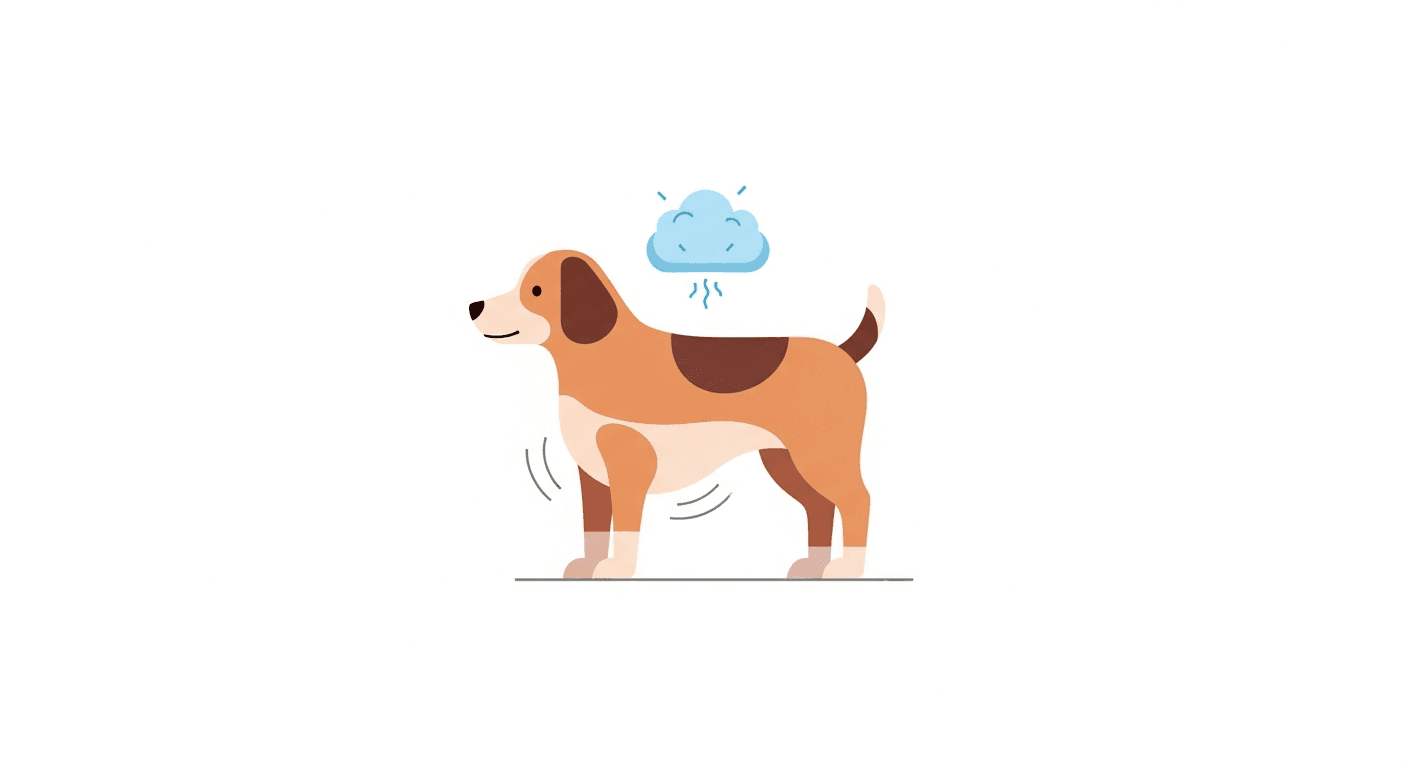
What Causes Gas and Bloating in Dogs?
There's a critical distinction to make here: flatulence (farting) and GDV bloat are completely different conditions. Flatulence is a normal digestive byproduct — gas produced when gut bacteria ferment food in the large intestine. It becomes problematic when excessive, caused by: diet (high-fiber vegetables, legumes, dairy, sudden food changes), eating too fast (swallowing air), poor-quality food with fermentable fillers, or intestinal dysbiosis (imbalanced gut bacteria). GDV (gastric dilatation-volvulus) is a life-threatening emergency where the stomach fills with gas and twists on itself — this is not just gassiness, it's a sudden, severe condition requiring emergency surgery.
First 3 Steps You Can Take at Home
- Assess the abdomen immediately if your dog seems distressed: A dog with simple flatulence is usually comfortable and normal aside from occasional gas passing. A dog with GDV is in obvious distress: retching repeatedly with nothing coming up, the abdomen visibly distending and feeling tight and drum-like, the dog is restless and unable to get comfortable. If you see these signs — especially in a large or deep-chested breed — this is an emergency. Skip the home steps and go directly to an emergency vet. Attempting home treatment for GDV costs fatal amounts of time.
- For simple flatulence — evaluate diet: The most common causes of excessive flatulence are dietary. Identify any high-gas foods: broccoli, cauliflower, peas, lentils, beans, dairy products, cheap food with soy fillers, and any food your dog struggles to digest well. A switch to a highly digestible, single-protein food often dramatically reduces gas. Also evaluate grain-free foods — the legume-heavy recipes used as grain replacements can actually cause more gas in some dogs.
- Use a slow-feed bowl and reduce air intake: Dogs that eat very fast swallow significant amounts of air, which contributes substantially to flatulence and mild stomach distension. Slow-feed bowls, food puzzles, or spreading kibble on a snuffle mat makes eating slower and reduces aerophagia (swallowing air). Feed in a quiet spot where your dog isn't competing or rushing.
When to Go to the Vet Immediately
- Distended, hard, drum-like abdomen with distress — GDV EMERGENCY
- Repeated retching with nothing coming up
- Dog is restless, drooling, can't get comfortable
- Pale or blue gums with abdominal distension
Follow-Up Care Checklist
- ☐ Switch to a highly digestible food if flatulence is chronic
- ☐ Use a slow-feed bowl to reduce air swallowing
- ☐ Add a probiotic to support gut flora balance
- ☐ Feed 2–3 smaller meals rather than one large one
- ☐ For GDV-risk breeds: discuss prophylactic gastropexy (stomach stapling) with your vet
📋 Log This With TailRounds
Log meal timing, food type, and gas episodes in the TailRounds daily log. Connecting specific foods to increased gassiness helps you optimize the diet efficiently.
Start Free →Book a Vet Appointment
If chronic flatulence doesn't improve with dietary changes, a fecal test and gut health assessment can identify bacterial imbalance or malabsorption issues. For GDV-risk breeds, ask your vet about prophylactic gastropexy — often done at the time of spay/neuter. Book an appointment at Happy Paws Veterinary Clinic — same-week slots are usually available.
Summary for Your Clinic
Pet concern: Dog Gas / Bloating
Type: [simple flatulence / distended abdomen with distress], breed: [especially note large breeds]
Diet: [current food, any high-gas additions], eating speed: [fast/normal]
Questions for vet: Is GDV gastropexy appropriate for my breed? Could this be a GI motility issue?
Related Articles
Continue Reading
 🐕 Dog Health
Dog Vomiting White Foam: What It Signals
What white foamy vomit in dogs usually means, when it's kennel cough or an empty stomach, and when bloat makes it an emergency.
 🦴 Dog Care
Dog Retching But Nothing Comes Up: Causes
Why a dog retches without vomiting — from dry heaves to bloat (GDV). Know which is harmless and which needs emergency care now.
 🦴 Dog Care
Dog Diet Change: How to Switch Food
Why slow food transitions matter for dogs and the exact step-by-step method to switch food without causing stomach upset.
 🐕 Dog Health
Dog Diarrhea: When to Worry and When to Wait
A practical guide to dog diarrhea — home care steps, warning signs that need a vet, and how to firm up loose stools safely.