
Breed Overview
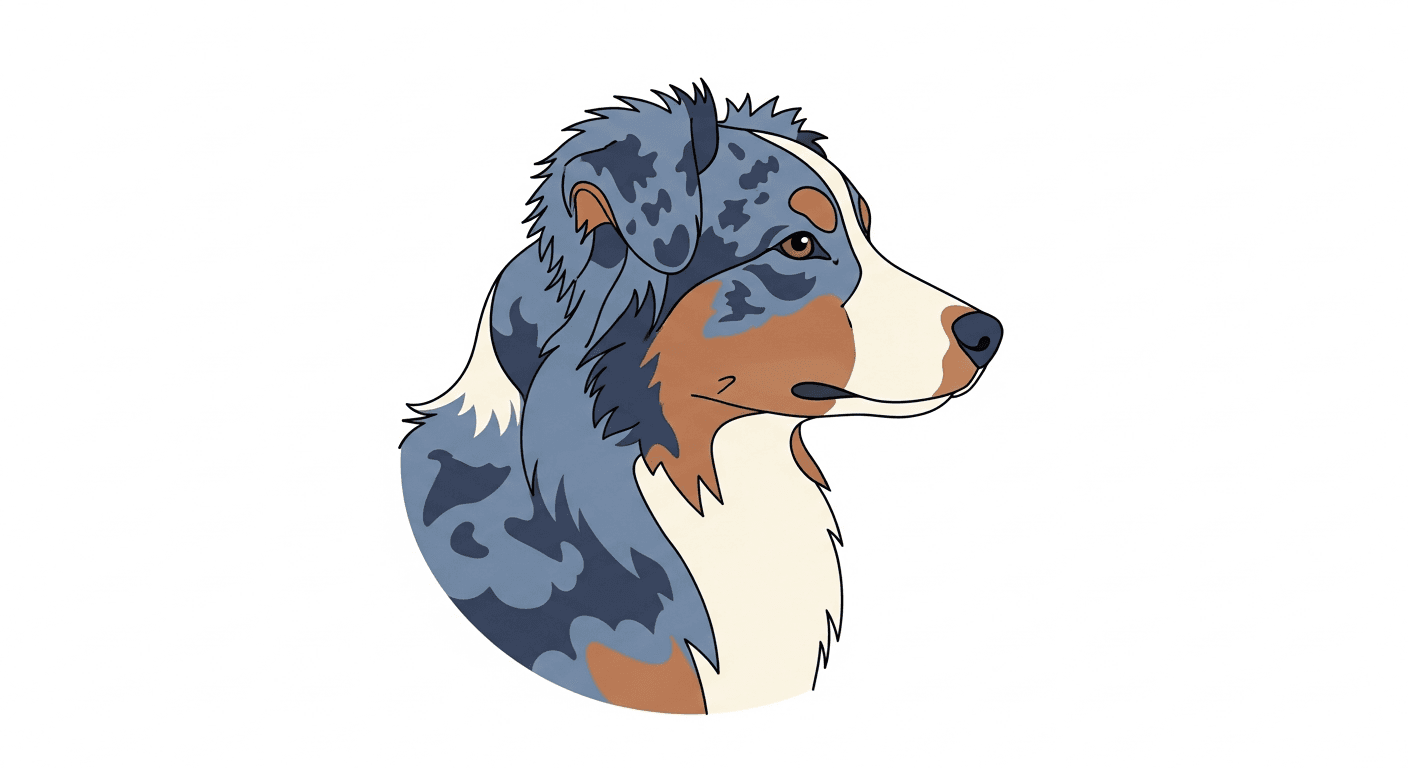
Despite its name, the Australian Shepherd was developed primarily in the American West, not in Australia. The breed evolved from herding dogs brought to America by Basque shepherds (who had lived in Australia before immigrating) in the 19th century, refined over generations on American ranches to become one of the finest herding dogs in the world. Their name is most likely derived from the association with the Australian sheep they were originally used to herd.
Australian Shepherds are medium-sized dogs, with males standing 20–23 inches and weighing 50–65 pounds; females are 18–21 inches and 40–55 pounds. They are perhaps best known for their striking, often multicolored merle coats — blue merle, red merle, black, and red, with or without white and copper markings — and their captivating eyes, which may be blue, brown, amber, or any combination thereof, including heterochromia (two different colored eyes).
Aussies are working dogs to their core. They are bred to spend all day herding livestock, requiring stamina, speed, intelligence, and the ability to make independent decisions. These traits make them fascinating companions but also demanding ones.
Temperament and Personality
The Australian Shepherd is a high-drive, intelligent, and intensely focused dog. Understanding their working dog heritage is essential to understanding their behavior:
- Highly intelligent: Aussies rank among the top ten most intelligent dog breeds. They learn quickly — including things you would rather they not learn.
- Energetic and driven: They have working-dog stamina and need significant physical and mental outlets to remain balanced.
- Loyal and protective: Aussies bond deeply with their families and can be reserved with strangers. Proper socialization prevents this from becoming problematic shyness or reactivity.
- Herding instinct: They may attempt to herd children, other pets, cyclists, or anything else that moves in a direction they prefer. This can include nipping at heels. Early training is essential to redirect this instinct appropriately.
- Velcro dog tendencies: Aussies want to be wherever their person is. They can develop separation anxiety if left alone frequently.
Care Needs
- Grooming: Their medium-length double coat requires brushing two to three times per week (daily during shedding seasons). They shed moderately year-round and heavily twice annually. Bathing every six to eight weeks and regular nail trims are necessary. Never shave their coat — it protects against heat and cold.
- Training: Aussies thrive with consistent, structured training. Enroll in puppy classes, then progress to advanced obedience, agility, herding trials, or other dog sports. They excel at nearly every dog sport ever devised. An untrained Aussie will create its own job — which rarely aligns with the owner's preferences.
- Mental stimulation: Physical exercise alone is insufficient. Aussies need daily cognitive challenges: puzzle feeders, trick training, scent work, and structured games. At least 30 minutes of deliberate mental engagement per day is recommended in addition to physical exercise.
- Socialization: Extensive early socialization prevents excessive suspicion of strangers and dog-dog reactivity later in life.
Health Risks and Common Conditions
- MDR1 gene mutation: A significant portion of Australian Shepherds carry a mutation in the MDR1 (ABCB1) gene that causes sensitivity to certain medications, including common antiparasitics (ivermectin), some antibiotics, and chemotherapy agents. DNA testing is essential — affected dogs can die from medications that are safe for other dogs.
- Hip and elbow dysplasia: Present in the breed. OFA certification of both parents is important.
- Epilepsy: Idiopathic epilepsy is more prevalent in Aussies than in many breeds.
- Eye conditions: Collie Eye Anomaly (CEA), Progressive Retinal Atrophy, and iris colobomas are heritable. Annual CAER ophthalmic exams and DNA testing of breeding stock are recommended.
- Cancer: Aussies have an elevated risk of lymphoma and other cancers, particularly later in life.
- Autoimmune conditions: Immune-mediated diseases are seen with some frequency in the breed.
Have your Aussie DNA tested for the MDR1 mutation before any veterinary procedure or medication is administered. Log health observations with the TailRounds Daily Log and book a vet appointment at Happy Paws to discuss genetic testing. Find a clinic familiar with herding breed health in your area.
Exercise Needs
Australian Shepherds need at minimum 90 minutes — and ideally two or more hours — of vigorous exercise daily. Without adequate exercise, Aussies become neurotic, destructive, and may develop stereotypic behaviors. Excellent outlets include:
- Agility training and competition
- Herding trials
- Frisbee and disc dog sports
- Trail running and hiking
- Swimming
- Flyball and dock diving
Is an Australian Shepherd Right for You?
An Australian Shepherd is perfect for highly active owners who want a canine partner in outdoor adventures and dog sports. They are not suitable for sedentary households, people working long hours without dog care, or first-time owners unprepared for the intensity of a working dog. For the right owner — one who can match their Aussie's energy and intelligence — this breed offers a level of partnership and connection that few other breeds can equal.
Continue Reading
 🐶 Dog Breeds
Border Collie: The World's Most Intelligent Dog — Is It Right for You?
Everything about the Border Collie — unmatched intelligence, herding intensity, exercise demands, mental stimulation needs, health risks, and whether you can handle the world's smartest dog.
 🐶 Dog Breeds
Siberian Husky: The Striking Arctic Sled Dog Built for Adventure
A complete guide to the Siberian Husky — stunning looks, high energy, escape artistry, care needs, health issues, and whether this athletic breed fits your lifestyle.
 🐶 Dog Breeds
Golden Retriever: The Complete Owner's Guide
Everything you need to know about Golden Retrievers — temperament, care, health risks, exercise needs, and whether this beloved breed fits your lifestyle.